A Progressive Foreign Policy for Africa
For too long, military force and myopic power plays have dominated US foreign policy toward Africa. We need an entirely different approach — one that allows ordinary Africans the space to build a more just and democratic continent.
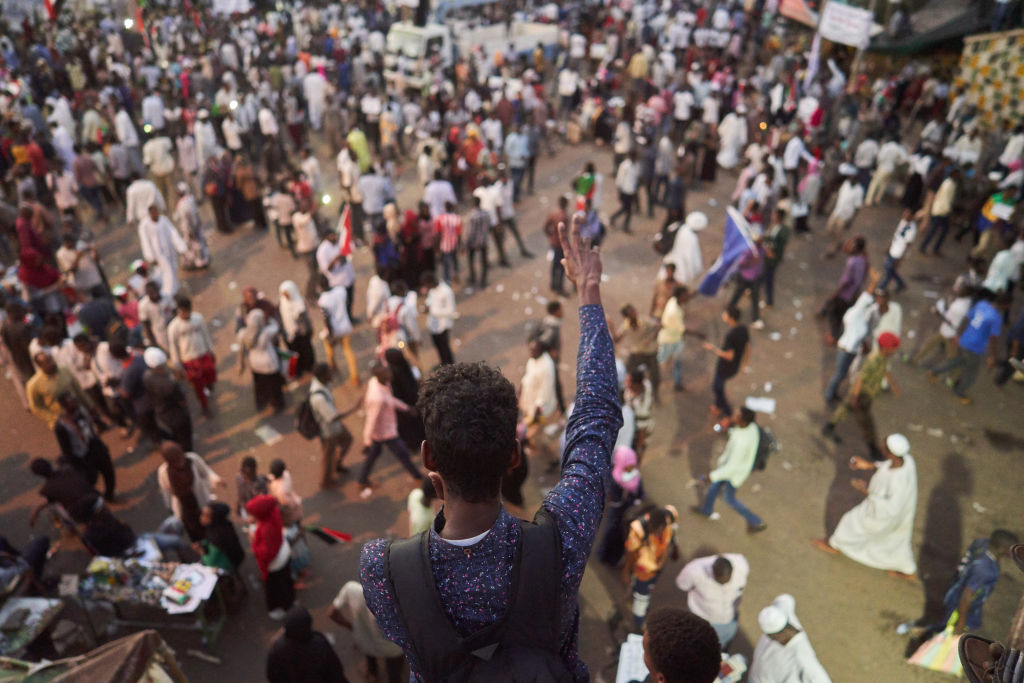
A protester chants and raises the peace sign above a sit-in on May 2, 2019 in Khartoum, Sudan. (David Degner / Getty Images)
Africa, the world’s second-largest continent in both size and population, rarely receives coverage in the mainstream US press. It is only when the US president dismisses African countries with a vulgarity, or tells an elected representative who happens to be Somali-American to “go back” to where she came from, or when American soldiers die in unfamiliar places that Washington’s Africa policy attracts even fleeting attention.
Negative myths and stereotypes abound. To many in the corporate media, the word “Africa” conjures up images of a continent in crisis, riddled with war and corruption, imploding from disease and starvation. Africans are regularly blamed for their plight, with few in the halls of power understanding the role the US government and its allies have played in generating and perpetuating many of the challenges facing the African continent today — and even fewer accepting US responsibility for righting the wrongs.
US Africa policy, developed in this context, has been marked by militarism and misunderstanding. It has failed to identify the true factors that undermine human security and offered wrong-headed solutions that often exacerbate the problem. If greater peace and justice are to be achieved on the continent, the United States’ posture toward Africa must be fundamentally transformed, with the rights and well-being of ordinary people the primary objective.