The New Scramble for Ethiopia
Ethiopia’s prime minister is making headlines as a Trudeau-like liberal reformer. But behind his progressive sheen, his economic policies are set to accelerate inequality and poverty.
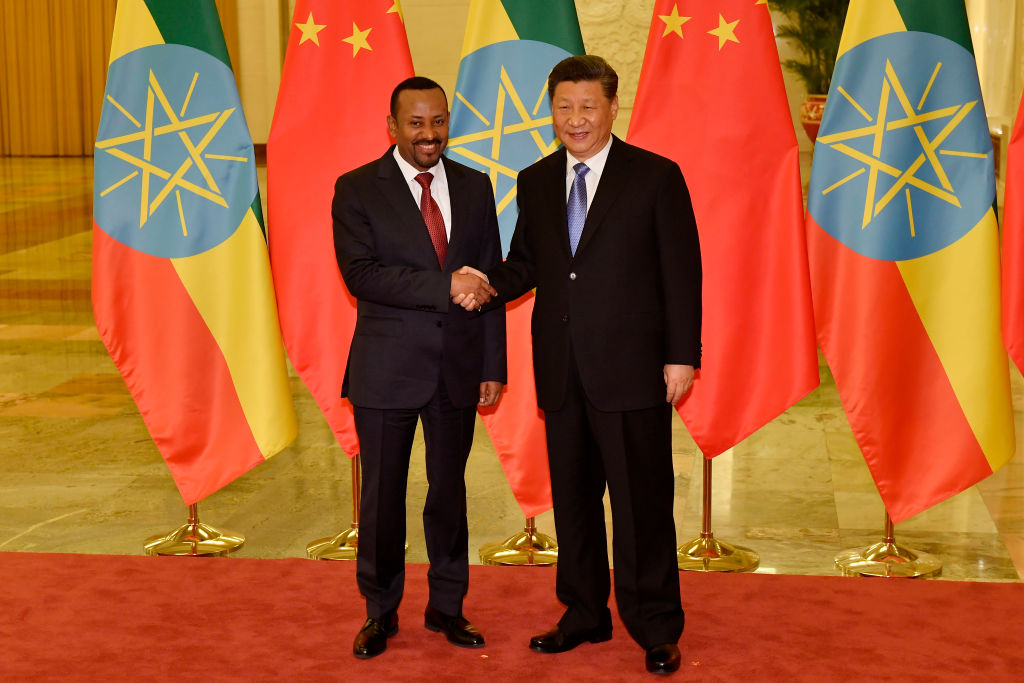
Ethiopia’s Prime Minister Abiy Ahmed (L) shakes hands with Chinese president Xi Jinping before their meeting at the Great Hall of the People in Beijing, China, April 24, 2019.Parker Song / Kyodo News – Pool / Getty
What happens in Davos, stays in Davos — at least for the majority of the Ethiopian public, who takes little interest in the exclusive annual gathering of the global financial elite. This year, however, the speech by Ethiopia’s new prime minister, Abiy Ahmed, at the 2019 World Economic Forum was shared widely on social media. Its spread highlighted the pop-star-like status that the country’s new, charismatic leader enjoys among Ethiopians, especially the country’s youth.
The forty-four-year-old prime minister addressed the World Economic Forum’s jet-setting global rich in their own language: literally, in English, but also in their neoliberal language of removing red tape for business, the power of the private sector, open markets, and integration (including Ethiopia’s commitment to joining the World Trade Organization).
Ahmed’s speech epitomized the usual pitch for global capital to come to cash-strapped developing countries (high returns! tax holidays!). But it also provided important insights on where the country may be headed, following its change of leadership in 2018 after years of protests.