Max Horkheimer, a Teacher Without a Class
Frankfurt School cofounder Max Horkheimer is today credited as an insightful analyst of authoritarian culture. But Horkheimer’s ever-pessimistic outlook reflected the political defeats of his time — and an oft one-sided view of the loss of working-class agency.
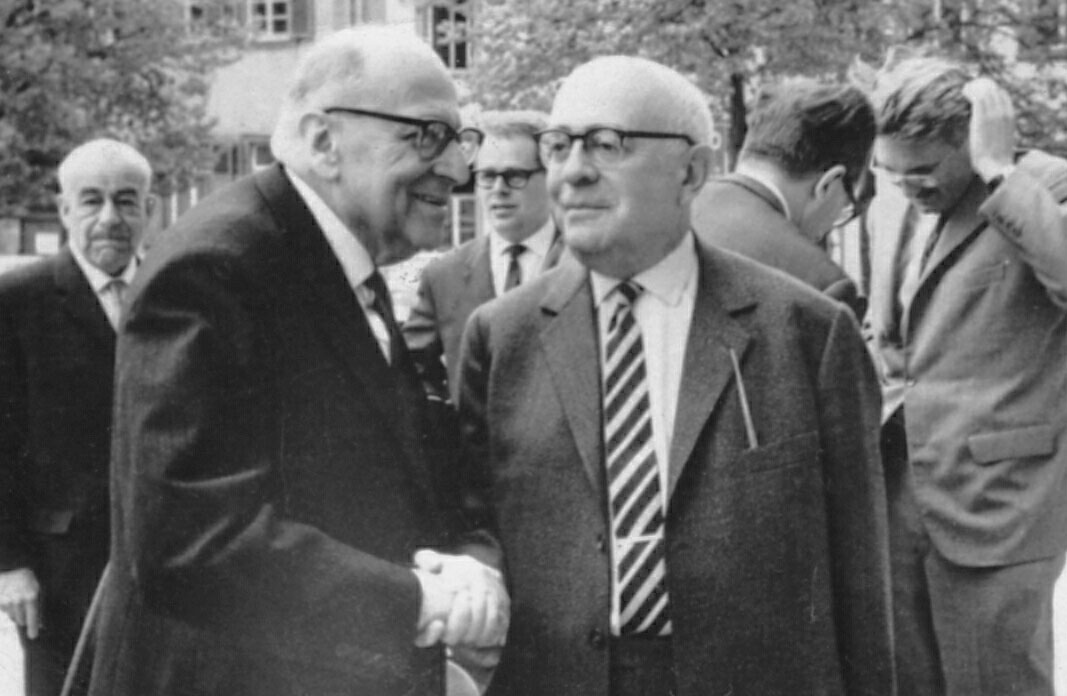
Max Horkheimer (left) and Theodor Adorno in April 1964 in Heidelberg, Germany. (Jeremy J. Shapiro / Wikimedia Commons)
The Frankfurt School has been credited — and blamed — for many things. Going by today’s panic over “cultural Marxism,” it must be vastly influential. Far-right strategist William Lind associated the school with university campuses resembling “small ivy-covered North Koreas,” given the supposed tyranny of political correctness. The white supremacist Council of Conservative Citizens complained that the school’s critique of right-wing authoritarianism — authored by foreign-born Jews — was “treason against the US Constitution and against America.”
Not only the Frankfurt School’s analysis of authoritarianism marks it out as relevant today. It has long held wide currency in academia as one of the key critiques of modernity — with the advantage, unlike postmodernism, of sticking to Enlightenment philosophy, while also making it reflexive. Late in life, Michel Foucault said he wished he had learned more about this school, earlier. He saw that his approach bore similarities with the Frankfurt School theory of how humanity’s mastery of nature through knowledge and technology turned into a tool for the domination of humans by other humans.
For all these reasons, the Frankfurt School is widely considered to be the most important outgrowth of postwar West German Marxism. This has led young radicals and activists to seek out the writings of Max Horkheimer, Theodor W. Adorno, Herbert Marcuse, and others, long after their deaths.