The Man Who Murdered Rosa Luxemburg
- Loren Balhorn
On January 15, 1919, the leaders of the German revolution were murdered by far-right soldiers enraged by the rising socialist movement. The man who masterminded the killings was Waldemar Pabst — a fanatical nationalist officer whose paramilitaries became the rank and file for Nazism.
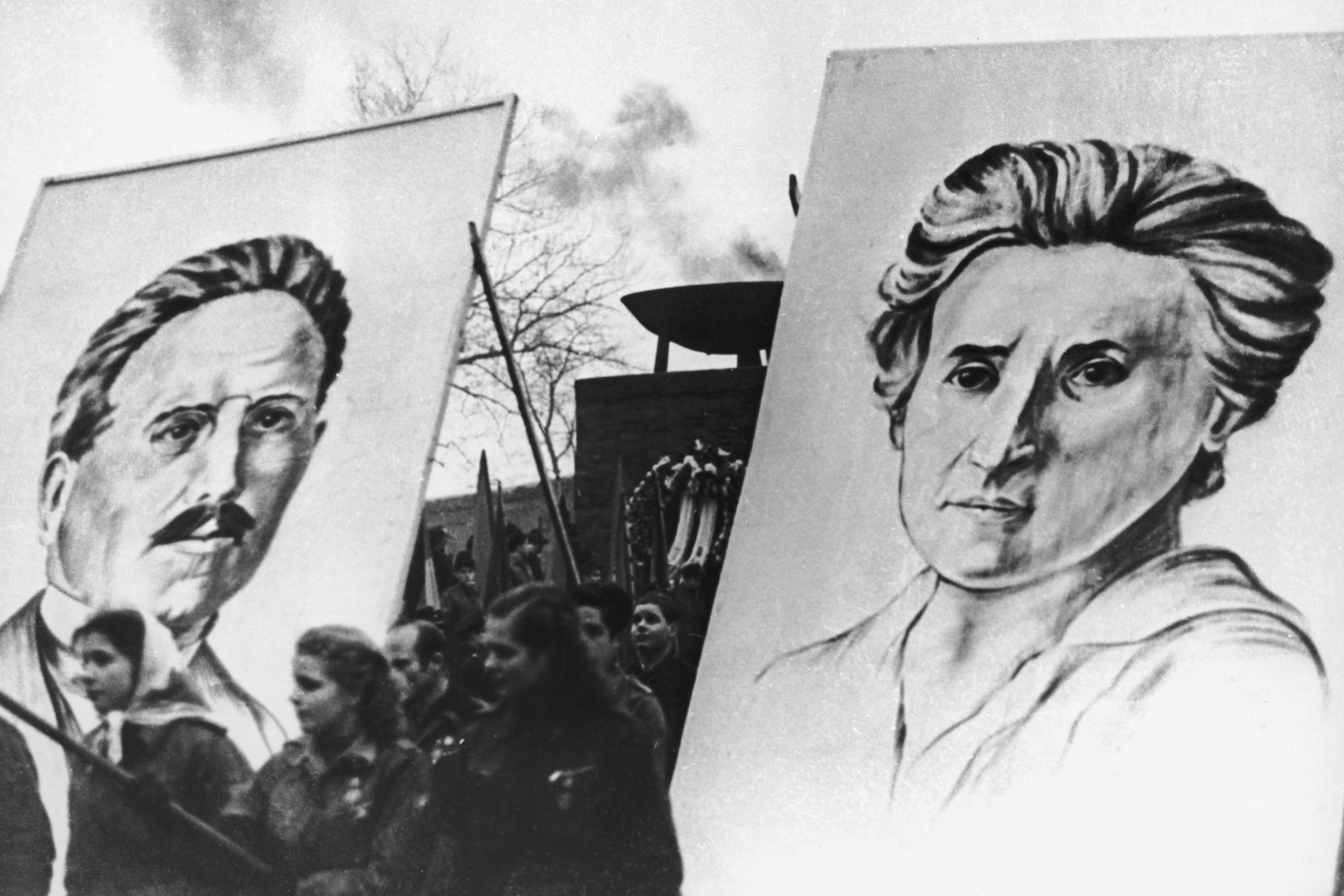
January 19, 1953: A communist march in East Berlin to commemorate the deaths of Karl Liebknecht and Rosa Luxemburg, cofounders of Germany’s Spartacist League. Keystone / Hulton Archive / Getty
On January 15, 1919, the revolutionary leaders Rosa Luxemburg and Karl Liebknecht were murdered in cold blood by a gang of right-wing army officers. Their killings came after the crushing of the January Uprising in Berlin, and enjoyed the tacit approval of leading members of the Social Democratic Party (SPD), which had taken power only weeks earlier. Sending shockwaves across Germany, their deaths went down in history as a decisive turning point in the postwar wave of popular uprisings — snuffing out hopes of socialism spreading across the rest of Europe.
A wide array of forces supported the counterrevolution — but the mastermind behind the killing was Waldemar Pabst, a first general staff officer in the German Army. A proud monarchist and nationalist and a bitter opponent of democracy and socialism, his career embodied all that was rotten about the imperial Germany striving to defend itself against the advancing revolution. But his influence also extended deeper into German history — showing the lineages of German nationalism and militarism in the postwar West German state.
Weathering the “Storm of Steel”
Waldemar Pabst was a man with a monstrous biography, whose influence on the politics of the first third of the twentieth century went underestimated for decades. First and foremost, he was a representative of the rising bourgeoisie in the semi-absolutist German Empire, or Kaiserreich. Only becoming a united country in 1871 under the leadership of Chancellor Otto von Bismarck, in the late nineteenth century, Germany was desperate to make up for lost time and claim its “place in the sun” among the other European powers. Eager to prove himself, Pabst enthusiastically subjected himself to the inhumane training regimen of the cadet academy and began to rise up the ranks.