When Germany’s Social Democrats Made a Revolution by Half
The November Revolution of 1918 replaced Germany’s monarchist regime with a parliamentary system. But its Social Democratic leaders made a pact with the old ruling class to repress the left-wing radicals who wanted to go further, crippling the new Weimar Republic from the start.
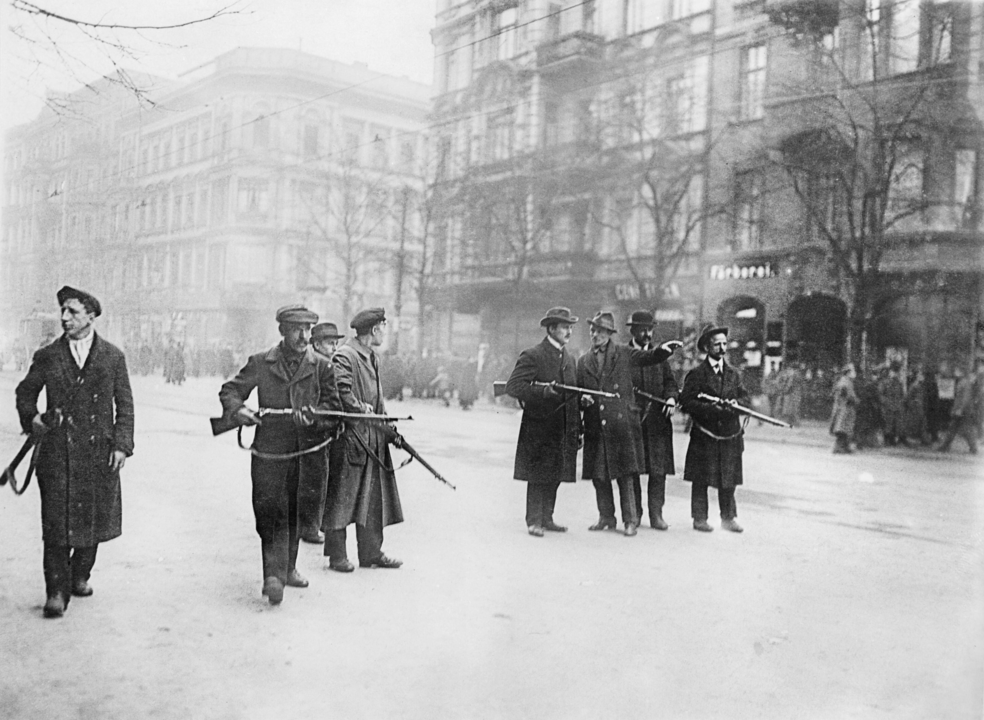
Spartacist irregulars holding a street in Berlin during the German Revolution. German Federal Archive / Wikimedia Commons
The history of the socialist movement in Germany has always been a major reference point for the global left. It was in Germany that Marxism first found a foothold in mass organization, and during the period of the Second International, it was here that the major debates of the twentieth-century socialist movement found their sharpest expression. The culmination of this movement in war and revolution has been an important object of activist and scholarly examination ever since.
The German November Revolution of 1918 played a major role in bringing an end to the First World War, laying the groundwork for Germany’s first democracy, the Weimar Republic, and shaping its political trajectory. In crucial respects, it was the fractures in German social and economic life during this revolutionary period that set the stage for Adolf Hitler’s seizure of power fourteen years later. As the first major application of socialist politics on a mass scale in an industrialized society, this historical period is rich with lessons for socialists today.