A Russian Sociologist Explains Why Putin’s War Is Going Even Worse Than It Looks
The Russian public response to the invasion of Ukraine has been muted with antiwar protests quickly repressed. But the slow progress of the war is feeding a series of other crises, leaving Vladimir Putin’s inner circle increasingly isolated.
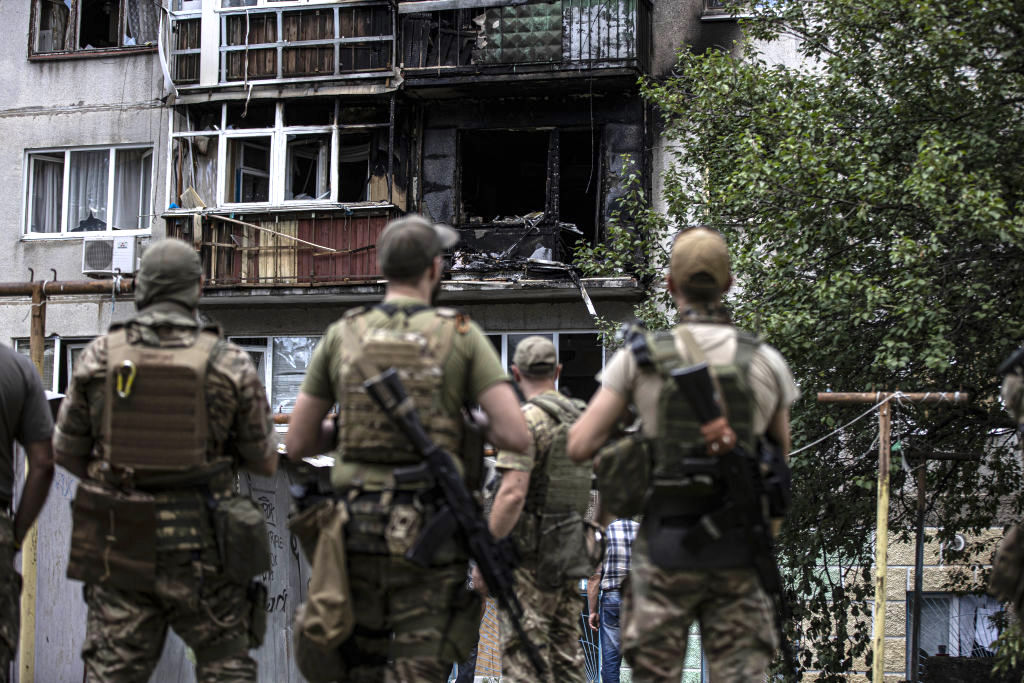
Ukraine security forces at the site of a recent Russian missile attack in Kramatorsk, Donetsk Oblast, Ukraine on July 19, 2022. (Metin Aktas / Anadolu Agency via Getty Images)
As the Russian attack on Ukraine drags into its fifth month, the war risks losing international public attention, replaced — in Europe at least — by rising food and gas prices, spiraling inflation, and another summer of record-breaking temperatures. Like wars from Afghanistan to Yemen, the longer it lasts the more it becomes normalized and accepted. For the people of Ukraine, however, the invasion remains an inescapable reality, with Russian troops pushing further into the country’s east and civilian casualties mounting.
The news from Russia, by contrast, has grown noticeably quieter since the beginning of the invasion. Initial reports of antiwar protests, jingoistic pro-government rallies and shuttered McDonald’s franchises have long since disappeared from the headlines. Support for the war might be muted, but few signs of public opposition have emerged in recent months, either. Have Russians resigned themselves to their fate? Loren Balhorn spoke with Boris Kagarlitsky, a Moscow-based sociologist and host of the popular Russian YouTube talk show Rabkor, to learn more about the impact of the war and how strong Vladimir Putin’s grip on power really is.
Loren Balhorn
At the start of the invasion of Ukraine, there were lots of reports of antiwar protests across Russia. Things seem to have grown quiet since then, with more and more media outlets claiming that most Russians back Putin. You live in Moscow — what’s the mood like?
Boris Kagarlitsky