Get on the Bus
Chile’s private bus companies tried to repress the working-class vote. It backfired.
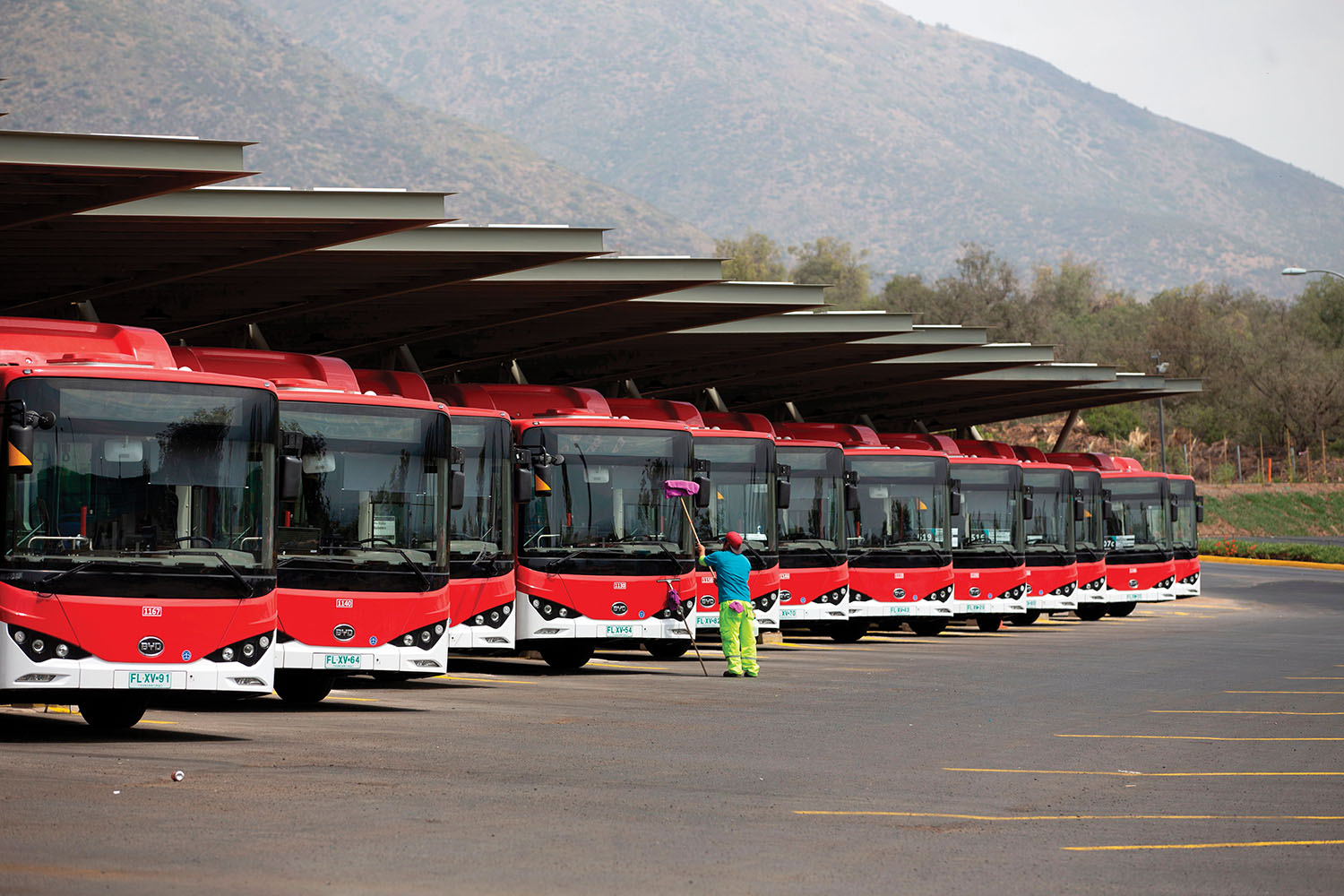
A worker cleans an E12 electric bus in Santiago, 2019. Chile has one of the largest electric bus fleets in the world, second only to China (Getty Images).
On December 19, 2021, the day of the Chilean presidential runoff, rumors spread about a corporate plan to sway the count in favor of the right-wing candidate, José Antonio Kast. As the day wore on, they were confirmed: private bus companies had cut service to working-class neighborhoods in Santiago and other cities, preventing voters from reaching the polls. Thousands of people were left waiting at bus stops, while photographs emerged showing hundreds of buses idling at company garages. To vote in the capital city, people would have to trudge long distances in nearly 100-degree-Fahrenheit heat.
The final round of the Chilean presidential elections was not merely about who would occupy the presidential office. It was about the fate of the constitutional reform process that began following a mass anti-neoliberal uprising in 2019. The constitutional process was years in the making, and now its forward momentum was threatened by buses that refused to budge.
The two candidates, Kast and Gabriel Boric, represented opposing views on the process. Kast — a supporter of the Augusto Pinochet dictatorship — declared his opposition to the constitutional rewrite, while socialist Boric firmly supported it. If the far-right candidate won, the executive power would be a fierce enemy of the constitutional process, while a victory for the left-wing candidate meant the executive power would become an ally.