Is Ann Arbor Ready for Democratic Socialism?

Dave Zeglen

Dave Zeglen is a longtime pro-union, pro-tenant, pro-Palestine, anti-ICE organizer backed by the Democratic Socialists of America — and his sights are set on Ann Arbor City Hall.
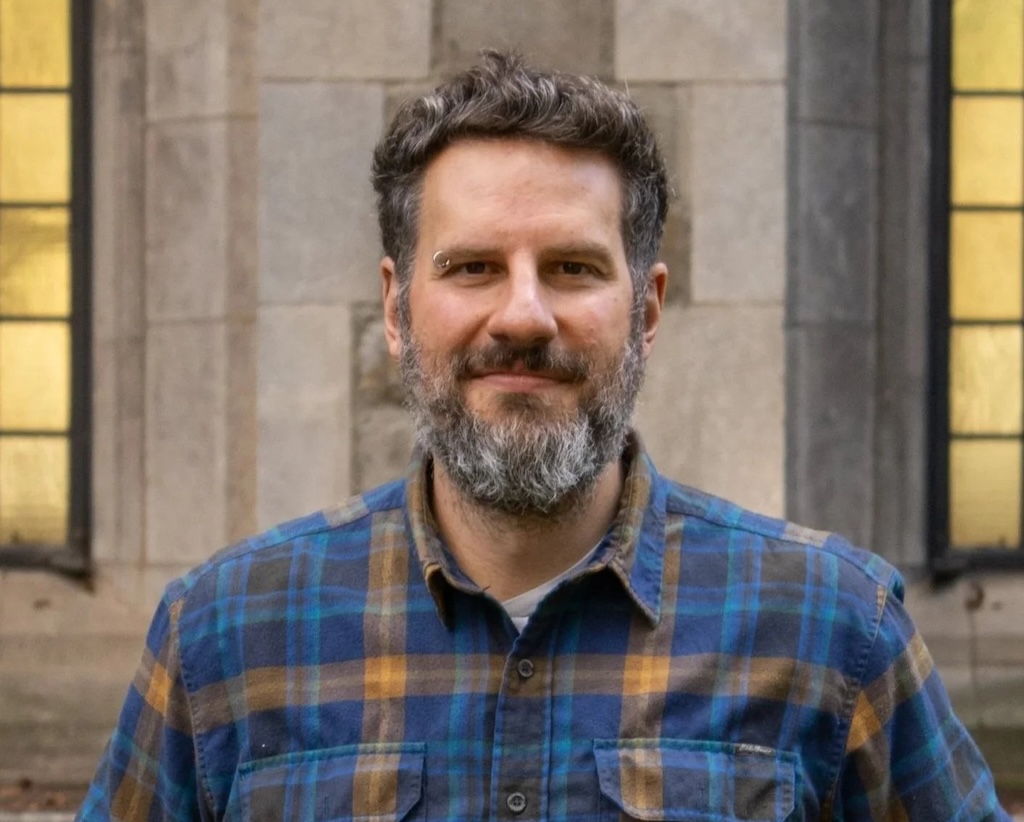
Ann Arbor City Council candidate for Ward 4, Dave Zeglen

Ann Arbor City Council candidate Dave Zeglen is trying to revive the Midwest’s proud sewer socialist tradition with a platform that spans public housing, labor protections, municipalized utilities, immigrant defense, and grassroots democratic reform. (Dave Zeglen for the People, Ward 4)


Interview by
Matt McManus

Last year, Zohran Mamdani, Katie Wilson, and other socialists surprised mainstream commentators by overcoming billionaire resistance to win major offices across the country. Their example has been electric: the Democratic Socialists of America (DSA) crossed one hundred thousand members for the first time ever, a suite of progressive Democrats look set for big primary wins ahead of the midterms, and new progressive and democratic socialist candidates are popping up across the country to run for municipal government.

Dave Zeglen is a lecturer at the University of Michigan in Ann Arbor, where he teaches cultural theory and international relations. An active member of the nontenured faculty Lecturers’ Employee Organization (AFT Local 6244), Zeglen is running for Ann Arbor City Council in Ward 4. He’s been endorsed by DSA and is looking to shake up Ann Arbor’s champagne liberal politics with a more radically democratic vision. Jacobin’s Matt McManus, a former colleague at the University of Michigan, spoke with Zeglen about what he hopes to achieve in municipal politics.


Matt McManus

Thank you for agreeing to do this interview with me. It’s exciting that we get to collaborate again. For our readers, can you speak a little bit about who you are and what you’re trying to accomplish by running for public office?

Dave Zeglen

My name is Dave Zeglen, and I’m a democratic socialist running for city council in Ann Arbor. I’m a lecturer in international studies at the University of Michigan, where I teach seminars on colonialism and cultural identity and the political economy of imperialism. I’ve been an active member of my union, the Lecturers’ Employee Organization (LEO), and involved in broader campus labor organizing for several years at the university. I’ve lived in the occupied West Bank, where I was a teacher in Balata refugee camp, and I’ve been part of the Palestinian liberation movement for over twenty years. I also participated in the Black Lives Matter movement and anti–Immigration and Customs Enforcement (ICE) protests in Washington, DC. More recently, I’ve joined the Stop the Data Center movement and aim to bring the fight against tech billionaires into city hall.

I’m running for office because the current city council brands itself as progressive, even citing concerns about “late-stage capitalism.” Yet they continue to implement neoliberal policies that are worsening the very economic inequality they claim to be fighting against. They’re privatizing public services, hiring outside consultants for city work, subsidizing corporate developers, propping up a regional utility monopoly, and undermining local democracy to favor private interests over the people — all facets of “late-stage” capitalism!

I want to give the public a real choice between the neoliberal status quo and an alternative rooted in democratic socialism. I am working with my local DSA chapter to use our campaign to raise local consciousness about what democratic socialism is, its history in the United States, and what democratic socialist policies look like.

Our campaign is dedicated to helping build the democratic socialist movement in southeast Michigan and beyond. We want to win office to demonstrate to the public that democratic socialism is committed to building local democracy and expanding public services for the people. We deserve a city that protects and expands the public good in ways that meaningfully put working people in democratic control over their lives and the systems they depend on.

Matt McManus

You’re one of many democratic socialists running for office at the municipal level, and indeed, there is a long history of socialist politicians running cities in this country, from Milwaukee’s sewer socialists to Burlington’s Bernie Sanders and New York City’s Zohran Mamdani. What can socialists do for people at the municipal level?

Dave Zeglen

The Midwest has a rich left-wing municipal political tradition that our campaign is drawing inspiration from. Like the Milwaukee sewer socialists, we’re focused on providing basic public services and infrastructure improvements. Our platform embraces key sewer socialist planks like fixing potholes, municipalizing the electrical grid, building public housing and cooperatives, protecting public parks and playgrounds, and supporting labor unions in the city. Like the sewer socialists, we are also working with local grassroots organizations to ensure they have influence and can apply pressure on local government so that it works for the people.

Understandably, the public has a distrustful attitude toward all levels of government at the moment. We need to rebuild that trust by empowering people from the bottom up. We do so by championing the return of mass working-class organizations and the civic participation they bring. When residents are organized en masse with their coworkers, fellow tenants, and neighbors, they have the power not just to ask and have their hearts broken by unresponsive technocrats, but to act collectively and demand solutions. As a sewer socialist, I want to be a conduit for that collective action because it is the building block of community trust and empowerment.

Our campaign draws inspiration from the local Human Rights Party (HRP), which was active in Ann Arbor during the 1970s and was deeply committed to supporting organized labor and tenant rights. The HRP supported the 1972 Ann Arbor teachers’ strike for better wages and working conditions. Simultaneously, David Black, the HRP candidate who ran in my ward in 1972, worked with the Ann Arbor Tenants Union to fight for tenants’ rights and understood that housing must be planned and controlled by the people of Ann Arbor, not corporate developers.

Today I stand with Ann Arbor teachers currently working without a contract and wholeheartedly back the Ann Arbor Tenants Union’s Tenant Bill of Rights. I do so not only because I myself am a union educator and tenant, but because their fight is the fight of all Ann Arbor residents who want to truly live in this city, not just scrape by.

Matt McManus

Ann Arbor is a lovely place, but it is undoubtedly a very expensive city to live in. One of your core campaign promises is to expand public housing in the city. How will you go about doing that, and what will you do about the vested interests that will surely try to block those efforts?

Dave Zeglen

In Ann Arbor, the city council takes an abundance-style “yes and” approach to housing. They support some affordable housing, but mainly prioritize deregulating the housing market. This progressive neoliberalism views the housing crisis as a supply problem that can be solved primarily through market forces. Policy centers on public subsidies and favorable zoning to corporate developers. The result is a lot of market-rate and luxury housing that displaces people, gentrifies neighborhoods, and intensifies the housing crisis for the working class.

As a socialist, my position is that housing is about the wider class struggle over private property relations. Just as commercial housing developers refuse to look beyond the next fiscal year, they also refuse to look back at history and their role in bringing us to this crisis we’re in. If we want housing for the working class, we need to decommodify housing as much as possible so that environmental concerns, worker safety, and displaced communities are treated as more than “externalities” to be haggled over in business deals.

I’m calling for historic investments in publicly owned, permanently affordable housing and a halt to the privatization of public land. The city can also play an active role in financing and supporting more community-controlled cooperatives. I also fully support the city’s investments in community land trusts for city workers. As a renter myself, I am championing the local tenants union’s Tenant Bill of Rights, which includes the right to organize, rent control, and public counsel.

There are insurgent candidates running against the establishment in every ward, including another democratic socialist, and there is a democratic socialist running for mayor. This election cycle, we have a real opportunity to implement meaningful social housing policy in the city. I’m also a grassroots activist and labor organizer. Organizing our community to expand local democracy and build neighborhood assemblies is how we ensure that people are prioritized over profit in the name of housing justice. I also draw inspiration from Jane McAlevey’s whole-worker organizing model. Workplace issues are community issues, so housing is part of the labor struggle.

Matt McManus

You’ve been involved in organizing labor for some time, including with the LEO and GEO [Graduate Employees’ Organization] Unions at the University of Michigan. That attitude has carried over into your political career, and you’ve called for the city to offer more support for local unions. What does that mean in practice? What efforts will you be taking that are not just symbolic?

Dave Zeglen

The city is privatizing city services and is considering further privatization in its request-for-proposal bids. Privatized services are inefficient, expensive, and unaccountable. I commit to opposing attempts at privatization, fighting for more publicly owned services, and expanding public sector employment. Public services by public workers give us a sense of collective ownership over our shared resources. Municipalities also need to think about labor internationally, as commodity chains are global. We need a sweat-free procurement ordinance for the city’s apparel purchases so we don’t use sweatshop labor from the Global South.

Workers’ rights to organize and collectively bargain reduce poverty and inequality. Public sector employers can and must set the standard for economic security, workplace safety, and good faith at the bargaining table. I will pass an ordinance ensuring all members of the city administration will remain strictly neutral in employees’ efforts to organize, accept the organizing union’s unit determination, and, upon recognition of a bargaining unit, immediately begin good-faith bargaining for a contract with those employees. We need to include labor in how the city engages in contracts and city services, which is why I want to establish a municipal labor commission. This commission would function as an advisory council with seats for the area’s unions, affiliates, and rank-and-file city workers.

When I am elected, I will continue to walk the picket line with workers, march in labor rallies, and publicly support workers’ efforts to form a union and negotiate a collective bargaining agreement. Solidarity matters, and I will call out union-busting employers and support boycotts until workers’ demands are met. It is important for elected officials to stand by our city’s unions and workers. Their labor makes Ann Arbor run, and as my neighbors and constituents, any injury to them is an injury to me and to us all.

Matt McManus

Michigan is a border state with a very diverse population. Detroit is just a stone’s throw away and has one of the largest Muslim populations in the country. Ann Arbor is home to thousands of migrants, whether they be students, workers, or university faculty. No doubt many of them are pleased that you plan to take a very hard line against ICE’s presence in the city. How will you go about doing that?

Dave Zeglen

Like many community members and local grassroots organizations, I’ve been frustrated with the city’s response to ICE. For instance, the city barred ICE from “nonpublic” areas of city property that already require badge access. They also permitted ICE to use Ann Arbor city facilities without resistance. Alternatively, the county worked with a local immigrant rights group to pass a more forceful resolution banning ICE from all county facilities and properties. The city should have passed something similar.

In addition to passing a stronger ICE-Free Zone ordinance, I fully support creating an action plan that mobilizes city resources including emergency medical technicians, law enforcement, and other city personnel to protect protesters, immigrants, and community members from ICE. The city can also refuse to contract with any company that collaborates with ICE or helps build or maintain ICE detention facilities. This is also a data center issue. These surveillance-state data centers share information with ICE, so Ann Arbor must support nearby cities and townships on the front lines of resisting them.

The city alone isn’t going to save us from ICE. Local government should be a partner in community defense against fascism and work with immigrant rights groups on strategy and policy. But we need to scale up tentative local structures within the community that already have rapid-response networks. The role of elected democratic socialists should be to put themselves in the streets to speak, rally, and direct people to community resources, as well as to build trust with local labor, including teachers, nurses, and trade unions in the area.

DSA’s role is to help coordinate members with these groups to organize mass mobilization in response to arrests when they happen. But people don’t have to wait for more raids in the city to fight ICE. There are several hotel and rental car companies that contract with ICE and have franchises in Ann Arbor. We can organize boycotts and demonstrations against them now.

Matt McManus

You’ve been endorsed by the Huron Valley DSA (HVDSA), of which I was once a member, and many other local progressive groups. How are they aligned with your campaign, and what influence will DSA politics have on you if you obtain office?

Dave Zeglen

Democratic socialism is about deepening democracy where it exists and introducing democracy where it is absent. As Shawn Gude points out in Jacobin, it’s the radical idea that ordinary working-class people can rule over themselves rather than being ruled by corporations, landlords, or the 1 percent.

The democratic socialist platform I’m running on was drafted in conversation with HVDSA and several other local grassroots organizations, including Ann Arbor for Public Power, the Ann Arbor Tenants Union, the Huron Valley Area Labor Federation, and local neighborhood associations. Many people from these organizations, including my own union, have formed a working-class campaign coalition to elect me to office. The coalition is made up of librarians, custodial workers, service workers, gig workers, teachers, union organizers, transit workers, nurses, social workers, grassroots activists, students, and the elderly. This isn’t my campaign; it’s our campaign.

When I am elected, DSA politics will be central to my approach because I’m a democratic socialist. For example, we need to build more grassroots democracy in the city. We need neighborhood assemblies in each precinct that bring people together over common issues that they can engage with in a bottom-up, participatory process. I’d like to appoint a city liaison to help facilitate the formation of these assemblies. To ensure that everyone can meaningfully and actively participate, we need policies that help the working class live lives of dignity and freedom. This means decommodified social housing such as public housing, cooperatives, and community land trusts; strong tenant and labor organizations supported by pro-union city policy; and the municipalization of utilities to keep costs low. These are all core DSA political positions.

Matt McManus

Last but not least, what is the best beer brewed in Michigan? There is a right answer, and if you don’t get it, I’ll judge.

Dave Zeglen

I support any local brewery that treats its workers with dignity and respect, pays them a fair wage with benefits, and, most importantly, doesn’t engage in union busting.