Austin Is Trying to Protect Abortion Rights in Post-Roe Texas
Texas already bans abortion after six weeks and has a trigger law to ban it entirely if Roe v. Wade is repealed. But Austin City Council members may have found a loophole, modeled after marijuana decriminalization, to protect local abortion access.
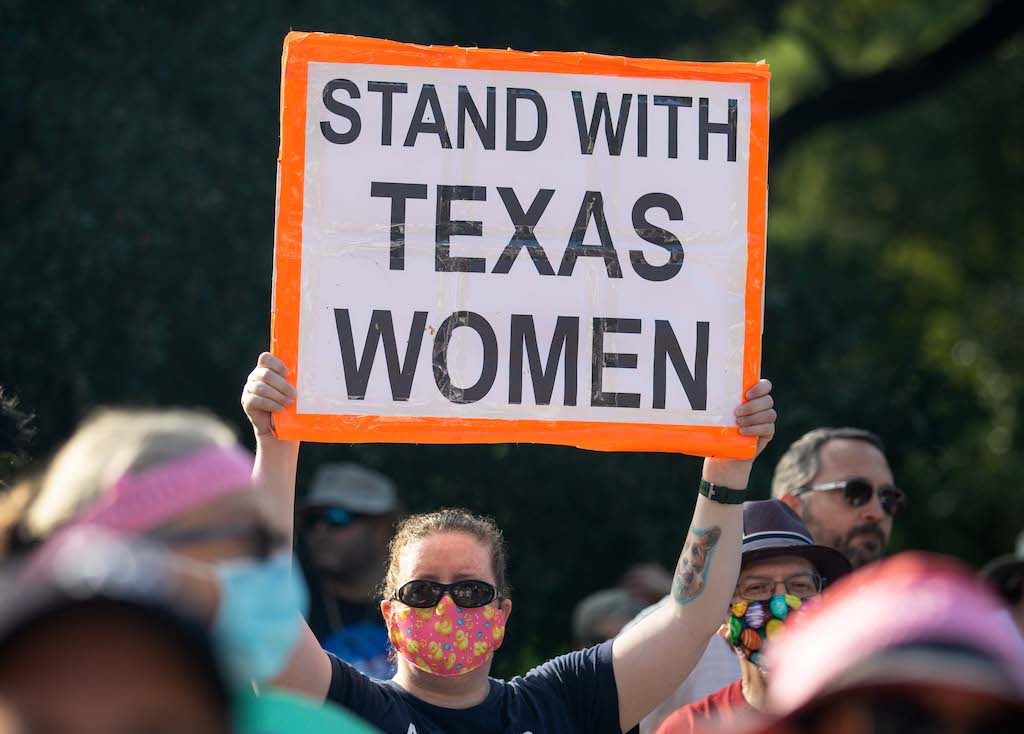
Demonstrators rally against antiabortion laws at the Texas State Capitol in Austin, Texas. (Montinique Monroe / Getty Images)
As we brace for the imminent loss of the protections offered by Roe v. Wade and a future without the federal right to legal abortion, access to care is increasingly going to be determined by the state, and maybe even the city, that a person lives in.
It remains to be seen how states hostile to abortion access might try to enforce abortion bans across state lines. Connecticut recently passed the Reproductive Freedom Defense Act, a law that will protect medical providers and patients seeking abortion care in Connecticut who may be traveling from states that have outlawed abortion. Other states like New York are dedicating funding for abortion providers and nonprofit organizations to increase access to care, including support for people traveling to the state. Going forward, we’ll continue to see a patchwork of laws and resolutions at the local level, as blue cities in red states and blue states in red regions use whatever legislative tools they can to protect and expand access to reproductive health care.
In Texas the situation is urgent. Since Senate Bill 8, which bans abortion care after around six weeks of pregnancy and allows private citizens to sue providers or anyone suspected of aiding and abetting an abortion, was passed in September 2021, many patients have already been forced to travel out of the state for care. Abortions in Texas dropped 60 percent in the first month of the ban. Abortion funds like the Frontera Fund and the Lilith Fund are connecting patients with resources, funding abortion services, and increasingly acting as travel agents for people seeking care.