A New Texas Law Puts a Bounty on Abortion Care Providers’ Heads
Texas’s new “heartbeat bill” offers private citizens $10,000 to successfully sue organizations that help women get abortions. It’s a public subsidy for the anti-abortion movement that harms working-class women.
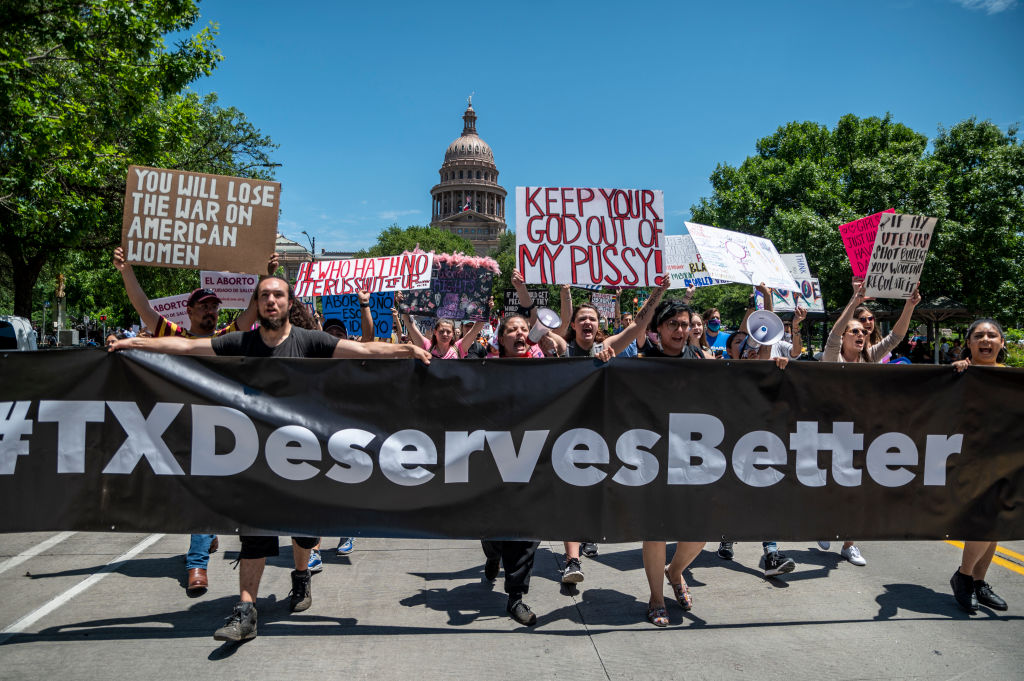
Pro-choice protesters march down Congress Avenue at a protest outside the Texas State Capitol on May 29, 2021 in Austin, Texas. (Sergio Flores / Getty Images)
In the past few years, anti-abortion activists have had great success in state legislatures passing so-called “heartbeat bills,” which outlaw abortion six weeks into a pregancy. The laws are supposedly designed to ban abortion upon detection of a “fetal heartbeat,” though that term is misleading at best. While ultrasounds can detect a flutter of activity from an embryo at six weeks, that embryo is not yet medically deemed to be a fetus and has not yet developed a heart.
Six weeks after conception is not long enough to gain a heartbeat. It’s also not usually enough time for a woman to miss a period, confirm pregnancy, find a provider, and schedule and complete an abortion procedure. Proponents of six-week bans know this. Their strategy is to institute an effective ban on abortion without outright prohibiting it, which remains unconstitutional.
Nearly a dozen states have passed “heartbeat bills” since 2018 alone, but none have actually gone into effect, since they violate the precedent first established by Roe v. Wade and then modified by Planned Parenthood v. Casey, which holds that states can’t rule abortion illegal before twenty-two weeks. This legal precedent is set to be challenged, but until it’s overturned, states’ six-week bans are tied up in litigation.