Annette Fascinates but Doesn’t Convince
Leos Carax’s Annette, starring Adam Driver and Marion Cotillard, is audacious. But the film thwarts its own truth-telling ambitions by refusing to put its characters’ inner turmoils in dialogue with anything but themselves.
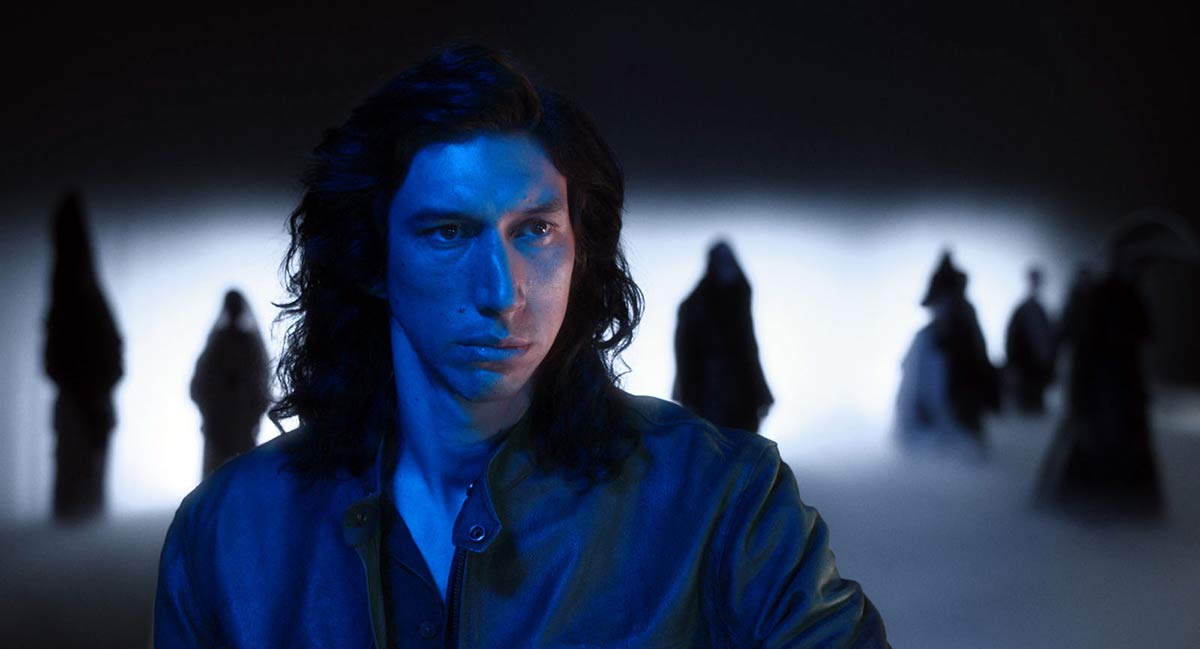
Adam Driver in Annette. (Photo: Amazon Studios)
I think five people walked out of the theater. First, a couple, after the puppet baby showed up on the screen. Then someone who’d come solo, seemingly just losing their patience. And then, finally, a couple a few seats away from me. I’d spotted them as I walked up toward the back of the theater to find a seat; the lights were still on overhead, and they already looked uncomfortable. When Marion Cotillard’s character reemerged from the ocean as a resuscitated sea corpse, body ravaged by saltwater and barnacles, hair in floor-length tendrils held taut by the weight of moisture and reminiscent of sea algae, they got up and left.
So Annette is not for everyone. We know that much.
Leos Carax has always played with the edge, pushed film and its concomitant parts — allegory, metaphor, plot and its undoings, pacing — to their absolute limit, seemingly seeing how many times he can hit his audiences over the head with an anvil until they really get what he’s trying to say, but not so many times that they die of blunt force obviousness.