How France Continues to Dominate Its Former Colonies in Africa
In France’s former African colonies, imperialist monetary policies from Paris continue to cripple domestic economies and undermine democracy. Colonialism in Africa won’t have meaningfully come to an end until true economic sovereignty is allowed to flourish.
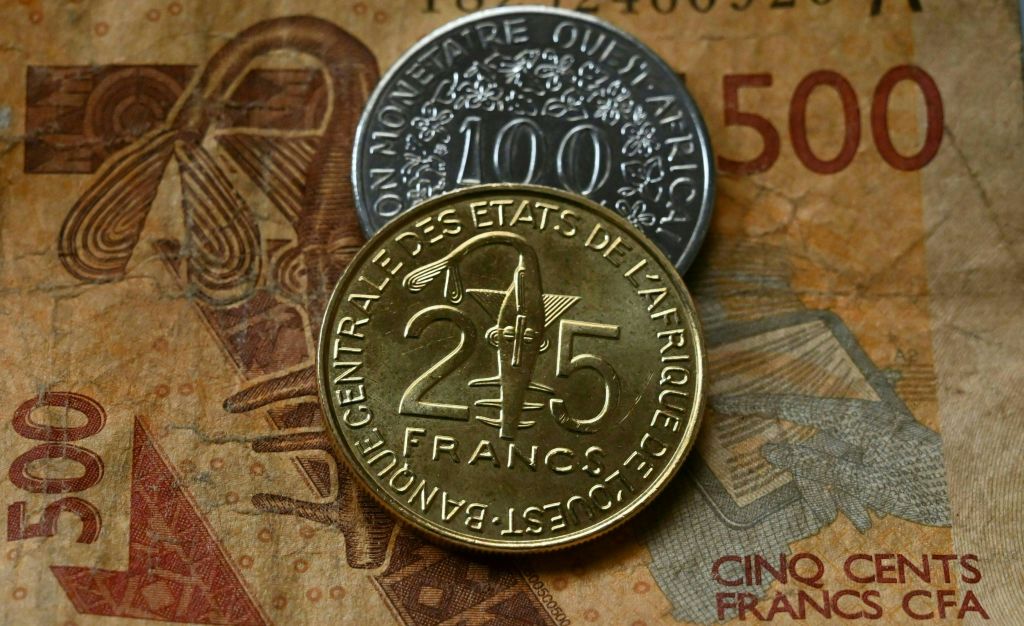
Small change of the CFA franc currency. (Issouf Sanogo / AFP via Getty Images)
The economics of sub-Saharan Africa burst into the headlines in the first week of March. As Ngozi Okonjo-Iweala assumed office as the first female African director general of the World Trade Organization, mass youth protests broke out in Senegal over deteriorating economic conditions. Sweeping in to help everyone make some sense of the situation was the English translation of Africa’s Last Colonial Currency: The CFA Franc Story by Ndongo Samba Sylla and Fanny Pigeaud.
The book lays out the French state’s continuous meddling in Africa — a master class in capitalist villainy, victim-blaming, and versatility. After the abolition of slavery, huge “reparations” were paid to the French former slave owners. These were used in part to establish colonial banks in Africa, later joined by others, which would strive to ensure that French domination would endure post-slavery by maintaining “the colonial pact.” This pact involved the deliberate underdeveloping of the colonies’ economies, their forced reliance on raw material exports, and a French monopoly on shipping, exports, and imports. The CFA franc was the currency designed by France to ensure French control survived colonialism’s official demise.
To learn more about it, Jacobin’s Chris Dite sat down with Ndongo Samba Sylla and Fanny Pigeaud to discuss their book as well as recent events on the continent.