The Roman Road to Capitalism and the Rise of the West
Historian Walter Scheidel claims to have found the surprising secret of Europe’s rise to world domination: the collapse of the Roman Empire. Scheidel’s work is an impressive, globe-trotting feat of scholarship, but his argument ultimately fails to convince.
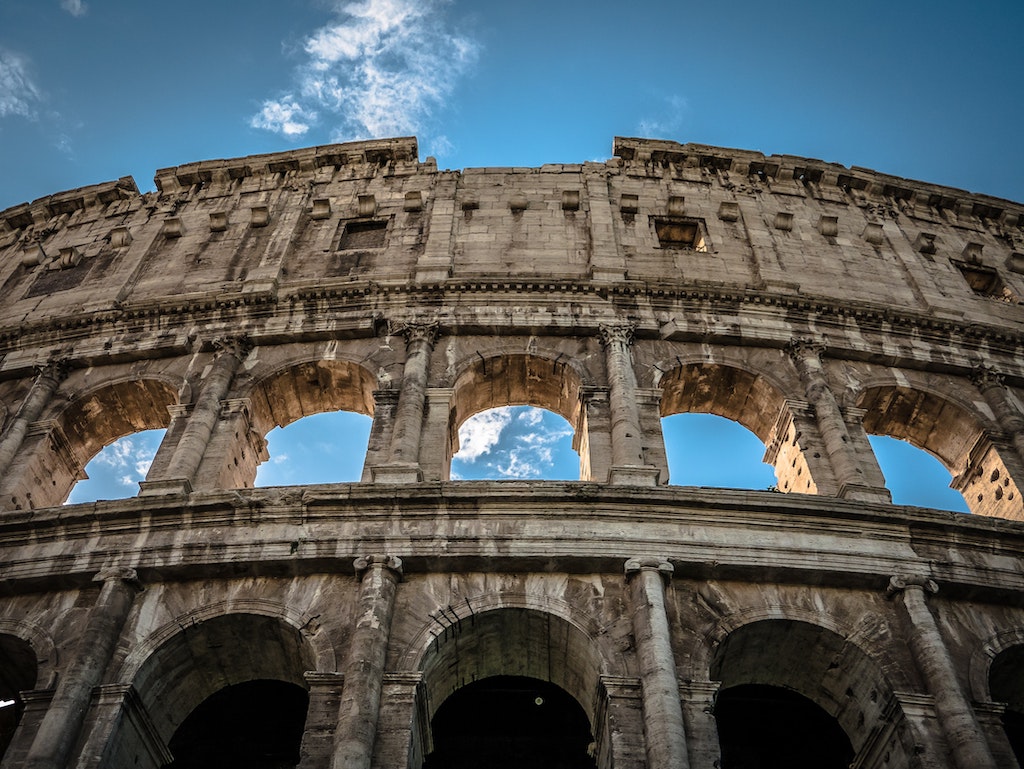
Historian Walter Scheidel attributes the rise of the West to the long absence of any large empire from Europe after the decline of Rome. (Unsplash)
The question of how Europe and its North American offshoot came to dominate the world is of perennial interest to historians. The scholarly debate has produced many different explanations for why and when the West came to rule, from the rise of agrarian capitalism and the uneven development of powerful territorial states to the colonial expansion of Europe itself.
There are several reasons for this diversity of thought. The protagonists of the debate often work with different understandings of modernity, a concept that is hard to pin down. They also have to reckon with the fact that history rarely gives us unambiguous turning points to identify and analyze. Moreover, the various pathways to modernity in different parts of the world were not walled off from one another. Their reciprocal chains of influence make it harder to determine which factor was the crucial one.
Walter Scheidel has never been afraid to tackle the big historical questions in his work. Scheidel’s latest book, Escape from Rome, argues that Europe followed a linear and rather violent evolutionary path. According to Scheidel, the explanation for Western hegemony is simple: with the collapse of the Western Roman Empire in the fifth century CE, Europe could shake off the burden of political constraints and begin its lonely, long, and “painful” march toward modernity.