“Progressive Capitalism” Is Impossible
Progressive economist Joseph Stiglitz means well, but the dream of a “progressive capitalism” will remain just a dream, its horizons always strictly limited by capitalist private ownership.
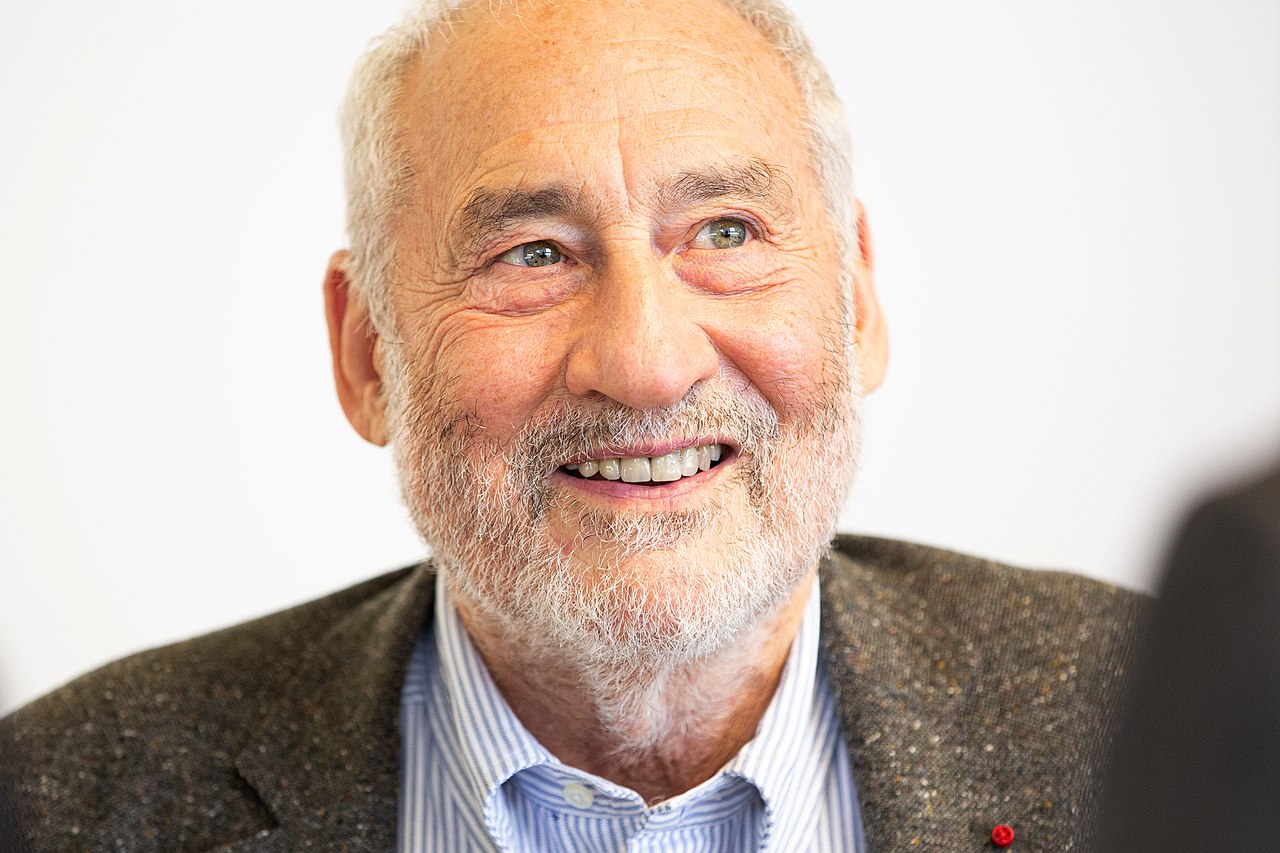
Joseph E. Stiglitz at École Polytechnique, October 16, 2019.Jérémy Barande / Ecole polytechnique Université Paris-Saclay
Joseph Stiglitz’s commitment to a “progressive capitalism” calls to mind the famous response of Gandhi to the notion of Western civilization: “It would be a very good idea.”
If progressive capitalism were within the realm of possibility, perhaps it would be a good idea too. The Nobel-winning economist dwells on how political power corrupts markets and generates inequality, which further fosters the use of political power to further diminish competition, in a negative feedback-loop. He does not consider whether such a condition, under capitalism, might be irreversible. It’s a hopeful book.
Stiglitz is a giant in the field of microeconomics, the branch of the discipline that deals with the behavior of individuals, business firms, and governments. (To be distinguished from macroeconomics, which is about the large aggregates in the economy: employment, national income, investment, and the like). The micro/macro dichotomy is mirrored in debates among left-of-center writers, with the micro gang often focusing on the problem of “rent-seeking,” which arises when there are distortions to hypothetically ideal, competitive markets. Prominent examples include Dean Baker and Matt Stoller.