The University of Phoenix Army
For-profit colleges are making Wall Street firms even richer. Bush’s 2008 GI Bill helped make that possible.
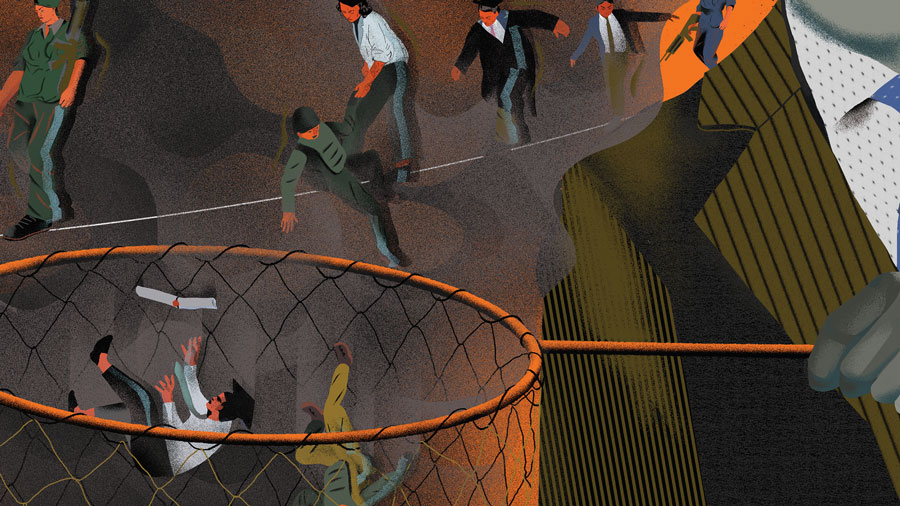
Illustration by Yeyei Gómez
If there was one person responsible for ending the draft in the United States, it was Milton Friedman. At least that’s what his acolyte, former Federal Reserve chairman Alan Greenspan, says.
In the 1960s, Friedman was a vocal opponent of conscription, likening a draft-based army to a “slave force.” To the Chicago Council on Foreign Relations, he argued that “the use of compulsion is repugnant to our society except in cases of dire emergency” — that “it is long past time that we return to our basic heritage, got rid of the compulsion in our military service and return to a voluntary system.”
Not only would a volunteer model be more in line with American traditions, he argued, but it would be cheaper and more efficient. Friedman envisioned a lean military run according to market principles, in which men were fairly compensated for their labor, no different than doctors or lawyers. Richard Nixon became a proponent of Friedman’s ideas, believing that eliminating the draft would defuse the antiwar movement rocking the country.