Massacre and Uprising in Sudan
Sudan’s ongoing but embattled revolution is perhaps the best organized and politically advanced in the region. That’s why the US and Saudi Arabia are determined to crush it.
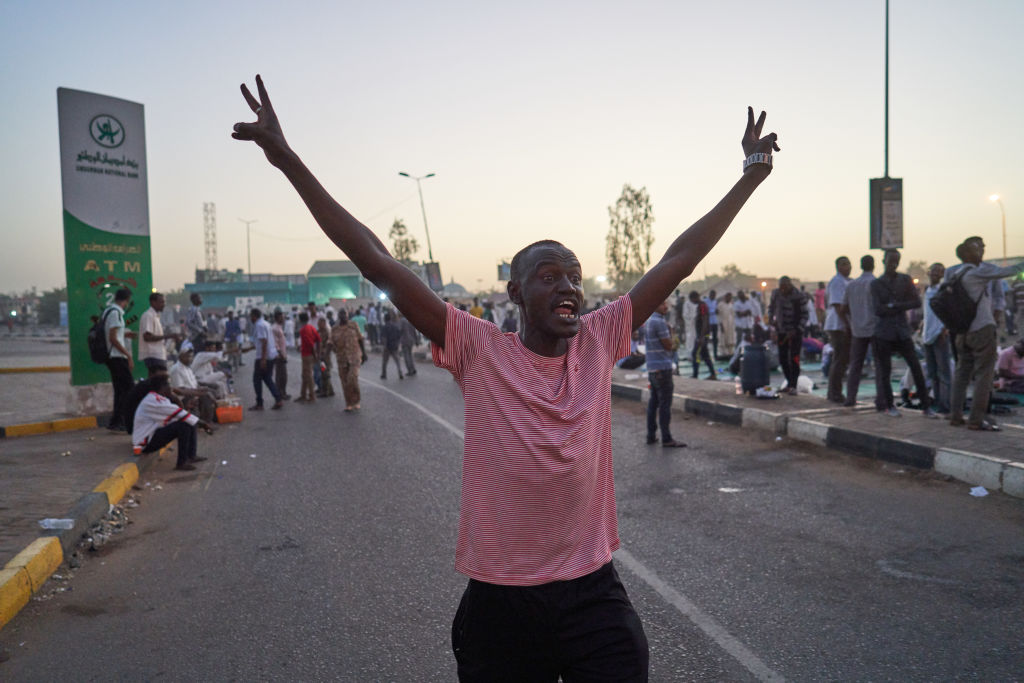
A protester on May 7, 2019 in Khartoum, Sudan. David Degner / Getty
At dawn on Monday, June 3, paramilitary forces raided the sit-in opposite the Army General Command in Khartoum, Sudan, raining fire on protesters and bringing an end to six months of a largely peaceful uprising. Soldiers broke through the demonstrators’ barricades, burnt their tents to the ground, and shot at and beat protesters. Witnesses spoke of soldiers shooting indiscriminately, throwing bodies of slain protesters into the Nile, and raping two of the medics at the sit-in.
Within forty-eight hours, the death toll rose to over a hundred, as tens of bodies were recovered from the Nile. Five hundred more were injured in what could only be described as a premeditated massacre.
The sit-in outside the military headquarters had become the focal point of the ongoing Sudanese Revolution, with students and professionals having camped out to protest the ruling military regime since early April. Led by the Sudanese Professionals Association, an umbrella group of trade unions that had previously been banned by the regime, the uprising maintained a nonviolent and highly organized character, culminating in a two-day general strike at the end of May.