“We Want to Take Sudan From This Dark Corner to a Bright Future.”
In only a few months, the Sudanese revolution ended Omar al-Bashir’s authoritarian rule and won an unprecedented transition to a civilian government. We spoke to one of the revolution’s many women leaders about the mass civil disobedience that defeated the regime.
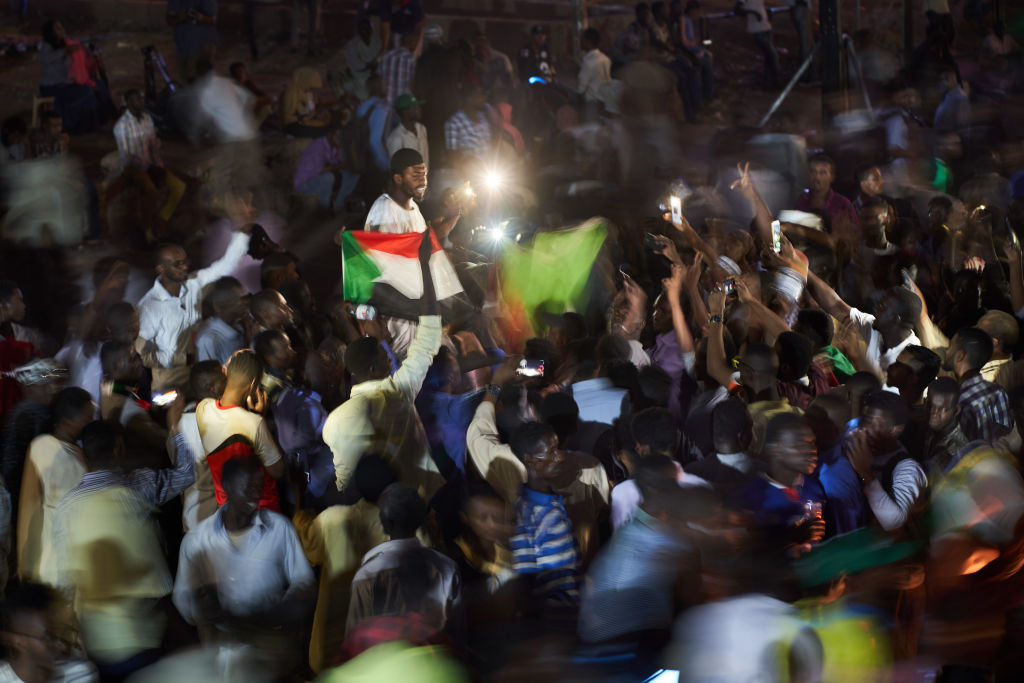
As the lead protester reads each point, the crowd around him shouts “revolution” at the sit-in on May 06, 2019 in Khartoum, Sudan. (David Degner / Getty Images)
On August 4, 2019, the Sudanese military council signed an agreement with Freedom and Change, a body representing the country’s mass protest movement. The agreement establishes the structures and powers of a transitional government that will lead the country out of almost three decades of authoritarian rule, with the expectation of elections in three years. It has been hailed as a major victory by protest leaders, who secured their terms on three key sticking points in several tense months of negotiations: limiting the participation of the military council in transitional structures, stripping military leaders of absolute immunity from prosecution, and subordinating the infamous Janjaweed militia to the general command of the armed forces.
The agreement follows more than eight months of protests, sit-ins, and political mass strikes across the country. At the forefront of the uprising has been the Sudanese Professionals Association (SPA), an umbrella coalition of seventeen white-collar trade unions that had been officially banned in the country since its founding.
SPA activist and geophysics professor Nuha Zein represented the group at the 2019 convention of the Democratic Socialists of America (DSA). DSA delegates Ella Wind and Niall Reddy conducted this interview with her on the day the constitutional agreement was announced.