Africa’s Road to Democracy
Democracy in Africa won't come from political elites. It will come from below, in the streets and through popular movements.
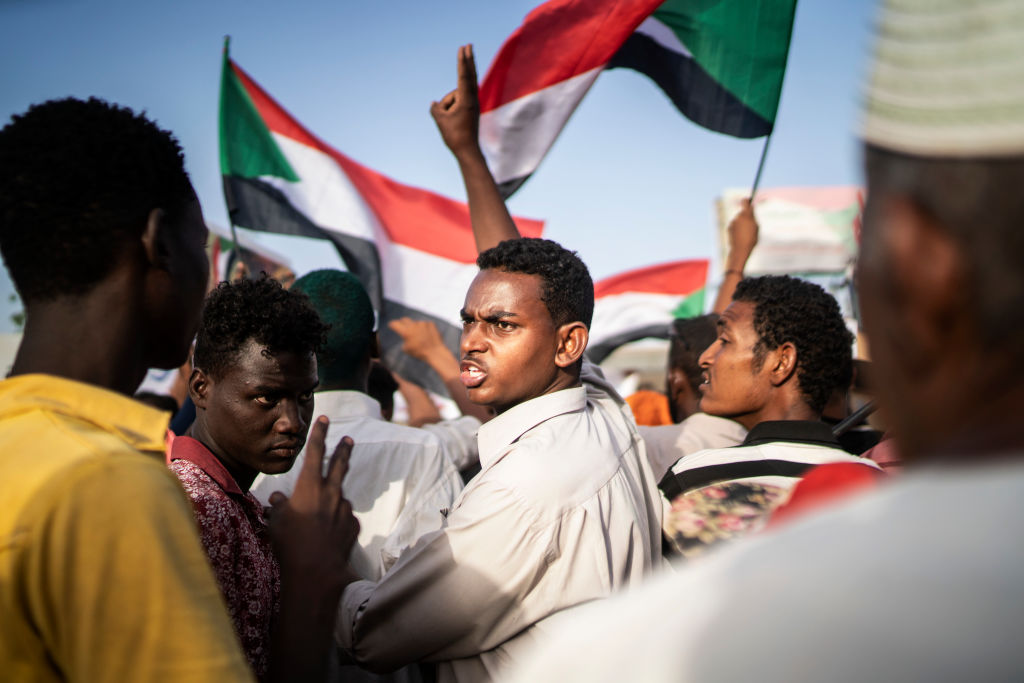
Protestors arrive in the main gathering point to protest against the military junta on April 27 in Khartoum, Sudan.Fredrik Lerneryd / Getty
There is much talk today of “democratic backsliding” across the globe, as liberal commentators rue the rise of “populists” of all persuasions and accuse new leaders of threatening the rule of law. Freedom House, always a good barometer of the foreign policy establishment, titled its 2019 report “Democracy in Retreat.” Africa has not been excluded from these analyses: Foreign Affairs, for instance, published an essay in January whose title announced “The Retreat of African Democracy.”
Of particular concern to commentators is so-called “Third Termism.” The Council on Foreign Relations denounces this new “contagion” spreading “from Burundi to Uganda to Cameroon” as “many African leaders [resist] term and age limits on their tenures, altering constitutions if necessary and personalizing executive power.”
Yet the handwringing over Third Termism assume that these leaders’ first and second terms were themselves legitimate. Take Uganda, where President Yoweri Museveni was first elected in 1996, ten years after coming to power. In 2005, facing a constitutional limit of two terms, he easily had the restriction removed and captured his third term the following year. He won his fifth term in 2016 and is poised to run again in 2021.