A Marxist in the European Parliament
- David Broder
Last week’s elections produced grim results for the Left across most of the continent. But in Belgium, the Workers’ Party made a historic breakthrough.
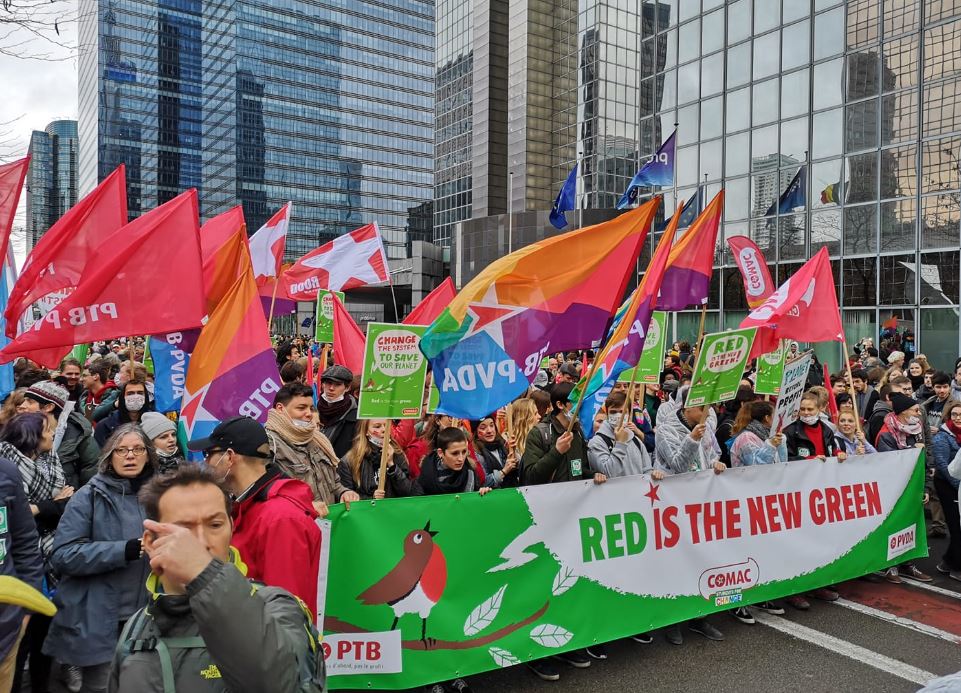
A Workers’ Party of Belgium climate demonstration on December 2, 2018. Marc Botenga / Facebook
Of orthodox Marxist-Leninist background, the Workers’ Party of Belgium has in recent years begun to look like one of the most dynamic forces on the European left. Sunday’s elections only confirmed this picture. While the vote for the EU Parliament in Brussels saw setbacks for the radical left across most of the continent — the GUE/NGL group fell from fifty-two seats to just thirty-eight in the 751-member assembly — the leading exception was in Belgium itself.
The far right is, here as elsewhere in Europe, a dangerous force. The Flemish-nationalist Vlaams Belang made strong gains in Sunday’s regional, national, and European elections, which were held simultaneously after the right-wing government fell in a dispute over migrant numbers. Yet just as big a story on election night were the advances for the Workers’ Party (PTB), which scored almost 9 percent of the vote nationally, more than doubling its support.
As well as increasing its number of MPs from two to twelve and electing a host of members in Belgium’s regional assemblies, the PTB also made a breakthrough in the European election, as Marc Botenga became its first member of the EU Parliament. Jacobin’s David Broder spoke to Marc about the reasons for the PTB’s success, building a social alternative to the far right, and the wider difficulties for the European left.