The Crisis in Sri Lanka
Sri Lanka is being convulsed by political crisis. A lasting solution will require transcending the politics of ethnic nationalism and neoliberal technocracy.
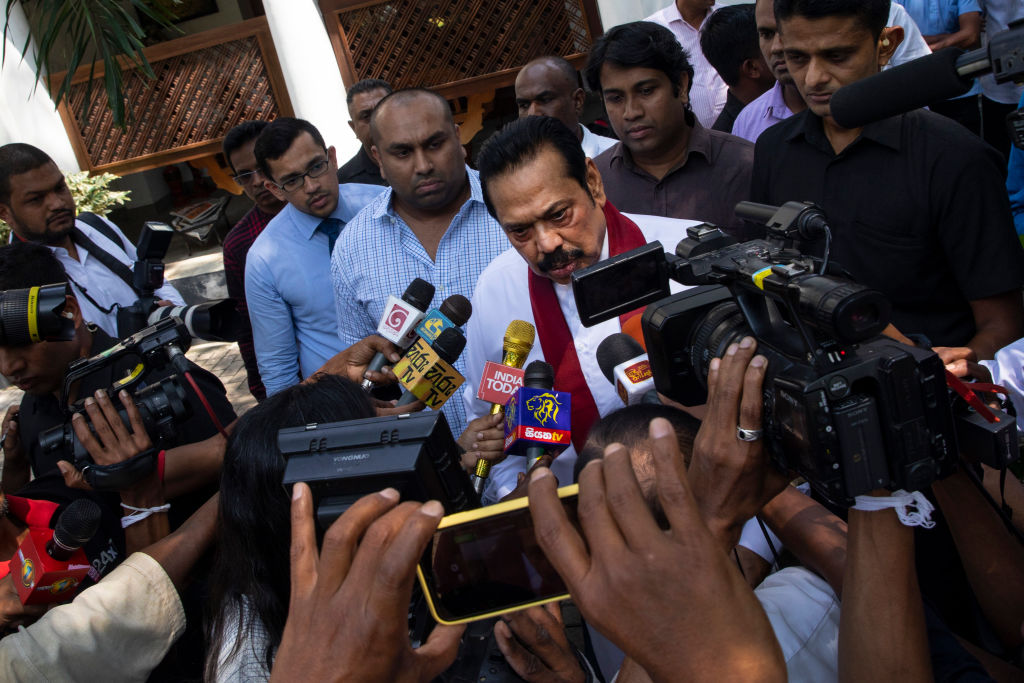
Mahinda Rajapaksa speaks to the media on November 11, 2018 in Colombo, Sri Lanka. Paula Bronstein / Getty
“In the name of God, go!” Rarely have these words of Oliver Cromwell been recycled with such farce and frequency as during Sri Lanka’s recent political crisis, not least by parliamentarians addressing rivals. As far as crises go, however, it was a remarkably peaceful affair outside of parliament and unrelated to any kind of revolution. Everyday life continued as usual even in Colombo despite extra-bold newspaper headlines, which were greeted in the distant North by “near silence.”
Yet there was no shortage of drama and spectacle. In the early days of turmoil, parents were advised to cover their children’s eyes when footage appeared on TV from parliament, where proceedings were disrupted by MPs engaged in fistfights, flinging furniture, drawing knives, and throwing chili pepper at ostensible opponents in the chamber. Curious foreign journalists, seasoned diplomats, and local NGOs minding human rights rushed to warn of an impending “bloodbath.” In such wishful thinking, one could be forgiven for sensing a yearning for “external intervention.”
The crisis seemed to appear out of nowhere on the evening of Friday, October 26, 2018 when President Maithripala Sirisena abruptly removed Prime Minister Ranil Wickremesinghe of the United National Party (UNP) from office and appointed in his stead the former president Mahinda Rajapaksa. Sirisena himself had defeated Rajapaksa in the last presidential election on January 8, 2015, having defected in late 2014 from a senior position in Rajapaksa’s United People Freedom Alliance (UPFA) regime to become the surprise but successful candidate of the United National Front (UNF) opposition.