Sinn Féin Is Having a Good Brexit
Thanks to the dogmatism of Northern Ireland’s Unionists, Sinn Féin gets to have it both ways: shielding its voters from a hard Irish border while boosting the chances of reunification.
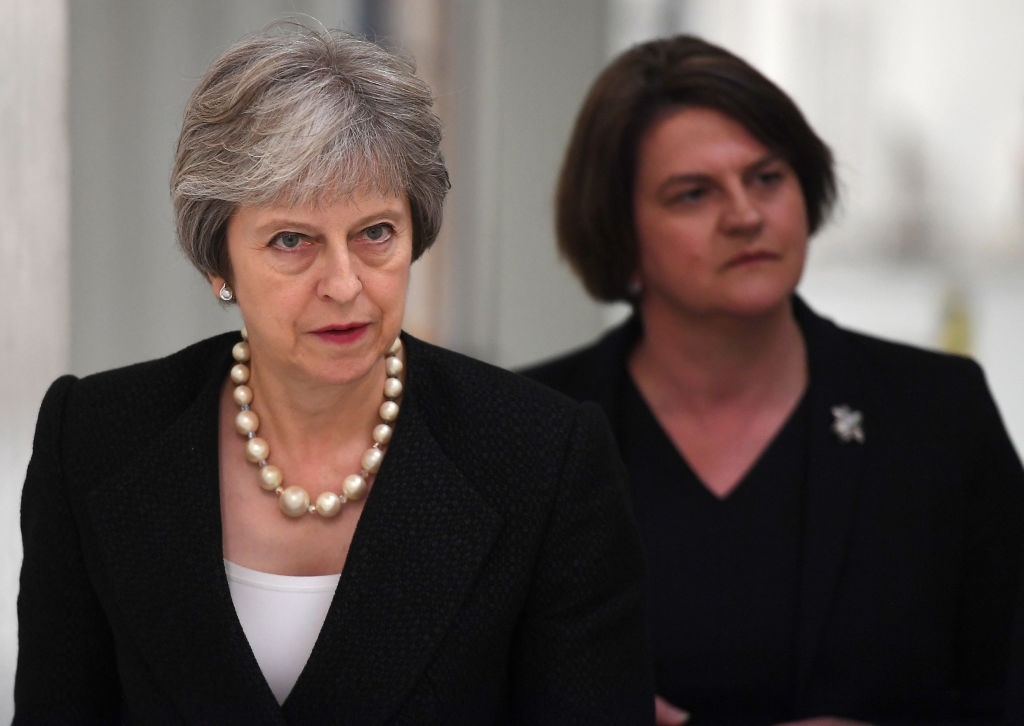
British Prime Minister Theresa May and Arlene Foster, the leader of the Democratic Unionist Party (DUP) visit Belleek Pottery, on July 19, 2018 in St Belleek, Fermanagh, Northern Ireland. Clodagh Kilcoyne – WPA Pool / Getty Images
A calling card for some of the most ignorant people in British politics is an obsession with the idea of abstentionist Sinn Féin members of parliament storming the doors of the House of Commons, pledging allegiance to the Queen, and tipping the balance of a close vote at the last minute. The history of the party’s Westminster stance matters little to these political daydreamers. For them, the Irish republican party exists purely to embroider their idle fantasies — bolstering roll call numbers to win short-term political battles rather than maintaining a stance backed by the voters who return them each election.
Sinn Féin voters are aware when they cast their ballots that the candidates won’t take their seats or attend the state opening of parliament with the Queen. The party does still hold offices in Westminster, and lobbies for its constituents’ interests, but its members eschew the chamber, refuse to pledge allegiance to the monarch, and do not take a salary. Their supporters haven’t been duped: if they suddenly took their seats in Westminster it would be a far greater upset to their voters than many English political journalists can grasp.
But insofar as it is possible to have a good Brexit, Sinn Féin are having a good Brexit. Although their ideological opponents, the Democratic Unionist Party (DUP), are propping up Theresa May’s minority government, the DUP have shown they wield little power despite the amount of media fuss they kick up.