Britain’s Secret War in Colombia
For over half a century, a war against Colombian civilians has been waged alongside the war against Colombia’s guerrilla insurgencies. And the British state has supported it.
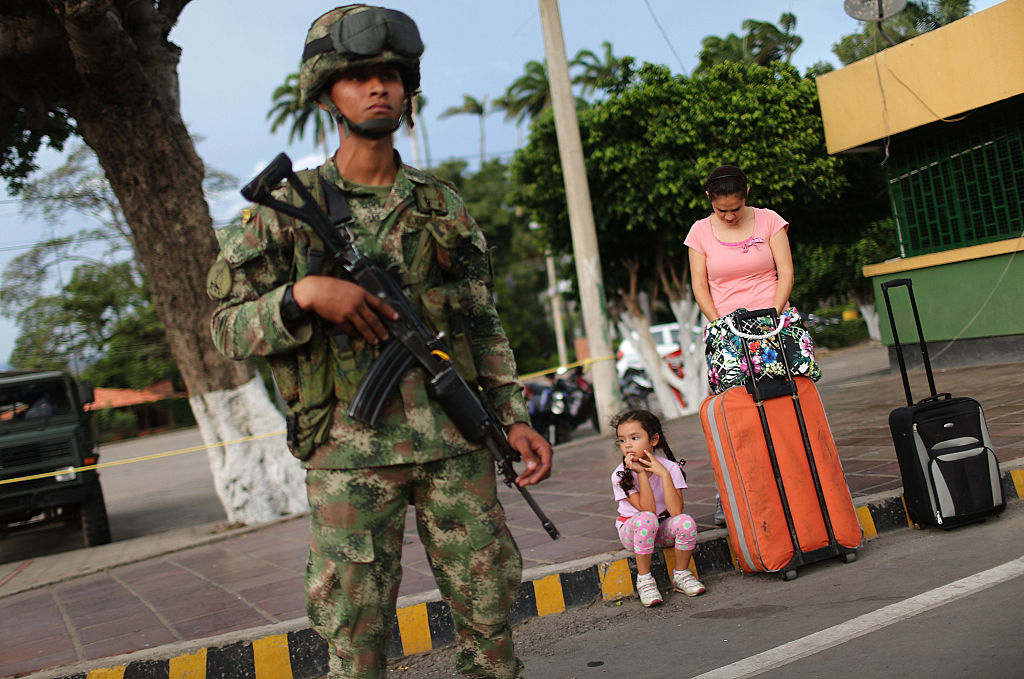
A Colombian soldier in Cucuta, October 2016. Mario Tama / Getty
For a country reportedly “at peace,” violence in Colombia continues at an alarming rate. Since the ratification of the 2016 peace accord between the Colombian state and the country’s oldest guerrilla insurgency, the Revolutionary Armed Forces of Colombia (FARC), over four hundred social activists have been murdered. In 2017 alone, the year following the FARC’s formal demobilization, killings of social activists totalled 170 – an increase of 45 percent on 2016. The surge in this violence following Colombia’s peace accord does not, however, represent a paradox.
For over half a century, a war against Colombian civilian life has been waged alongside the war against Colombia’s guerrilla insurgencies. Beginning in 1989, Britain sponsored this “dirty war” under the pretext of the war on drugs. Kept secret on the grounds of “national security,” British intervention did little in the way of reducing drug supply, yet sponsored political violence designed to promote Western capital interests. To this day, neither the British state nor public has addressed the consequences — nor, to a large degree, existence — of this chapter of British foreign policy.
The Dirty War
British military and police intervention in Colombia supplemented decades of US-sponsored political violence in the country.