In Colombia, Álvaro Uribe’s Conviction Is a Flash Point
Former Colombian president Álvaro Uribe was convicted this month of bribing witnesses, making him the first head of state in modern Colombia to face a criminal conviction. The case is roiling the country’s political landscape.
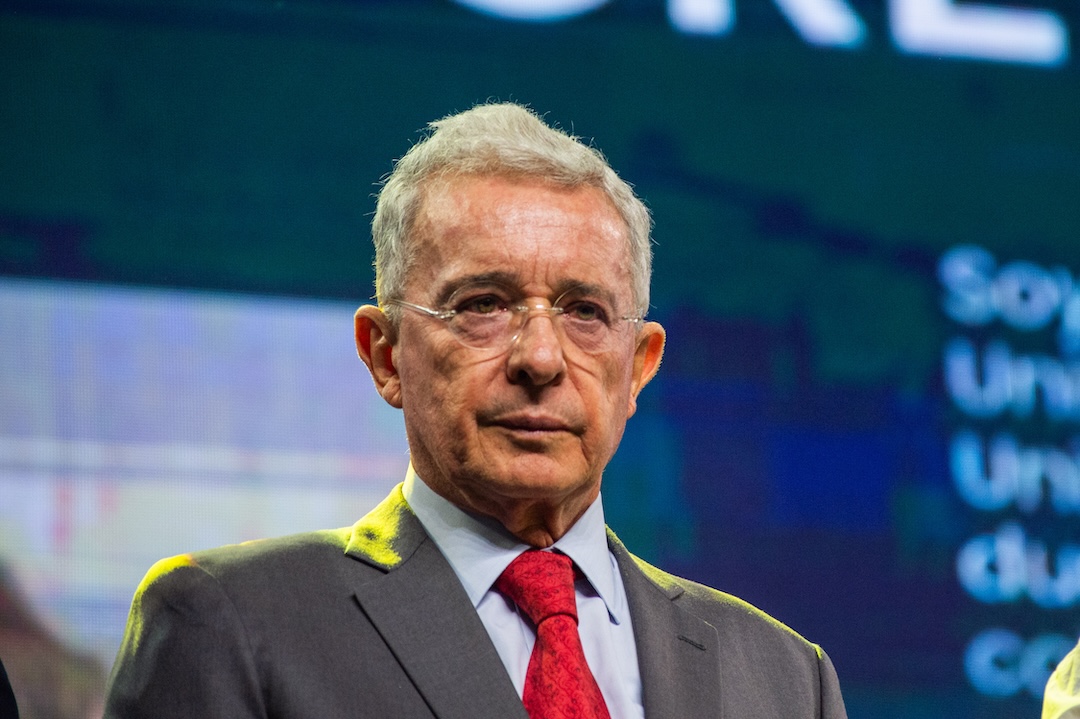
With Álvaro Uribe’s conviction for bribing witnesses now pending appeal, the case is certain to shape Colombia’s political landscape ahead of the 2026 elections. (Sebastian Barros / NurPhoto via Getty Images)
On August 1, former Colombian president Álvaro Uribe was sentenced to twelve years of house arrest, making history as the first head of state in modern Colombia to face a criminal conviction. In a country long defined by entrenched impunity for its political elite, this landmark ruling has shaken the foundations of Colombian politics and set the stage for what many are calling “the trial of the century.”
Until last week, Uribe seemed untouchable. The hard-right politician ruled between 2002 and 2010 under a mano dura (“iron fist”) security policy that earned him approval ratings approaching 80 percent, even as the country’s armed conflict raged on. For more than two decades, he has remained the central figure of the Colombian right, successfully backing two of the four presidents elected since he left office. Yet his legacy is deeply contested: critics point to extrajudicial executions, alleged ties to paramilitaries, and systematic attacks on political opponents — accusations that have never before brought him into a courtroom.
The current case stems not from those human rights allegations, but from Uribe’s actions as a private citizen. In 2012, Uribe sued Iván Cepeda — a prominent leftist who was investigating links between the former president and paramilitary groups — for allegedly manipulating testimony to tie him to paramilitaries. However, in 2018, the Supreme Court of Justice dismissed the case against Cepeda and, in an unexpected turn of events, opened an investigation against Uribe himself. According to the judges, there was evidence that the former president and his lawyers had bribed former paramilitaries to change their testimony to discredit Cepeda and clear his name.