51 Percent Losers
The midterms have given the Democratic Party a boost. But their professional-class politics are a cul de sac — we desperately need a political revolution driven by the needs and aspirations of the multiracial working class.
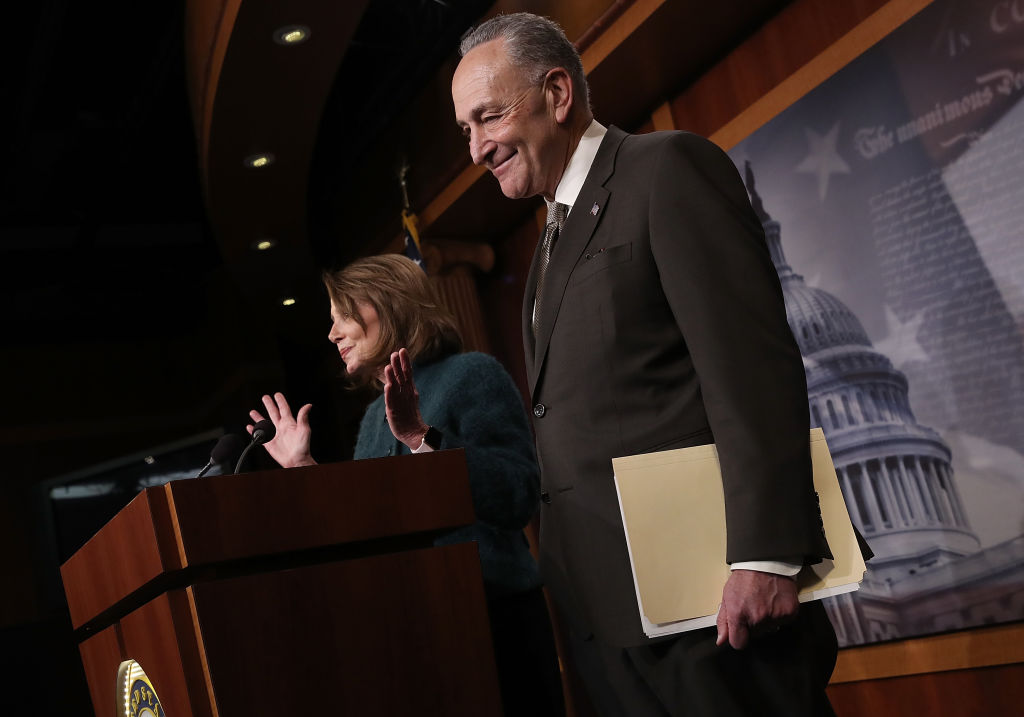
Senate minority leader Chuck Schumer and House minority leader Nancy Pelosi speak at a news conference at the US Capitol on March 22, 2018 in Washington DC. Win McNamee / Getty
The midterm elections produced a range of results as vast, gorgeous, and idiotic as America itself. A glance at the state ballot measures alone suggests the warring impulses at work in our confused society: Idaho expanded Medicaid, Louisiana repealed its Jim Crow–era jury rules, and Missouri raised the minimum wage, but Washington rejected a carbon tax, Colorado declined to further regulate fracking, and California crushed a rent control law. Florida, meanwhile, voted to enfranchise ex-felons, but hobbled its already dysfunctional government by requiring a legislative supermajority to raise taxes.
The national political story was no different. Democrats won a narrow majority in the House and a handful of governorships, but Republicans strengthened their hold on the Senate. An exciting new crop of left-wing legislators won office, but some of the country’s most dynamic candidates were (probably) defeated by Trumpist lapdogs, industry tools, and neoliberal flunkies. Scott Walker lost, but Ted Cruz won: it was that kind of night.
The media reaction to this mixed fruit revealed the Janus face of contemporary liberalism. One cluster of pundits arraigned ordinary Americans for failing to “repudiate” Donald Trump with sufficient gusto. “If the midterms were a test of the country’s character,” pronounced Sarah Kendzior, “Americans failed.” Democrats may have scraped back a few seats in Congress, but the nightmare of Trump remains, and with it the frenzy of shame, disgust, and hostility toward popular government that has saturated liberal commentary since November 2016.