Why Non-Citizens Should Be Allowed to Vote
Undocumented immigrants are part of the political community just like any other resident. They should have full voting rights.
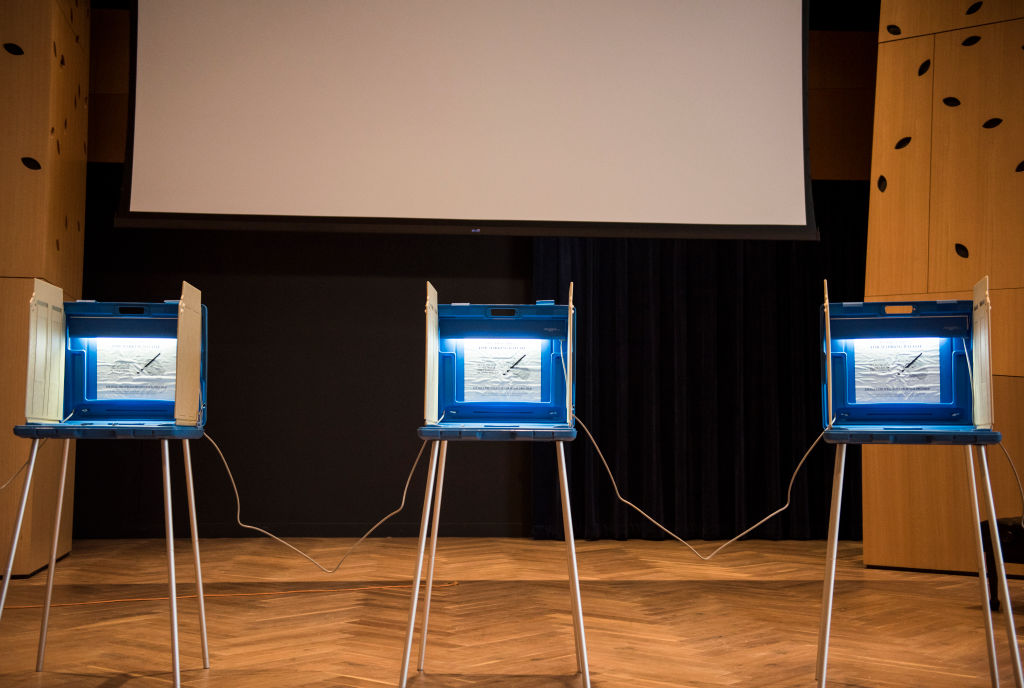
Voting booths are set up at a 2018 Minnesota primary election polling place inside the Westminster Presbyterian Church on August 14, 2018 in Minneapolis. Stephen Maturen / Getty
Imagine: what if today, instead of being consigned to the shadows, the more than 22 million noncitizen immigrants in the US were heading to the polls? Sound preposterous?
Voting by non-citizens is actually as old America itself. From the founding of the American Republic, voting rights were determined not by citizenship but by other criteria, such as race, gender, and property holdings. When women, post-emancipation African Americans, and poor white men were denied voting rights, it was due to elite antipathy — not because they lacked citizenship. Non-citizens in those years picked electoral winners and losers, and even held political office. What brought this period of “alien suffrage” to a close was simple nativism.
The case for noncitizen voting remains compelling: all residents are part of the political community in which they live and should therefore have a say in the local, state, and federal laws to which they’re subject. Without the means of choosing representation, non-citizen immigrants are a non-voting caste — disenfranchised pariahs in their adopted country. Noncitizen voting is a logical step to correct this injustice, and to make the ideals of American democracy more of a reality.