Witches and Class Struggle
In sixteenth-century Europe, witch-hunting was class war by the elite.
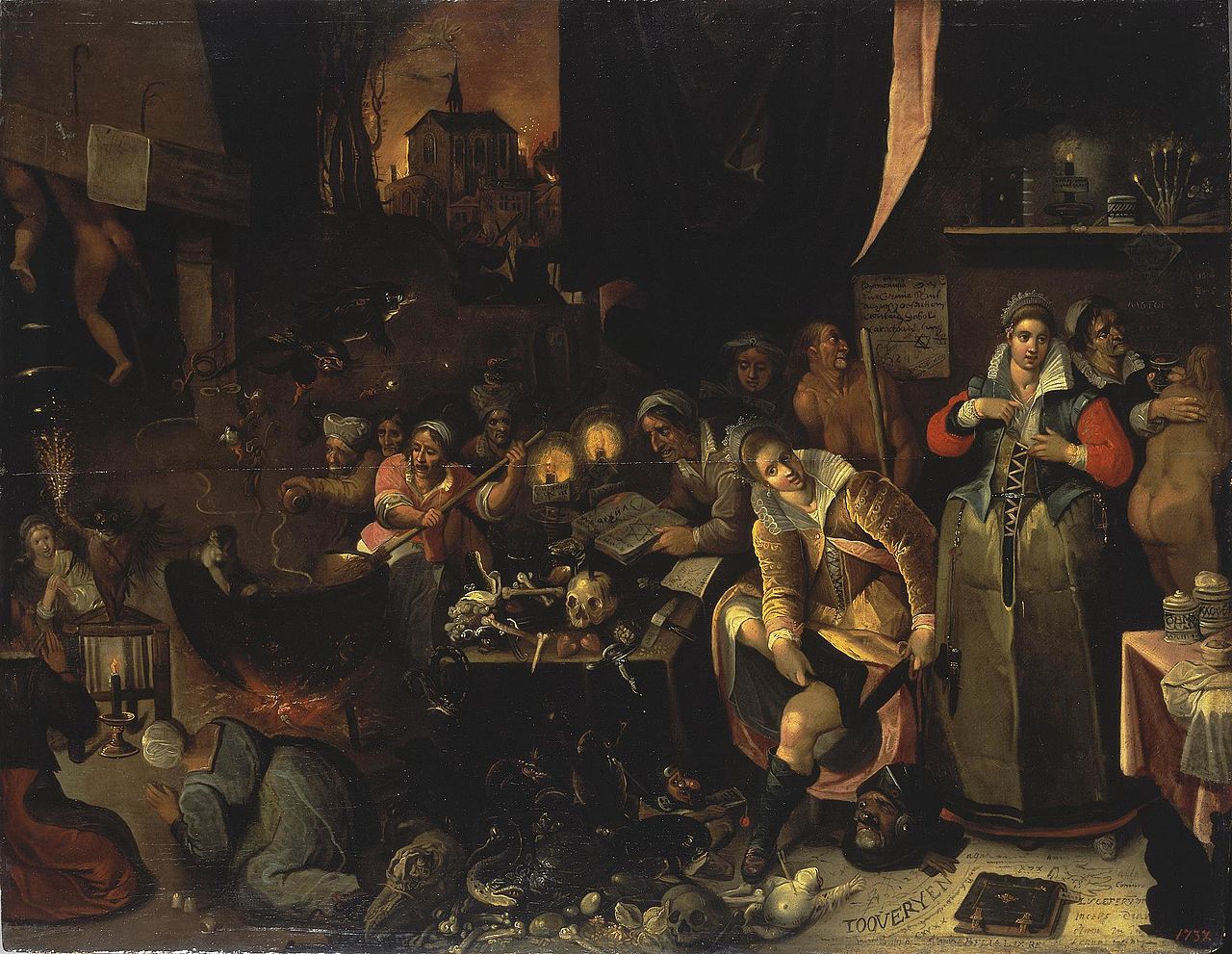
The Witches’ Kitchen by Frans Francken the Younger, 1606.Hermitage Museum / Wikimedia
The witch hunt rarely appears in the history of the proletariat. To this day, it remains one the most understudied phenomena in European history, or rather, world history, if we consider that the charge of devil worshipping was carried by missionaries and conquistadors to the “New World” as a tool for the subjugation of the local populations.
That the victims, in Europe, were mostly peasant women may account for the historians’ past indifference towards this genocide, an indifference that has bordered on complicity, since the elimination of the witches from the pages of history has contributed to trivializing their physical elimination at the stake, suggesting that it was a phenomenon of minor significance, if not a matter of folklore.
Even those who have studied the witch hunt (in the past almost exclusively men) were often worthy heirs of the sixteenth-century demonologists. While deploring the extermination of the witches, many have insisted on portraying them as wretched fools afflicted by hallucinations, so that their persecution could be explained as a process of “social therapy,” serving to reinforce neighborly cohesion, or could be described in medical terms as a “panic,” a “craze,” an “epidemic,” all characterizations that exculpate the witch hunters and depoliticize their crimes.