The Democrats and the Deficit Con
Dick Cheney was right: deficits don’t matter. If only Democrats would learn.
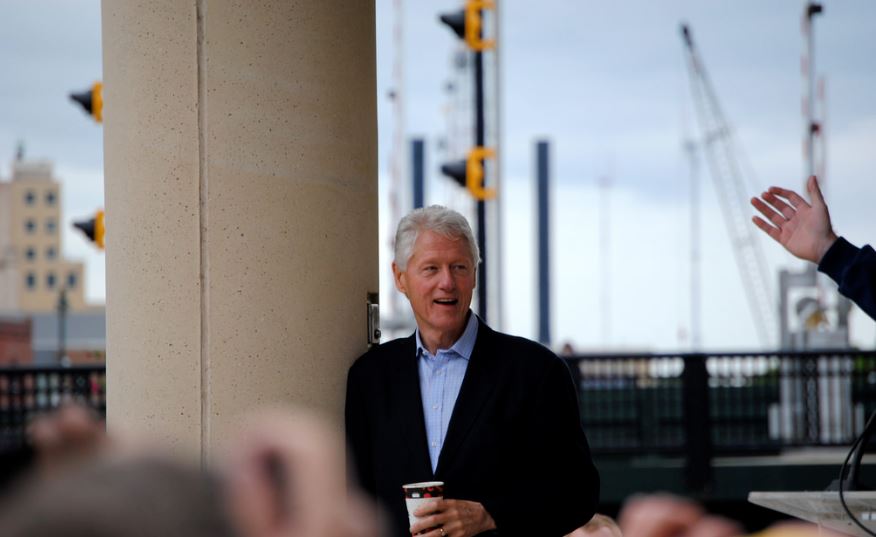
Bill Clinton in 2012. Casey Eisenreich / Flickr
Deficit hand-wringing is a venerable American political tradition, a staple of rhetoric on both sides of the aisle — especially for the party out of power. But here’s the rub: hardly anybody can say exactly how a high deficit leads to serious economic problems, and it’s not actually clear that it does. Increasingly, left-wing (and even not-so-left-wing) economists are urging us to rethink the accepted notion that government debt is a harbinger of a nation’s future insolvency. In fact, these economists point out, it’s far from clear that deficits have any macroeconomic effect at all. Meanwhile, more public social spending is correlated with a host of positive social outcomes for everyone except the wealthiest few.
The deficit-scolding script is familiar: Republicans attack every Democratic effort to increase spending on social programs by agonizing over the nation’s mounting debt, vowing that soaring numbers spell imminent ruin. Democrats claim that this or that military campaign or top-bracket tax cut is bad because it will break the bank — often at the expense of actual political arguments against war or inequality. Not even progressive Democrats — hell, not even Bernie Sanders — can resist the temptation to use this weapon, even though their own progressive policies rely on a diametrically different logic: namely that social investment is important in its own right, and that reducing inequality is more essential to building a healthy society than frugality in the abstract.
Deficit-scolding became a fixture of modern politics in the Reagan years, when government borrowing ballooned thanks to tax cuts and a historic military buildup. At the time, many in the Democratic Party, especially those who earned the nickname “Atari Democrats,” were beginning to set their electoral sights on upscale professional voters, as the power of the organized working class eroded. Though Reagan’s 1984 opponent, Walter Mondale, had a background as a union-friendly New Dealer, he heeded the party’s new political winds by focusing his attack on Reagan’s red ink. “I’m going to raise your taxes,” Mondale famously pledged, prompting the New York Times to applaud his fiscal prudence: