Do We Need Pfizer?
A plan to take on Big Pharma — and create and distribute lifesaving drugs.
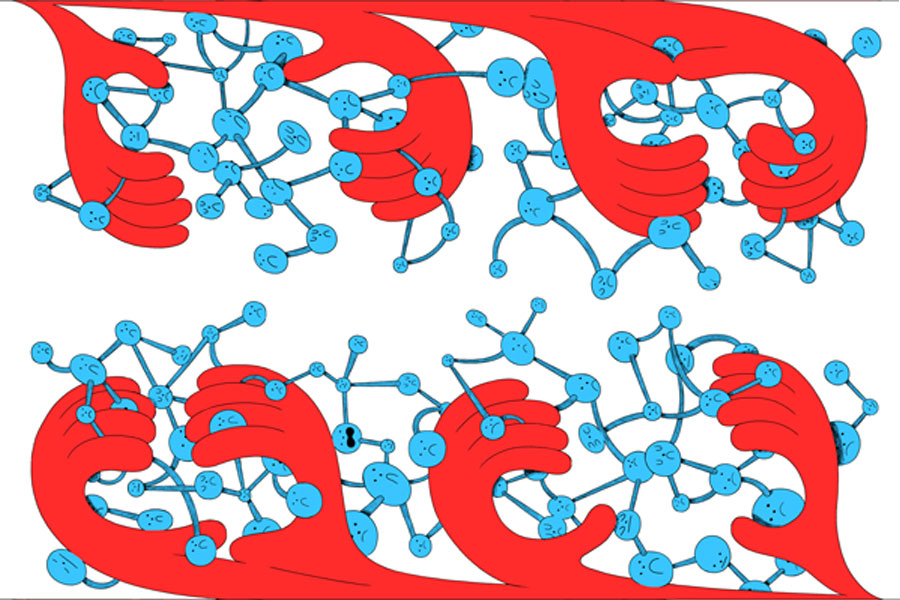
`Illustrations by Michael DeForge`
Around the time of World War I, the Metropolitan Life Insurance Company estimated that a ten-year-old with diabetes could expect to live a mere two or three years more; by World War II, however, it was predicting that such a child could expect to live another forty-five years. A death sentence had been lifted by a team of researchers at the University of Toronto, who in the early 1920s, developed insulin.
Yet according to today’s dogma on drug discovery, this should never have happened: we’re told it is only the promise of prodigious profits — guaranteed by patent protection — that incentivizes the discovery of lifesaving drugs. But two of the key developers of insulin — Frederick Banting and John Macleod — declined, for ethical reasons, to even have their names on the first insulin patent, as noted by Rob Hegele in The Lancet Diabetes & Endocrinology last May. The researchers who did take out the patent did so only to sell it back to their university for $1, later writing that they intended to assure that “no one could secure a profitable monopoly.”
Now, let’s move forward a hundred years or so. Patent monopolies are the source of windfall profits and profound misery. Insulin is modified again and again over the years, and the new versions are patented and sold at high premiums, at the expense of those who need them. During years when Alex Azar — now Trump’s nominee to lead the Department of Health and Human Services — headed the US branch of drug giant Eli Lilly, the company jacked up the price of one modified insulin product by more than 300 percent. And while Azar amassed millions for his service, others did less well — like Shane Patrick Boyle, a young man who couldn’t afford his insulin. “As he waited to fill his expensive prescription, he rationed what he had left, stretching it by taking smaller doses,” Tonic reported. The acid levels in Boyle’s blood began to rise. Then, he died.