Awaiting an Alternative
The Lula conviction signals the end of an era for the Brazilian left. But it's profoundly unclear what comes next.
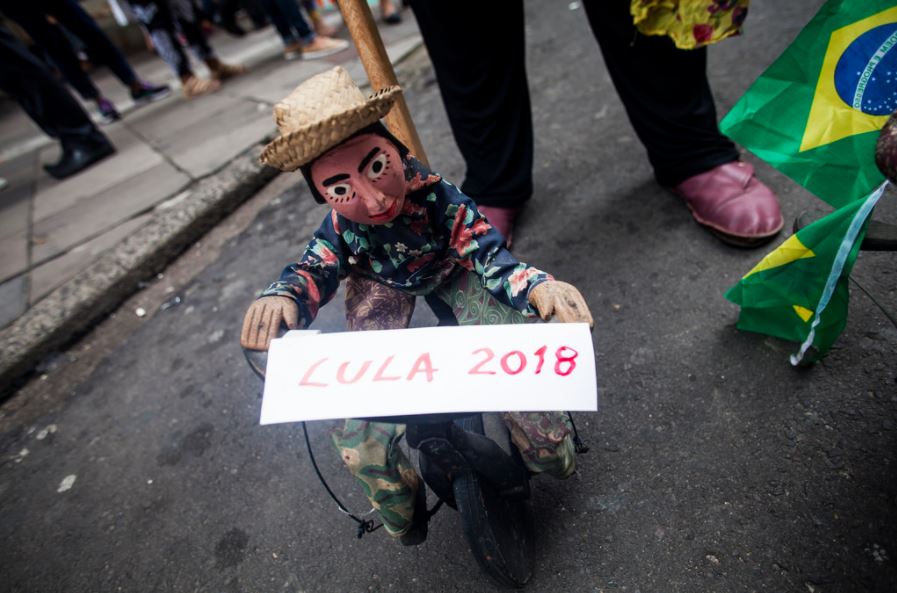
Porto Alegre, Brazil, on January 23, 2018. Mídia NINJA / Flickr
On the day of Lula’s judgment on January 24, I had a serious debate with a political leader from the Brazilian radical left, about what happened after the Workers Party (PT) came into power in 2003. He argued that the organizations of the Brazilian left needed to preserve themselves at this moment, in order to prevent the “Lulista” elite from transforming the political situation into an opportunity to revitalize Lula in the popular imagination and ensure the PT remains the only electoral option for the Left in the 2018 elections.
Though my own political leanings differ from the PT, I believed I had a political reason to think otherwise about the convictions: the defense of Brazilian democracy, a defense that overlaps with defenders of Lula.
In the heat of the debate, my friend and I exchanged words that were not very cordial. Alas, a conversation that reproduced the impatience that is all-too-common in contemporary Brazilian political discussions. I charged him with reproducing an “aesthetic” position, a beautiful image without a more concrete politics. In practice this position reinforces the image of the “post-Lula” left as sectarian and ultra-leftist. I also pointed out that his position was too indifferent to the fundamental conflicts that affect the Workers Party’s base and Lulismo and that will only increase in the near future. To me, it was pointless to defend Lula’s right to compete in the elections as a candidate yet avoid going to the demonstrations in support of this because of appearances.