Information Is Power
How a group of researchers helped strengthen and scale up the anti–Vietnam War movement.
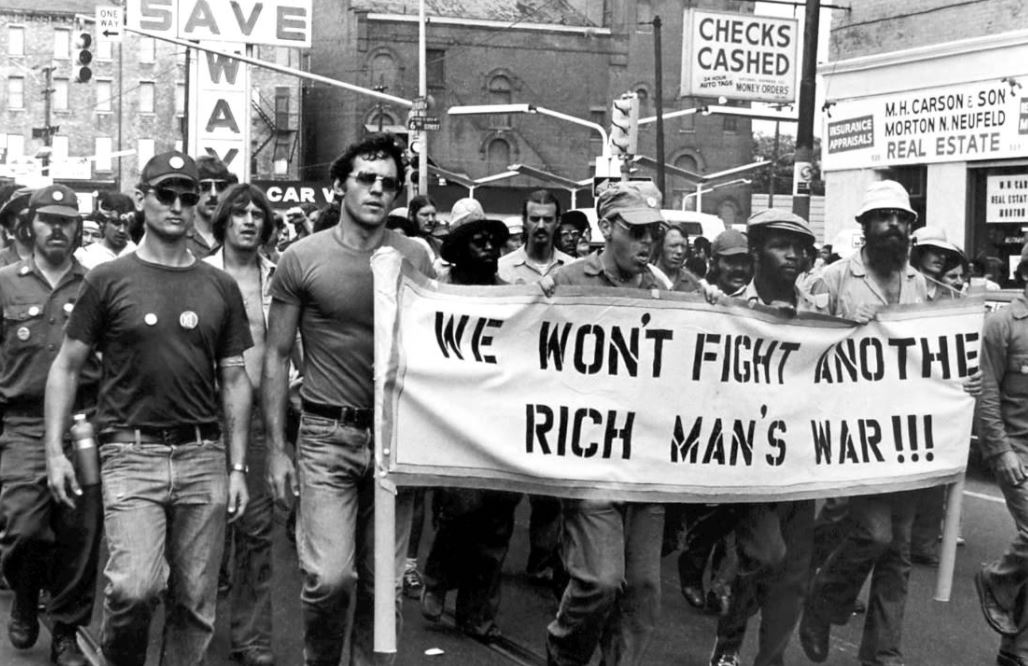
Vietnam Veterans Against the War (VVAW) marches through the streets around 1970.
It was 1969, and the American War on Vietnam seemed unending. Mass outrage over the war had spilled into the nation’s streets and campuses — outrage over the rising heap of body bags returning home, over the neverending spree of bombs that barreled down from US planes onto rural villages, with the images of fleeing families, their skin seared by napalm, broadcast across the world.
Hundreds of thousands of people had begun to resist the war. The fall of 1969 saw the historic Moratorium protests, the largest protests in US history.
But while the passion and determination of the antiwar movement was strong, some felt that hard knowledge about the power behind the war machine was lacking. Who was manufacturing and profiting off of the bombs, planes, and chemicals used in Vietnam? Where did the war machine — its factories, its research labs — exist in the United States? In what states, and in what towns? Who were the companies benefiting from and fueling the war?