The Merkel Effect
As German elections loom this Sunday, cracks may be starting to show in Merkel's radical centrist reign.
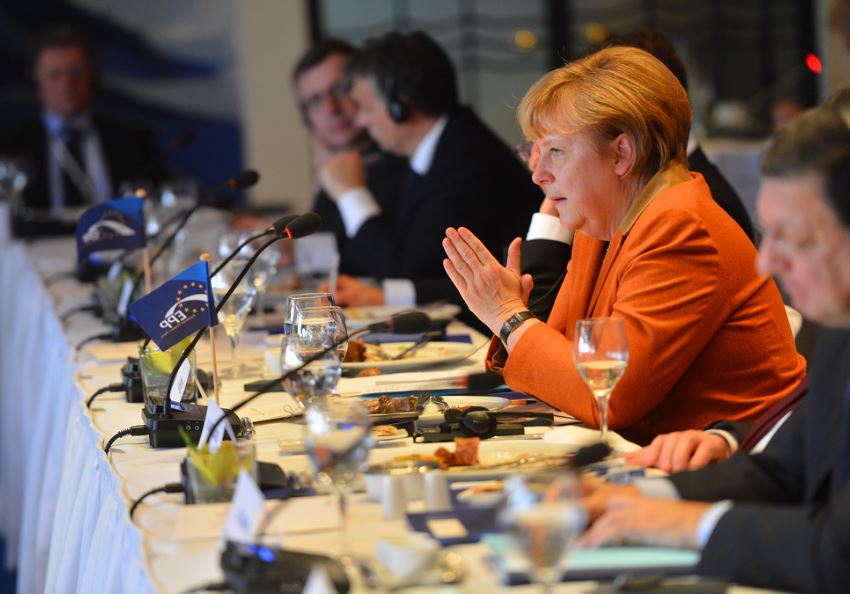
Angela Merkel in 2013. European People’s Party / Flickr
German voters will go to the polls this Sunday to elect a new federal parliament. Angela Merkel remains the clear frontrunner, but things are shifting at the bottom. Thanks to Germany’s strong economic performance and Merkel’s expert moves to “externalize” Europe’s immigration and austerity crises, pushing their consequences beyond German borders, the country has managed to project a calm exterior. But under the surface, German society is beginning to see the same polarization that’s overtaken Europe at large.
Will Merkel’s Christian Democratic Union continue its radical centrist reign? And if cracks start to show in the centrist status quo, will they be forged by the Left or the Right? To discuss these questions and more, Loren Balhorn for Jacobin spoke with the University of Basel’s Oliver Nachtwey.
Loren Balhorn
Angela Merkel has governed Germany since 2005, and seems set to win another term on September 24. Outside of Germany, she is often perceived as cold and bland — far from the kind of charismatic politician who could serve four or five consecutive terms in office. Yet recent polls indicate a moderate surge of popularity. How do you explain this phenomenon, and how much of it has to do with Merkel herself?
Oliver Nachtwey