But at Least Capitalism Is Free and Democratic, Right?
It might seem that way, but genuine freedom and democracy aren't compatible with capitalism.
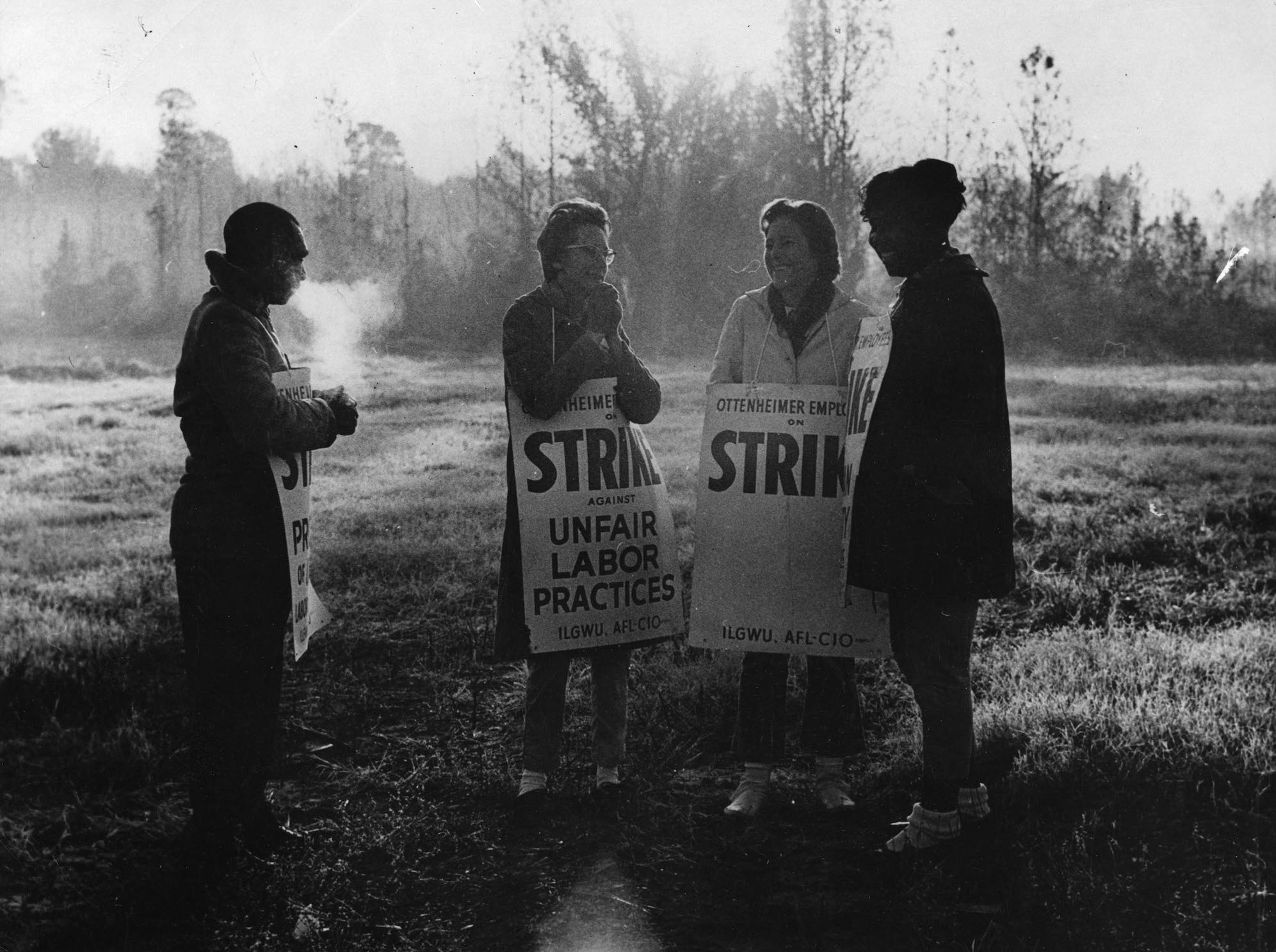
Members of the International Ladies’ Garment Workers’ Union stand in the cold holding strike placards protesting unfair labor practices by the Ottenheimer company (date unknown). Kheel Center / Flickr
In the United States, many take for granted that freedom and democracy are inextricably connected with capitalism. Milton Friedman, in his book Capitalism and Freedom, went so far as to argue that capitalism was a necessary condition for both.
It is certainly true that the appearance and spread of capitalism brought with it a tremendous expansion of individual freedoms and, eventually, popular struggles for more democratic forms of political organization. The claim that capitalism fundamentally obstructs both freedom and democracy will then sound strange to many.
To say that capitalism restricts the flourishing of these values is not to argue that capitalism has run counter to freedom and democracy in every instance. Rather, through the functioning of its most basic processes, capitalism generates severe deficits of both freedom and democracy that it can never remedy. Capitalism has promoted the emergence of certain limited forms of freedom and democracy, but it imposes a low ceiling on their further realization.