Without Workers, We Wouldn’t Have Democracy
All around the world, it wasn't capitalist elites who gave us democracy. It was organized workers.
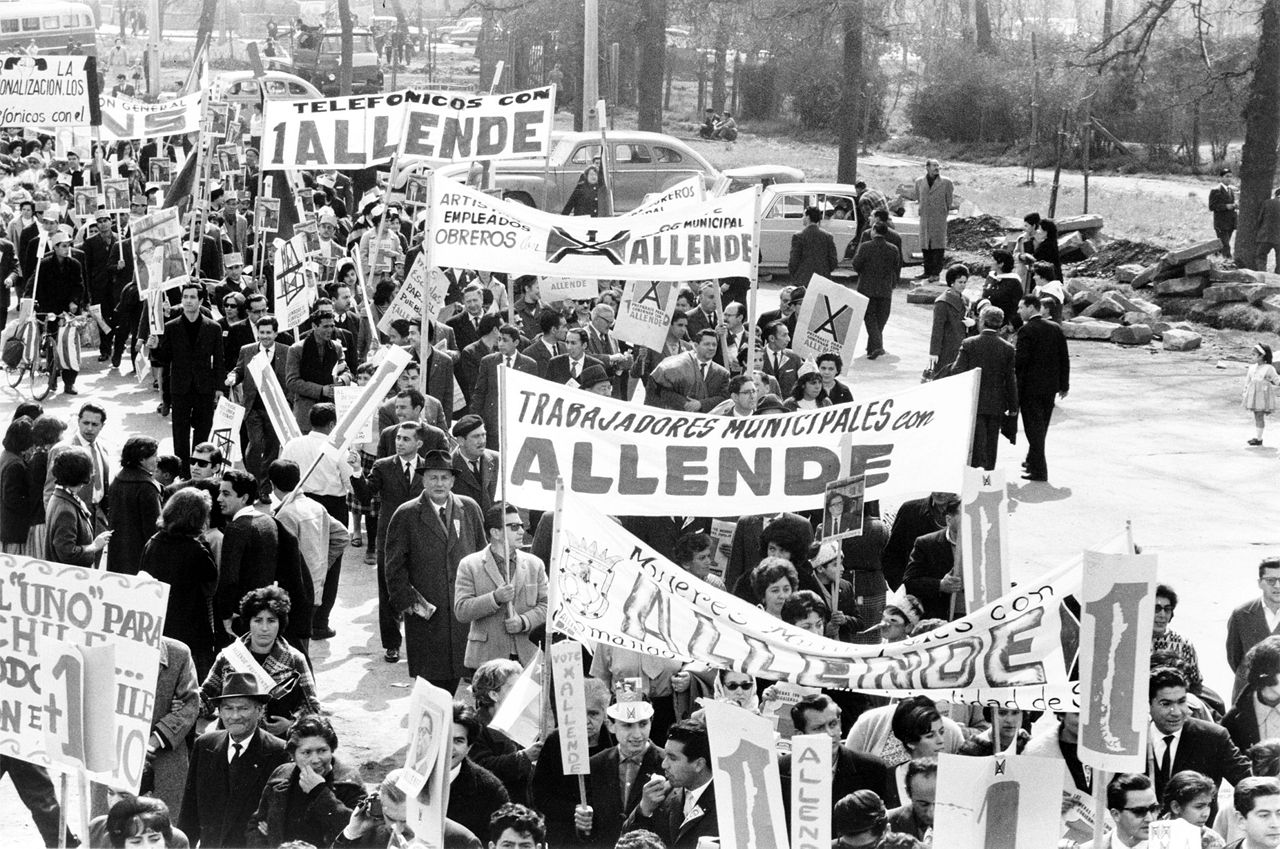
A crowd of people marching to support the election of Salvador Allende for president in Santiago, Chile, March 5, 1964. Wikimedia Commons
Discussions about the state of democracy are suddenly all the rage. And it’s not hard to see why: Bolsonaro in Brazil, Trump in the US, Erdoğan in Turkey, Orbán in Hungary — all point to a resurgent authoritarianism and a diminution of democratic forms. But we can’t understand the current retrenchment without understanding how mass democracy came about in the first place.
In Capitalist Development and Democracy, first published in 1992, a trio of scholars (Evelyne Huber, John Stephens, and Dietrich Rueschemeyer) provide a sweeping examination of democracy’s rise in the twentieth century across three regions: Europe, North America, and Latin America and the Caribbean. Breaking from the conventional story, they argue that capitalism has been crucial to democracy’s ascension not because of its natural symbiosis with popular government, but because it breaks up traditional power structures and generates a larger, more organizable working class. “Capitalism,” they write, “creates democratic pressures in spite of capitalists, not because of them.”
Huber and her coauthors pay special attention to how distributions of power, both domestically and internationally, have opened up or closed off democratic struggles. If a country was on the periphery of the global political order, for instance, domestic reform movements might be undermined by the actions of powerful outside actors (like the United States). If a country had a small working class due to lack of development, it ended up having limited forms of democratic rule at best. In other words, those countries with weak democracies didn’t (and don’t) suffer from some sort of cultural deficiency, but instead “constellations of power” that dampened the ability of “subordinate groups” (like workers and racial minorities) to press for their inclusion in the political process.