A Guide to Hurricane Katrina and Its Aftermath
Hurricane Katrina made landfall on this day in 2005. In the devastating aftermath, the US government abandoned its citizens, intensifying the trauma of the disaster.
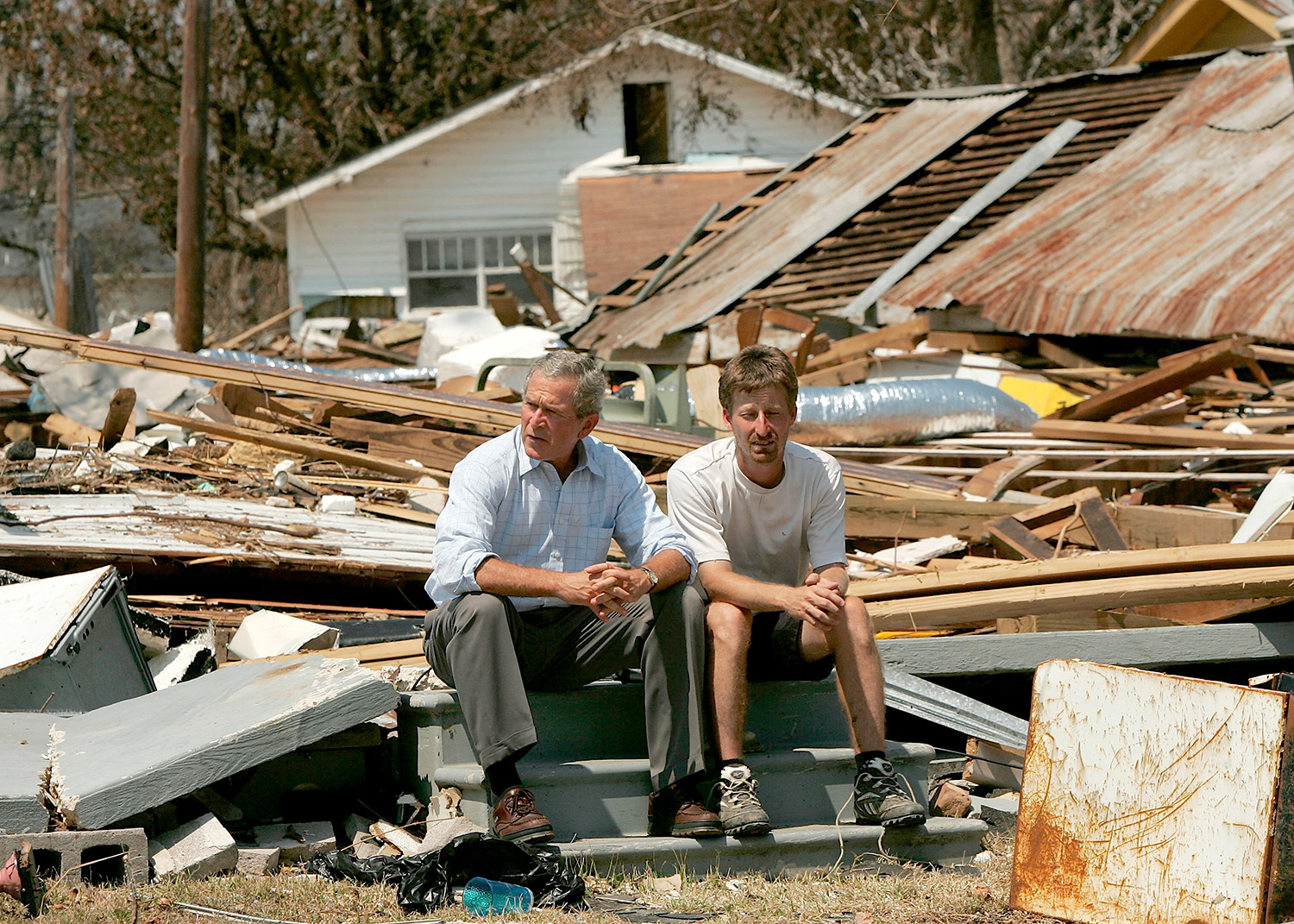
Hurricane Katrina struck the Gulf Coast in 2005, dispersing a city of 500,000, demolishing hundreds of miles of coastline, and causing roughly $81 billion in property damage. It ranks among the worst natural disasters of the twenty-first century, which in only fifteen years has seen such extreme weather events as the 2010 Haitian earthquake, Iran’s Bam earthquake in 2003, and the 2004 tsunami that devastated coastal areas of Indonesia, India, Sri Lanka, and Thailand.
But perhaps the most memorable aspect of the Hurricane Katrina disaster is the United States government’s profound failure to protect and serve citizens in the wake of the storm. President George W. Bush’s lethargic response to the hurricane intensified the trauma of the disaster, prolonging suffering and uncertainty for months after the storm.
In a striking example of neglect, tens of thousands of storm refugees were left for days in the unimaginable filth of the Louisiana Superdome, a football stadium that had suddenly become a “refuge of last resort” for stranded residents.