In Turkey, When Does a Joke Become a Crime?
Comedian Deniz Göktaş spent 88 days in a high-security prison for insulting Turkish President Recep Tayyip Erdoğan. He turned his sentence into a punch line, but the chilling consequences of the case extend far beyond one comedian.
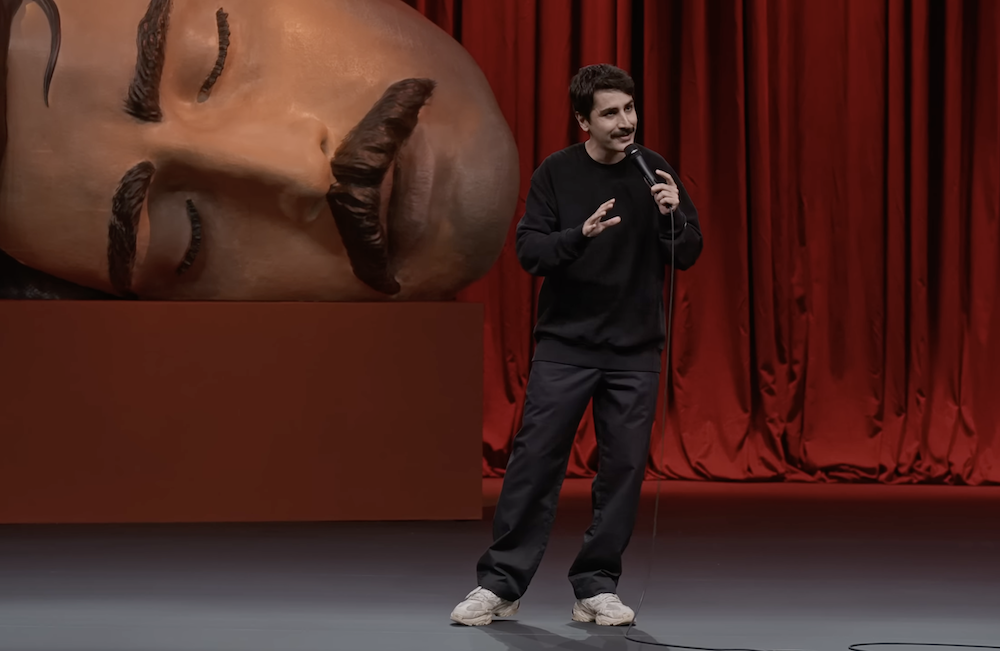
Comedian Deniz Göktaş’s imprisonment over a performance is of a piece with Turkey’s longer history of conflict between political satire and state power. (YouTube)
Have you ever made a joke that offended someone? Maybe they took it personally or stopped speaking to you. A joke can put strain on a relationship or leave someone feeling isolated. But what if the consequences for a joke go far beyond social fallout? What if a comedy performance lands you in a high-security prison cell? For Deniz Göktaş, this question is no longer hypothetical.
Until recently, Göktaş performed for relatively small audiences, playing bars in Kadıköy, an Istanbul district known for political satire, and occasionally in university halls elsewhere in Turkey. He was part of a niche comedy scene.
Things changed when he took his show to one of Istanbul’s most prominent stages and uploaded the performance to YouTube, opening it to a much wider audience. He knew the show might attract attention. Not just because of the words he spoke onstage, but also because the title and stage image played on a grisly visual gag. Ölü Deniz (“Dead Sea”) was a dark play on his first name, Deniz (“Sea”), while an enormous, sculpted image of his face lay on its side as if decapitated.