Abdul El-Sayed Isn’t Backing Down on Medicare for All
Some commentators are claiming that Michigan Senate candidate Abdul El-Sayed once supported Medicare for All and now merely backs a “public option.” Matt Bruenig explains why this is not true.
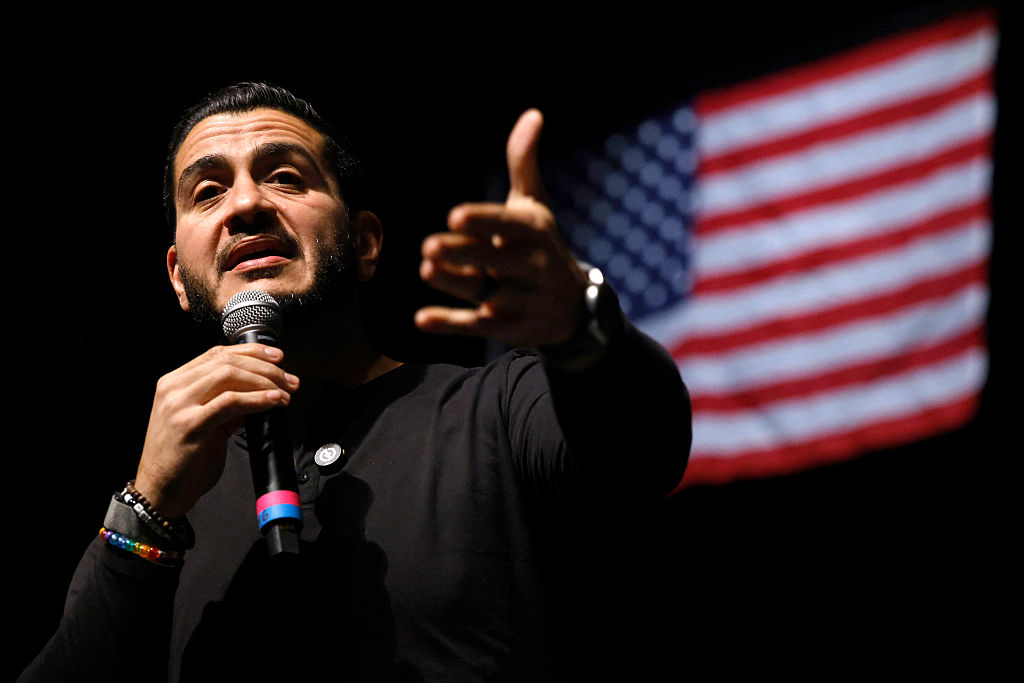
Formally permitting duplicative insurance while making it uneconomical for anyone to buy or sell it unlocks certain rhetoric but does not really change anything about the reality of Abdul El-Sayed’s Medicare for All policy. (Jeff Kowalsky / AFP via Getty Images)
The discourse around Abdul El-Sayed’s position on Medicare for All is mostly confused. Reading most of the reporting on the matter would lead one to believe that El-Sayed initially supported Medicare for All but now merely supports a “public option.” This is not really true under conventional meanings of the phrase “public option.” El-Sayed seems to be inviting this understanding for rhetorical effect, but all he has really done is drop his opposition to a type of duplicative insurance that nobody would ever want to buy.
Conventional Public Options
In the health insurance context, the phrase “public option” has typically referred to two types of arrangements:
The government creates a health insurance plan and attempts to sell it in the employer and individual markets. People become insured under the government plan when their employer switches them onto it or when they select it in an individual health exchange. When people become insured in this way, they cease to pay premiums to private insurance companies and instead pay them to the government. This is how the LA Care Health Plan works.
The government provides free health insurance to people. It then allows private insurers to compete with the free health insurance plan. If people select a private plan, they cease to be covered by the government plan and become covered by the private plan. The government pays their premium. This is how Medicare Advantage works.