The Sewer Socialists Were Pragmatic Class Warriors

Eric Blanc

Milwaukee’s “sewer socialists” have often been dismissed as tepid reformers. In fact, they were pragmatic champions of a world beyond capitalism who were laser-focused on organizing the working class.
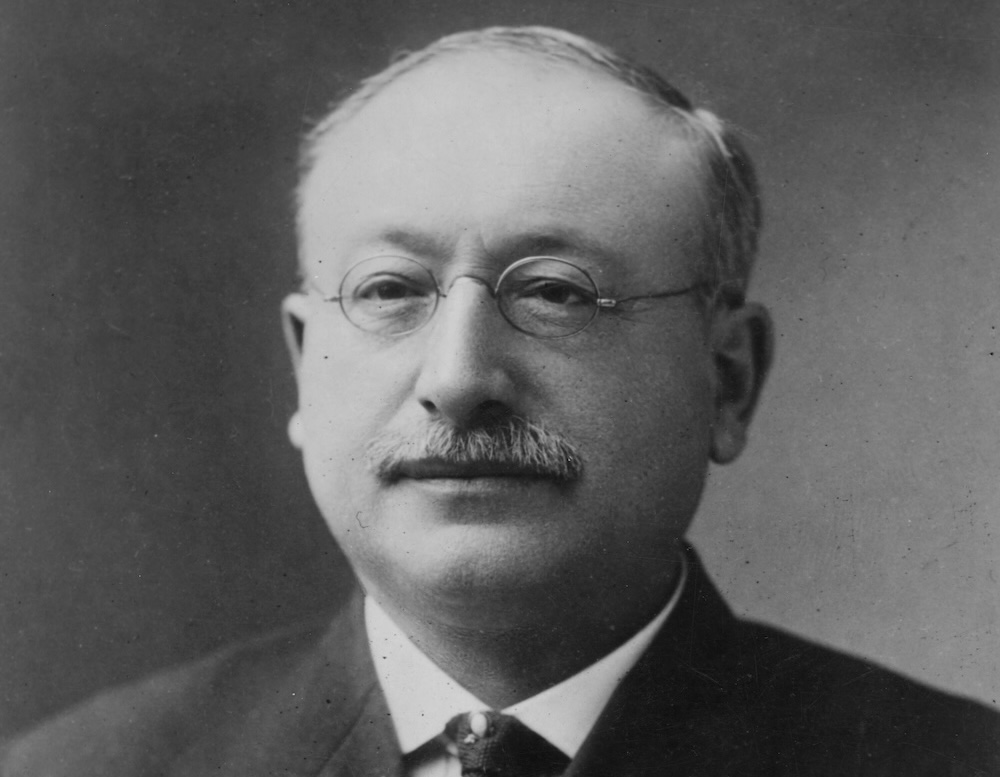
A portrait of Milwaukee socialist Victor L. Berger

The oft-maligned sewer socialists of early 20th-century Milwaukee were in fact strategic champions of working-class interests, combining a pragmatic legislative strategy with efforts to organize workers outside the state. (HUM Images / Universal Images Group via Getty Images)


Interview by
David Griscom

Milwaukee, Wisconsin, was a Socialist Party stronghold for much of the first half of the twentieth century. Socialists there built a strong presence in the labor movement and city council and held the mayor’s office for nearly forty years between 1910 and 1960.

The Milwaukee socialists’ focus on good governance and municipal policy achievements like clean water earned them the ire of some fellow socialists, who derisively dubbed them “sewer socialists.” Yet New York City Mayor Zohran Mamdani has cited them as an inspiration for his own administration, and, as Jacobin contributor Eric Blanc argued in an essay for Catalyst earlier this year, the sewer socialists’ pragmatic approach to building working-class power has much to teach the Left today.

David Griscom recently interviewed Blanc for The Jacobin Show about his research on the Milwaukee socialists, discussing their strategy and potential takeaways for Mayor Mamdani and American socialists in the current moment. You can watch the full interview here. This transcript has been edited for length and clarity.


David Griscom

Who were the sewer socialists?

Eric Blanc

The sewer socialists were the most important socialist party in the history of the United States. They ran Milwaukee for most years between 1910 and 1960. They had more members per capita than anywhere else in the United States. They were as strong in Milwaukee as the German Social Democratic Party was in Germany.

They ran the town. They led the labor movement. They were electorally successful. They were deeply rooted across the working class.

And they delivered. They pioneered a lot of the things that now we take for granted, or have been taken away from us, that came to fruition in the best parts of the New Deal, and they showed the rest of the socialist movement at the time — and I think still today — what mass democratic socialist politics can look like and deliver.

David Griscom

What did they achieve for working people, beyond electoral victories?

Eric Blanc

For those of us who are on the Left today and are trying to think about how we could reconnect socialist politics with the working class and what that looks like, the sewer socialists show that it’s possible. And at a moment when the Democratic Party is in such a crisis and Democratic Socialists of America (DSA) has an opening. I actually think that our best model for replicating some sort of mass majoritarian politics is the democratic practice and politics of the sewer socialists.

What they were able to deliver was remarkable for a local level. They dramatically expanded public services. They improved people’s health. This is a moment, remember, when things like cholera are really widespread. For us, saying they expanded the sewers might sound like small change, but if your kids are dying from preventable diseases, it’s actually a big deal if you can prevent these needless deaths by providing basic public services.

They [also] made people’s lives more fun. It wasn’t just the bread; it was the roses as well. I think Zohran Mamdani in New York City is living up to that spirit. They had free public concerts; they built a ton of parks; they had parades. They did that over and over and over again, both through bottom-up struggle and by using the power of the state.

Building a Socialist Culture

David Griscom

People who have read my book and have heard me talk about the Texas Socialist Party — one of the major things that I find really interesting about that moment in time is that, in Texas, they’d have these massive encampments where thousands of people would meet up together in the summer and they would hear speeches from figures like Eugene Debs. They would dance together, eat together, and it was an incredible social experience that I would love to see replicated today. And it sounds like up in Milwaukee they were doing a very similar large-scale version of this as well.

Eric Blanc

Yeah, in both places. A huge part of the reason for their success lies in the culture, if you want to think about it that way — they built this culture of socializing and community and purpose. It was almost like a church at its best, where you have the music, you have the community.

I think that’s something we can look toward, especially right now when people are so atomized and stuck at home on their phones, and there’s something truly transformative about singing “Solidarity Forever” with a bunch of other comrades or being out at a picnic all day — these types of things that back then were less rare and a little more par for the course in politics. Today, when we look at what the sewer socialists did, or what they did in Texas, that’s maybe the lowest-hanging fruit for being able to replicate their success.

David Griscom

That’s something that’s been exciting about watching Zohran, all of these little events and quests. Even during the World Cup, having the lottery to give people tickets to go to one of the big games. . . .  I think that’s a creative way to use state power that isn’t directly like, “This is class struggle,” but is showing people that we can make society work for everyday people in a way that really benefits you. Not just putting butter on your bread but giving you a joyful and fulfilled life.

Eric Blanc

That’s so crucial because the strategy of the sewer socialists, and I think Zohran as well, wasn’t limited to this vision of a better welfare state. They understood that you were never going to be able to get a majority of working-class people to go further to demand a radical transformation of society, economic democracy, socialism, if you couldn’t show that the public sector and the government works better than the private sector. You had to provide some proof of concept.

You also needed to help them get better organized. One of the big things that the sewer socialists did was that they created an environment for unions to flourish. I think the union movement in Milwaukee got stronger than anywhere else. They had something like 60 percent union density, which is astronomical, because they would have the state literally intervene when the workers were on strike.

Can you imagine if that was today? Workers go on strike, and you have the state, in one case, literally shutting down the company — forcing it to close and prevent scabs from coming in. These types of direct intervention on the side of the workers from the state is something that I think should open our vistas for the possibilities of creating bottom-up organization, not just through organizing but leaning on our elected officials as well.

Delivering Material Improvements

David Griscom

There was a serious commitment to achievement, right? Not just to having the right slogans or the right theoretical positions, but this understanding that, yes, socialism is an idea of a better future, but it is also a practical vehicle to achieve that better future. Could you talk about the orientation of these socialists to other socialists in the United States, in the past or today, or internationally?

Eric Blanc

A lot of the debates we still have on the Left were paralleled back then. It’s funny because before I started doing the research for this, I had a lot of myths in my head about what the sewer socialists were that turned out not to be accurate. I had thought, these are just moderate, milquetoast reformists who weren’t real socialists; they just wanted to expand the sewer system or whatever.

Far from that being the case, these were committed socialists. They were what we call democratic socialists today. But their goal was to overcome capitalism. They educated people about it; that was very central to what drove their volunteer base. If you’re getting up at 5:30 in the morning to distribute the newspaper to all of your neighbors, what drives you is a vision of that long-term society.

But they were also extremely pragmatic. They understood that you had to base your politics on an accurate assessment where the majority of working-class people were. You couldn’t go too far ahead of them. You had to really gauge how far you could go: What demands are plausible right now?

They also understood that the main way you get to socialism isn’t just going to be spreading the good word. They did spread the good word. They had a lot of publications. Victor Berger, the founder of sewer socialism, said it well. The main obstacle is not that people haven’t heard our ideas or are uneducated. It’s that they don’t have hope. They don’t have confidence [that things] can be better. You need to be able to prove in practice that collective action and organization and public power through the state can make a difference.

That was different from the approach of a lot of socialists. There was a lot of sectarianism and what I think you can call ultraleftism in the Socialist Party at the time. The Milwaukee socialists were more the exception than the norm. In a lot of other places, the idea was, you just preach the good word of socialism, and eventually people will come around. We saw in practice that that didn’t really work. You have to do that, but it’s not enough, because people need to be able to see you deliver in the meantime.

David Griscom

Let me read this quote that you referenced from Victor Berger. He says:

The most formidable obstacle in the way of further progress and especially in the propaganda of socialism is not that men are insufficiently versed in political economy or lacking in intelligence. It is that people are without hope. Despair is the chief opponent of progress. Our greatest need is hope.

I find that to be a phenomenal quote, especially in the context of the Left today. I think a lot of times people misread the moment that that we’re in: what everyday people need is not to be woken up from a capitalist mythology that keeps them in chains, but rather for socialists to provide a viable vehicle, a viable vision of a future — not in the distant future, but actually something that is achievable today. I think a lot of times, especially young leftists get lost in the sauce on this question, and they forget this very practical, basic lesson that Berger lays out there.

Eric Blanc

There’s a lot of lessons there. When I was eighteen, I just wanted to go to the barricades the next day. So I get the spirit of it, and there’s a basically healthy impulse there, which is that capitalism is terrible, and the sooner we can get rid of it the better. But you have to take it seriously.

If you treat this as a science, you have to look at what’s worked and what’s working. One of the exciting things about the sewer socialists and part of the reason for their success is that they understood you couldn’t just borrow models from other countries because there are particularities to the United States. Consciousness is different; the political conditions are different.

Part of their success was they said, “We’re going to look at everything that’s working around the world, but we’re not going to assume that there’s some formula for what’s going to work here.” They did a lot of experimenting. Ultimately, that acknowledgment that we don’t yet know what’s going to work and we have to learn through experience — I think that kind of pragmatic approach is the only viable way if we’re going to rebuild a mass socialist politics in the United States today.

Sewer Socialism Inside and Outside the State

David Griscom

Let’s get specific here. Again, “sewer socialism” is often presented as just, “We’ll make public amenities work well.” That doesn’t seem very controversial as a principle. What are the lessons from the sewer socialists that we might not be following today, or that certain sections of the Left maybe need to take more seriously?

Eric Blanc

One important thing we haven’t talked about as much is that they had a robust vision and practice for working inside and outside of the state, as we would put it today. They didn’t believe what those who we might call social democrats believe today, in some parts of the world, that you can just elect people and that’s going to be how change happens. They purposefully and consciously said that’s not going to be enough, because they understood you’re going you’re going up against important corporations and the political establishment, even the best politicians getting elected aren’t going to be able to win their program.

So they consciously and consistently combined electing people and doing mass organizing in neighborhoods and in workplaces. That was the sweet spot, because without that bottom-up power, there’s no way that the sewer socialists — who, it’s worth saying, very rarely had a majority on their city council, and never had a majority statewide — they ended up passing all of this stuff despite being in a minority within the state for most of the time. They tended to have the mayorship, but they didn’t have some sort of supermajority through which they could have done everything.

The way they were able to pressure all these establishment politicians and overcome the capitalists who were funding them and trying to stop these policies was by going and talking to the people: constantly going and talking to your neighbors, talking to your coworkers, leading the union movement. I don’t think we can overstress this. It wasn’t just that they were involved in the union movement; they led a mass workers’ movement. It was socialists who were literally the leadership of the union. So much so that Berger’s newspaper was actually published and printed by the union movement of Milwaukee.

That outside power really gave the punch to the electoral realm. But they were really pragmatic. Beyond the things I already said, I want to flag that they were extremely focused on the most widely and deeply felt needs of working people. They didn’t just project what their program would be and hope people would come around. They listened.

It turned out that what people wanted was same thing they want today. They want to be able to get by. You want decent wages, decent housing, to be able to afford health care for your kids, be able to afford enough to enjoy life. So they were ruthlessly focused on bread-and-butter issues. They had the message discipline of Bernie Sanders or Zohran. If you’ve ever seen Bernie or Zohran talk, they always pivot back to what they know the core issues are. That was sewer socialism.

The Sewer Socialists and Racial Oppression

David Griscom

You note that sometimes there’s an overemphasis on the German origins of sewer socialism. Again, there’s a similar story here in Texas. Yes, there were a lot of Germans in the Texas Socialist Party early on, but we really made it into a larger movement. Something exciting was the fact that it became very Americanized. There’s a sense of that in Milwaukee as well, where there’s a kind of misremembrance that this isn’t an American story — this is more of a German story transplanted into Wisconsin.

Eric Blanc

The easy way to see that’s not the case is that the number of Germans was actually going down. From about 1890 through the 1960s, it’s consistently going down by this time. The big waves of immigration were earlier.

Certainly the Germans were an important part of the party. I don’t want to discount that aspect of it, but at first, most of those Germans weren’t socialists. Even in Milwaukee, the socialists were a minority. It took them decades to win the leadership of the union movement. It took them decades before they even elected their first city councilors. And so, if all of the Germans had been naturally socialist, then it would have been the case from the start. But actually, they had to do the work.

And it wasn’t just Germans who they won over. Not just because a lot of those Germans were basically Americans by then; the kid of a German who didn’t speak German was an American just like anybody else. But they had to win over Poles. Poles were the biggest non-German group.

Pretty remarkably, if you want to say which ethnic group in Milwaukee most overwhelmingly supported the sewer socialists, it wasn’t Germans or Poles. It was black people The black population of Milwaukee, which was very small — we’re talking about roughly 1 percent of the population, but it was growing after World War I — overwhelmingly supported the sewer socialists because they were the only ones that were fighting for their economic interests, and they were the only ones that were fighting against the Ku Klux Klan and against lynching nationally.

That was a story that I had never heard about before and, frankly, I found surprising. Victor Berger is notorious, rightly so, for early on in his career being an open white supremacist. What I found in my research was that there was a totally untold story. During World War I, he flipped, and the movement flipped, because of the influence of the black movement and because of the discrediting of scientific racism. People were starting to understand that there aren’t scientifically different races. They reenvisioned what socialist politics meant in the fight against racism, and they became very consistent anti-racists.

That’s an important story as well, because the white supremacy of Victor Berger has often been used to discredit the socialist movement: “Why would you talk about these people? They were a bunch of racists.” But then also, it’s just an inspiring story. It’s pretty remarkable that somebody who had been so racist could become, by the time he died. . . . 

This is how I found out that Berger ended up becoming an anti-racist. I was looking at the newspaper the day after he died; he was hit by a trolley in 1929. So I’m looking at the sewer socialist newspaper, and it has all these different people’s speeches and mourning and remembrances of Victor Berger. On the front page of their paper, the leader of the NAACP in Milwaukee had long paean to Berger — not just as a fighter for working people, but [he said,] “There’s never been a more consistent fighter for racial justice,” which is actually not true. I think he didn’t even realize that Berger had been pretty bad on this before. This is the pre-internet era; there are not so many receipts.

But by the time he died, he was rightly revered as a fighter for black equality. That’s an important part of the sewer socialist legacy worth reviving.

David Griscom

Was it really the movement of history that brought him [to the cause of racial equality], or was it being engaged in the worker struggle that challenged him? And why do you think that this story has been missed by a lot of the chroniclers of this period of time?

Eric Blanc

Part of it was his own independent sort of  . . .  Victor Berger was a big nerd. Part of the reason he was so racist before is that he was reading all of this scientific racist nonsense. But then, in these years during World War I, it starts getting discredited. There’s all this research coming out, rigorous comparative studies, that proved scientific racism wrong. Berger was like, “Oh, I was wrong.”

Then part of it was just that black people finally had significant enough representation within Milwaukee that they could start working together. It wasn’t just what he read about in other parts of the country. There was a black community, and through experience, he and the socialists through experience saw that these were working-class people who had nowhere else to go politically, who had been abandoned, who were very open to socialism, and who weren’t like what all of the myths of the time said about black people. These myths just weren’t proven to be true in practice.

There’s story after story that I talk about in my blog post. Just to give one example, they have this multi-month defense of a black pastor who killed a white man who was trying to kill him.

The sewer socialists put all of their effort into saying it was self-defense, and they won. At the time, this is the peak of the KKK. Nobody else is doing this at the time.

So there was this real affinity between the socialists [and the black population]. Part of it had to do with the fact that they themselves were being repressed at this time. There’s this moment during World War I when there’s an anti-socialist and particularly anti-German offensive across the country, where they’re really demonized.

I think, for Berger, that was a profound experience that heightened his attention to the dangers of demonization and what it felt like to be persecuted. He was thrown in prison; he was facing up to twenty years of jail time. If you go through an experience like that, then your sensitivity to repression and prejudice gets heightened, and I think you saw that in Victor Berger’s evolution.

Sewer Socialism and Socialist Strategy Today

David Griscom

Let’s talk about the question of reformism. One thing that is different between this movement and what DSA is doing today is that DSA is running candidates mostly within the Democratic Party. How do you see the differences between these two movements on the party question? And if you want to draw lessons from the sewer socialists for today, how can you do that when the strategy is different on the ballot line?

Eric Blanc

It’s funny, because I when I first published a short version of this piece, some far-left critics said, “You like the sewer socialists. You’re saying they’re a bunch of moderates. But actually, they’re even further to the left than you are today in DSA, because at least they had independent party.”

The answer is, well, the contexts are different. They were very pragmatic at the time, and they were in a time that predated the establishment and crystallization of party primaries across the board.

This is a big factor. Up until 1968, basically, you couldn’t run a socialist, for instance, for Democratic president. It couldn’t happen. Party insiders determined who the candidate was going to be. You couldn’t have had Bernie; you couldn’t have an Alexandria Ocasio-Cortez. Even on a local level, the primary system didn’t really become normalized for many more decades into the twentieth century.

The context through which you might be able to do an inside-the–Democratic Party strategy or where that would make sense was basically cut off. That meant that their voters weren’t like, “We’re going to go try to work within the Democrats” — or actually, in this case, the Republicans, who were the more progressive party in Wisconsin at the time.

Also, part of the difference was that the Democrats and Republicans were way less polarized. So the Socialists could afford to be a third party, because the spoiler question was really a nonissue. Whereas today, if you run somebody for president or even on a state level and you’re a third-party candidate, you’re not going to get too many votes — because if you do, that’s likely to make the Republicans win, and that’s going to be extremely detrimental to working-class people’s interests.

That wasn’t the case in the early 1900s. As I mentioned, the Republicans in Wisconsin were actually better; the political differences between Democrats and Republicans was like Tweedledee and Tweedledum. People say today that they’re the same. Well, it was actually the case then, as far as the material differences [on many issues]. The Democrats were the party of Jim Crow. It was very messy.

In that context, they had more space for a third party. I don’t think that you can replicate that today, because the contexts are different. But you can replicate their approach, which was to scientifically study the terrain. It’s not just formulas. The formulas emerged from experience. They saw what worked in practice, and they changed their positions.

We’re having to relearn through experience and not just books what it takes to do mass politics in the United States today. How do you relate to the Democrats? What are the contradictions? What are the dilemmas? To think that there’s just a formula for how to do that, independently of assessing and reassessing what’s working on the ground, I think, is wrong. So it’s more the methodology of the sewer socialists and their spirit [that we can learn from] than just this or that tactic that they employed.

David Griscom

Sometimes the sewer socialists’ opponents might take this or that platform plank from the socialists and run on it. How would they deal with something like that? And where did they decide to draw lines in the sand when it came to supporting this or that policy from the majority parties, which might not be the proper socialist one but was probably beneficial to everyday people?

Eric Blanc

They didn’t have a formula for it. Which is to say that they actually had to assess each compromise on its own merits. Oftentimes they wouldn’t accept the first compromise offer that was made. If you’re in a state legislature or Congress, it’s constantly an issue: Which compromises are going to be enough for you to call a victory, for your base to feel, “Okay, that was enough”?

Obviously, their demands were very ambitious. They wanted to overthrow capitalism; they wanted to nationalize industries. They wanted to do all these things, but they were also pragmatic. They knew they had to deliver. So there was always going to be a gap between the maximal program and what they knew they could win, what they had the votes for.

They took it on a case-by-case basis. Sometimes they just voted no. Relatively frequently, they would reject the Democrats’ or Republicans’ milquetoast reforms if they didn’t go far enough. But sometimes, they would accept the compromise and say, “We’re going to keep on fighting.”

I think the lesson there is that the secret to figuring out which compromises are acceptable is assessing each one on its own but then also understanding that your independence [as socialists] doesn’t just come from what this or that politician says or this or that decision. It comes from your independent organization. They could afford to make some compromises, because they knew that they had a base that understood their politics. That independent vision and that independent structure allowed them to collectively figure out, okay, this is as far as we can go at this moment, and they didn’t demoralize their base in that way.

It’s also how they understood which compromises went too far. How can you know what you should accept without actually having a deliberative process with working-class people? because of that, they were able to thread that needle, which is extremely difficult, better than anybody else I’ve seen.

David Griscom

What message would you like Zohran and his team to take from the sewer socialists? One of the challenges that we’ve gotten from certain sections of the Left about Zohran is that you can’t do socialism on the municipal level.

Eric Blanc

It’s clear that Zohran has already taken a lot from the sewer socialists. He talks about it. Some of the things that he’s talked about . . .  well, first of all, running for mayor — just the plausibility of that. He’s proven that in practice, but then also by pointing to the history and the precedent that you can take executive positions even under capitalism and deliver.

He talks about making government more efficient, so that you can show it’s better than the private sector, and having excellent public governance. Those are things that he’s already done.

The third piece, which is something he’s sort of done and is doing better but that I’d still like to see more of, is using the state to do everything possible to build up working-class organization from below. This was not a secondary piece for the sewer socialists. When they talked about delivering, it wasn’t just public services. They were delivering a political context in which you could have 60 percent union density, 60 percent of workers in a union, in which working people could build power from below. They understood that their project was inextricable from that.

Zohran is most of the way there, but it hasn’t yet been the same degree of focus, particularly the labor movement, but you’re starting to see it now. I was more critical of Zohran early on because we hadn’t seen so many initiatives. But I’ve been pretty excited over the last few weeks. For instance, the administration has made a big thing about supporting the Amazon workers who are unionizing and who are pushing for the Delivery Protection Act, which would essentially make it possible for them to be treated like Amazon workers. [The Mamdani administration] didn’t just write a press release. It made a video; it’s putting political capital to it. It has also been putting a lot of resources toward organizing tenants.

So I think that Zohran’s administration is moving in that direction. But I think it’s good to keep on pushing it on that, because the reality is there’s only so far you can go, and there’s only so far he’ll be able to go until the working class in New York City is far more organized.

This is the biggest danger. As popular as Zohran is and as exciting it is that New York City DSA has over fifteen thousand members, the reality is we’re still very fragile. Our links to the working class are still much more tenuous and shallow than the sewer socialists’ were. That’s a difficult situation because people’s excitement and the good vibes can go away really quickly if there’s one economic crisis or one political defeat. If you don’t have that organized base, all of that can evaporate quickly.

So I think that there’s a bit of a race against the clock. I would urge listeners, Zohran and company, to just keep that urgency in mind. We need to get as organized from below as possible so that this project can succeed in New York and nationally.