Russian Elites Are Fighting for Unchecked Power
Talk of defending civilizational values looms large in the thinking of Vladimir Putin and his allies. Russia’s elites both define themselves against the West and imitate US conservatives’ culture-warrior assumptions.
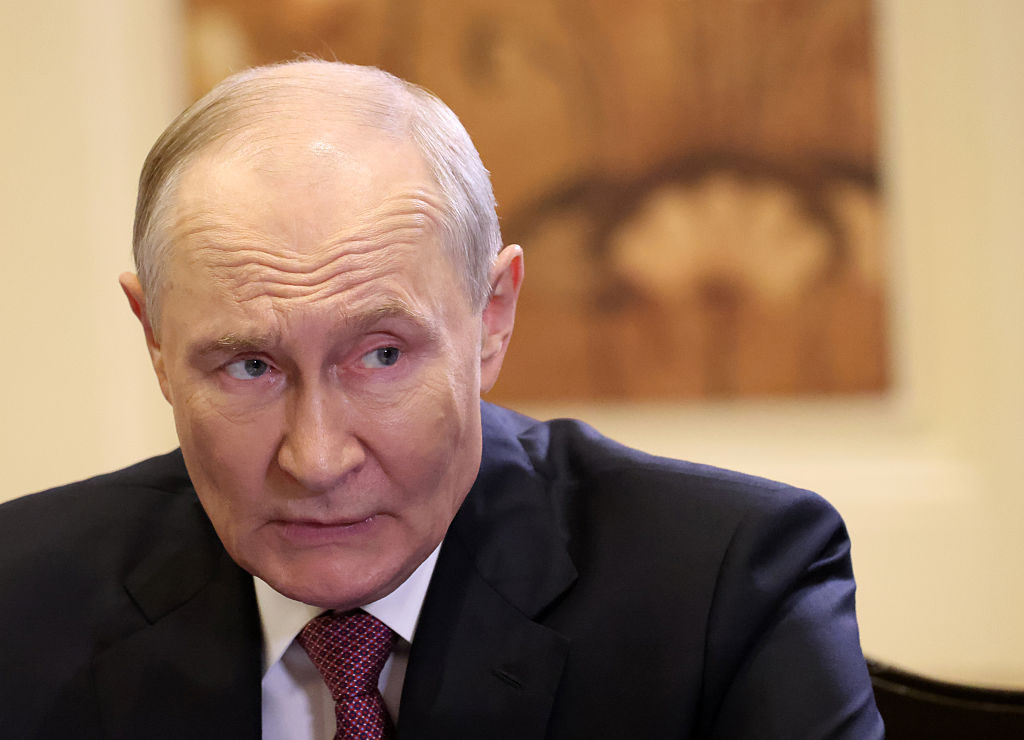
Russia’s elites claim to represent an alternative to a decadent and amoral West. The irony is that their civilizational rhetoric is steeped in the codes of American right-wing culture wars. (Getty Images)
Ignoring a problem is rarely enough to make it go away. Take civilizationism, an approach based on shared culture taken to the level of civilizational identity. Also called civilizationalism, the idea has been around for centuries and has quietly inspired many conflicts. Overshadowed briefly by Cold War ideological conflict, it resurfaced in the 1990s when political scientist Samuel Huntington famously proposed a coming “clash of civilizations,” in contrast to his student Francis Fukuyama’s suggestion of the “end of history.”
Huntington’s thesis was heavily criticized in mainstream academia, partly due to his Orientalism and racialized stereotyping. Still, it had its political impact, even beyond Huntington’s own homeland. After Russia’s conservative turn in 2012, President Vladimir Putin started to call his country a “civilization state,” and the civilizational framing later became central to Putin’s speeches. Similar civilization talk has since spread everywhere from Narendra Modi’s India to Donald Trump’s America.
Now that civilizationism is blooming, we can see how its dismissal was essential for its rise. Calling Huntington’s geopolitical vision ignorant, racist, and irrational should not have been the end of the matter but more like the start of the conversation, especially when racism and irrationality were exactly what some adherents of the model were hankering after. As historian Ilya Budraitskis argued, Huntington’s theory was a self-fulfilling prophecy: his ill-motivated predictions gave influential readers, including some world leaders, a useful ideological construct.