Five Takeaways From Francesca Hong’s Near-Win in Wisconsin

Francesca Hong’s campaign both showed the potential that exists for the socialist left in purple states and what the Left needs to do to reach it.
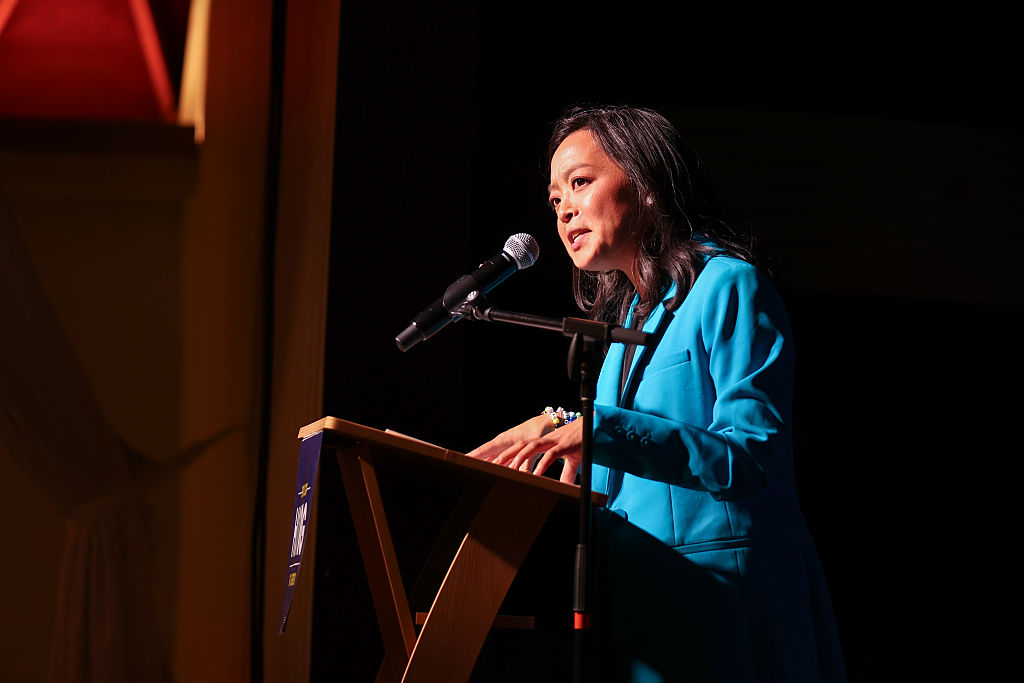
Francesca Hong speaks during a primary election night watch party in Madison, Wisconsin, on August 11, 2026.

It’s clear that Francesca Hong’s campaign made big mistakes that leftists should analyze seriously. But her achievements were also impressive and indicate that the space for socialist politics, even outside of major cities like New York, is massive. (Talia Sprague / Bloomberg via Getty Images)


Francesca Hong, the democratic socialist running in the Democratic primary for the Wisconsin governor’s race, lost last night in an extremely close election. She came within half a percentage point of beating David Crowley, the executive of Milwaukee County. Preelection polling showed Hong with a commanding lead, and many assumed she would coast to victory. As such, her result is being spun as a hard defeat for the socialist left.

The truth is more complicated. Hong accomplished a great deal in her campaign, and even her loss contains valuable lessons for future attempts.

  1. Horse-race polling warps the narrative.

    Perhaps the biggest lesson from this race is that a focus on the horse-race polling makes for bad politics. Since serious polling for this race began, Hong held a solid lead. She led current Lieutenant Governor Sara Rodriguez by 10 points even before Rodriguez had to drop out because of campaign finance mishaps. Crowley, who ultimately won, hadn’t come within 20 points of Hong since March. Because of this, Hong’s victory was widely viewed as all but inevitable.

    But the polls were wrong. Turnout was up significantly from the last statewide Democratic primary in 2022. And large numbers of voters were clearly waiting to make up their minds.

    The Democratic establishment in Wisconsin can hardly be thrilled that they were only able to defeat a novice candidate like Hong by the skin of their teeth.

    Hong’s lead in the polls lent itself to a narrative of her as a prohibitive favorite. This was clearly a mistake. And it obscures how far the campaign came. When Hong launched her campaign back in September of last year, she described herself as a wild card in the race and was largely treated as a fringe candidate. The vast majority of voters in the state had never heard of her. She was a state assembly member (a part-time position in Wisconsin), and worked in restaurants. But through dedicated campaigning across the state, Hong built up a real profile and won the trust of hundreds of thousands of voters.

    Coming within half a percent of victory from such a starting point is an objectively impressive achievement. The Democratic establishment in Wisconsin can hardly be thrilled that they were only able to defeat a novice candidate like Hong by the skin of their teeth. But the focus on polling obscures all of this.

  2. Subcultural leftism hurts socialists.

    Hong accomplished a tremendous amount in this race. But it is impossible to avoid the conclusion that she could have accomplished much more if she hadn’t had to carry the load of past statements she made exemplifying insular leftist subcultures.

    A post she had made in 2020 calling for scrapping Thanksgiving for “celebrating colonialism” and “a time that’s incredibly painful for many people in our communities” received a great deal of attention in the last weeks of the race, for example. So did her endorsement of abolishing the police, a slogan I’ve recently argued is a barrier to left success and desperately needed criminal justice reform. And while it’s unlikely that many Democratic primary voters decided not to endorse Hong because they were afraid of being deprived of turkey in November, the sheer number of statements Hong had to walk back in the last few weeks convinced many voters that she would have a hard time defeating the Republican Tom Tiffany in the general election. In a race with margins this tight, it’s at least plausible that all this cost her the race.

    Hong isn’t the only socialist who got on board with self-marginalizing politics during the “Great Awokening” of the early 2020s. Zohran Mamdani also embraced defunding the police. But by frankly repudiating his earlier position in the campaign and maintaining iron discipline in his focus on affordability in all campaign appearances, he was able to convince voters that he really had changed his positions. Hong’s disavowals, coming out late in the race and made far less forcefully, were not as impactful. For candidates who are freighted with this kind of baggage, extraordinary message discipline is necessary.

  3. Socialists need to be able to make the case they’ll defeat Republicans.

    This leads directly into the next point. It should have been clear after Joe Biden’s victory over Bernie Sanders in 2020 that the ability to defeat Republicans in general elections is nonnegotiable for Democratic primary voters. In places like New York City, where the GOP runs a local mascot like Curtis Sliwa for mayor rather than an actual candidate, this is less of a concern. But in a state like Wisconsin, where voters remember the devastation wrought by eight years of Scott Walker’s austerity-crazed, viciously antiunion Republican administration, Democratic primary voters were unwilling to take a chance with someone they viewed as less likely to win the general election.

    Socialist candidates need to embrace the work of making this case, and need to campaign in a way that demonstrates to voters that we take beating Republicans every bit as seriously as they do.

  4. Campaign on what matters to voters.

    Hong achieved as much as she did in this race because of her focus on what mattered to voters. She campaigned on free public childcare, taxing the rich, and instituting a one-year moratorium on data center construction. These issues resonated deeply with voters, and convinced thousands and thousands to support a candidate they had not even heard of when the race began.

    To appreciate the way her policies made Hong stand out, compare her plan for free public childcare with Lieutenant Governor Sara Rodriguez’s childcare plan. Rodriguez proposed a means-tested program that would cap childcare expenses at 7 percent of annual income. Given a choice between the two policies, it’s not hard to see why so many voters preferred Hong. Similarly, data centers are deeply unpopular in Wisconsin, and Hong was the only candidate to come out for a moratorium on their construction.

    Simple, clear policies like these are a strong foundation for outsider candidates.

  5. The space for socialist politics, even outside of major cities like New York, is massive.

    After Zohran Mamdani won the New York City mayoral race in 2025, a common refrain from the pundit choir was that Mamdani’s approach could work in big cities like New York or Chicago but stood no chance in purple states. Hong showed that even in Wisconsin, there is a huge appetite for a break from politics as usual.

    Her campaign began much like Mamdani’s, with virtually no funding, support, or media visibility. But through hard campaigning across the state, Hong built up a profile, at the same time that the nonsocialist Democrats in the race all failed to inspire much excitement.

    Much of the commentariat would like to declare that Hong’s loss shows the ceiling on democratic socialist politics in purple states. But given Hong’s burden of subcultural leftism and the reported disorganization of her campaign, it would be more apt to conclude that a more disciplined candidate and campaign with the same platform could have achieved much more. Hong’s campaign both showed the potential that exists for the socialist left in purple states and what we need to do to reach it.