“Movement Parties” and Democratic Socialists of America
The rapid growth of DSA in recent decades is part of a global phenomenon of voters and activists from the Left and Right who distrust the political establishment and traditional parties, and have formed what scholar Fabian Holt calls “movement parties.”
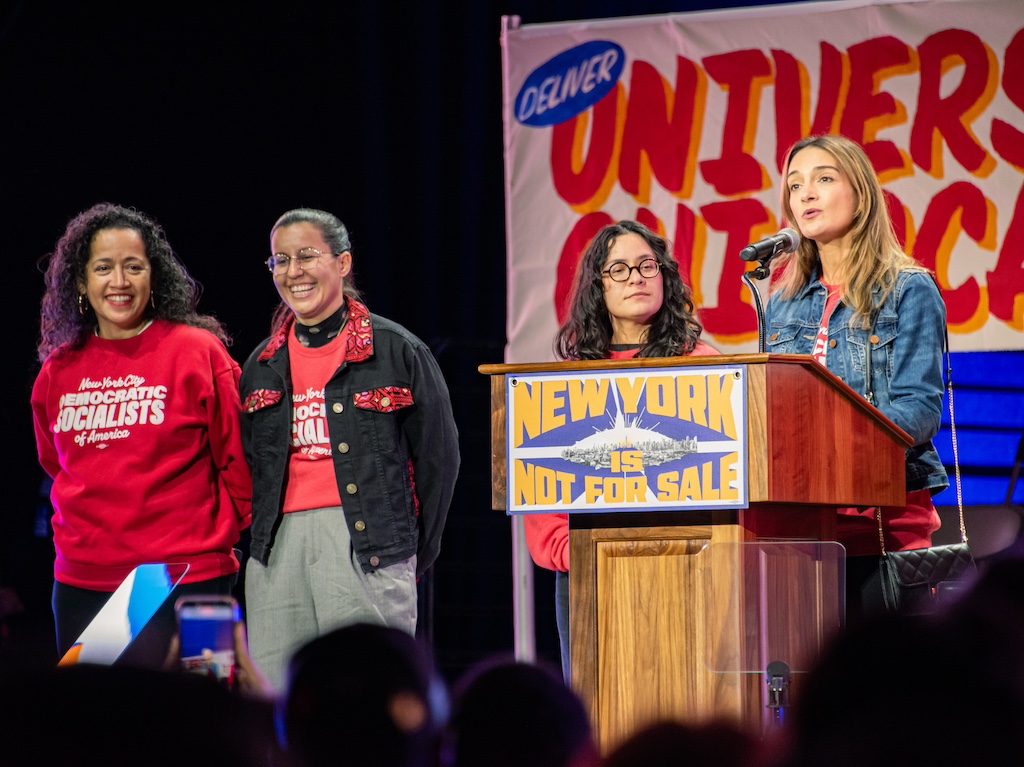
Fabian Holt shows DSA’s growth and challenges as part of a global trend of “movement parties” rather than a unique US phenomenon. (Neil Constantine / NurPhoto)
At the time of this writing, Democratic Socialists of America (DSA) is about to break 100,000 members, with nearly 14,000 of them in New York City alone. The election of Zohran Mamdani, a longtime DSA activist and New York assemblymember, as the city’s mayor brought unprecedented attention to the socialist group. Thousands of socialist activists have played a real and often unseen role in getting DSA to not only elect candidates but win public policy in places like New York.
In Organize or Burn: How New York Socialists Fight for Climate Survival, Fabian Holt breaks from other recent literature on DSA and its aligned movements by focusing on grassroots cadre instead of famous politicians. By doing so, Holt shows DSA’s growth and challenges as part of a global trend of “movement parties” rather than a unique US phenomenon — one that has more staying power, but also weaknesses, that both DSA’s supporters and detractors may miss.
For this research, Holt embedded himself in the New York City chapter of DSA (NYC-DSA), specifically the 2022 state senate campaign of democratic socialist David Alexis in Brooklyn. Participating in the political activity of rank-and-file DSA members around an endorsed candidate and analyzing how that shaped a chapter-level ecosocialist priority for green technology is a departure from recent literature looking at DSA and other new left formations.