The Human Cost of Google’s AI Expansion
Google’s $15 billion AI data center in southern India is being hailed as triumph for India’s technological development. For the local Dalit farmers losing their land for the project, it is raising fears about the future of the region’s land and water.
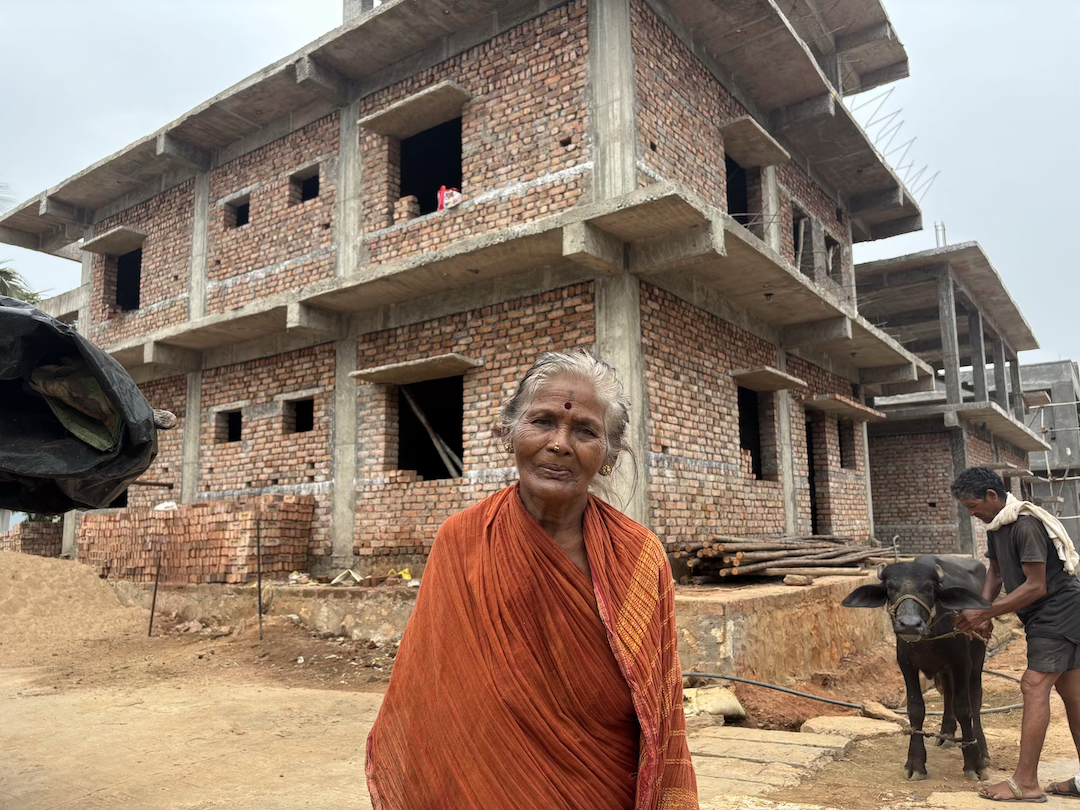
P. Bangarama outside the house her family is constructing with compensation received after the acquisition of their farmland for Google’s proposed hyperscale data center in Tarluvada, Andhra Pradesh. (Anuj Behal / Jacobin)
For nearly six months, Relli Ramakrishna has not made the daily walk to the small farm where she spent most of her life cultivating cashews, mangoes, and seasonal vegetables. Now her mornings pass in a quiet repetition of boredom. She stays at home, attending to chores that end long before the day does. “There is nothing left for me to do,” she says. “The farm was my work. It was where I spent my time.”
The land in Tarluvada, a village on the outskirts of Visakhapatnam in the southern Indian state of Andhra Pradesh, was acquired as part of Google’s ambitious plan to build a large data center across three sites, a project the government has championed as the cornerstone of India’s artificial intelligence ambitions.
Alphabet, Google’s parent company, plans to invest $15 billion over the next five years to build the data center, its largest outside the United States. It will be linked to Singapore, South Africa, Australia, and the US through a network of sub-sea and terrestrial fiber optic cables.