Nobody Wants Data Centers in Their Backyard

New polling shows that most Americans hate the prospect of data centers being built in their communities. The opposition is entirely predictable, not least because data centers seem to offer little benefit to people living near them.
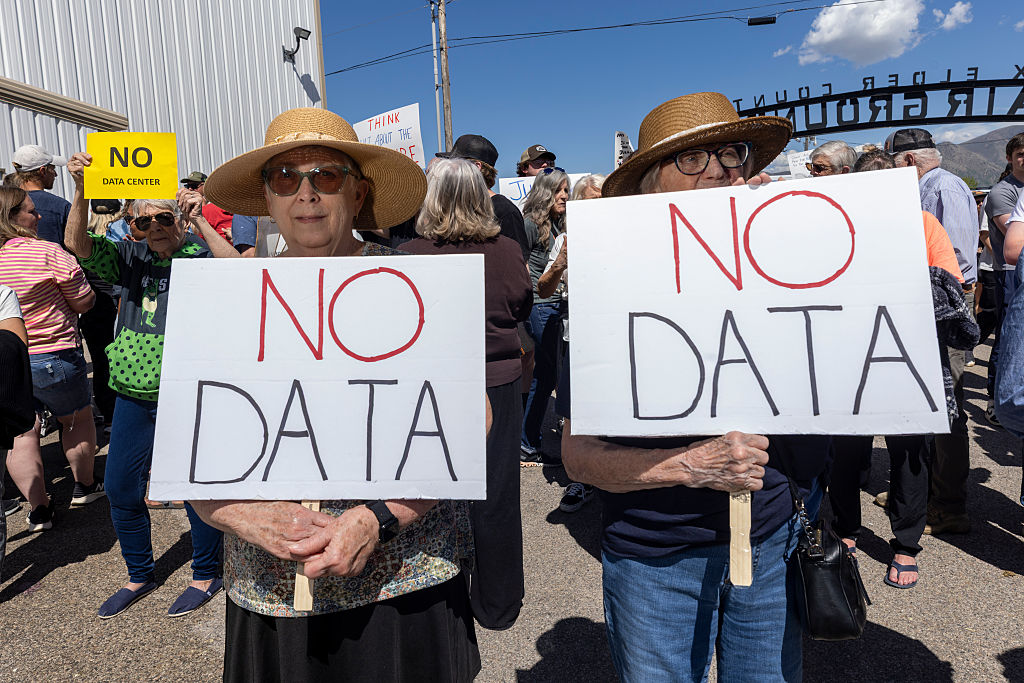
Protesters gather ahead of a Box Elder County Commission meeting to decide whether to approve the construction of a large data center on May 4, 2026, in Tremonton, Utah.

Protesters gather ahead of a Box Elder County Commission meeting to decide whether to approve the construction of a large data center on May 4, 2026, in Tremonton, Utah. (Natalie Behring / Getty Images)


Anew Gallup poll confirms that most Americans hate the prospect of data centers coming to their communities. This revelation has been met with some anger among the tech crowd and its extremely online fans, but the opposition is entirely predictable for a few reasons worth reviewing, even if they are obvious:

  • People don’t generally like the idea of living near industrial facilities that create a lot of noise pollution, and data centers can create a lot of noise pollution.

  • People don’t generally like the idea of seeing their residential electricity and water rates rise, and there is the perception — and some evidence — that data centers are linked to those price increases.

  • People don’t generally like the idea of artificial intelligence systems powering predatory pricing schemes, ruining the education system, and creating a panopticon — and data centers are the engines of those dystopias.

  • People don’t generally like the idea of giving tech companies billions of dollars of special tax breaks that could prompt higher taxes on everyone else — all to further enrich the tech oligarchs creating these dystopias.

After the Gallup poll was released, one prominent Twitter economist lamented that “people are mad about data centers, they’re mad about warehouses. Boy if neoliberalism hadn’t killed all the factories people would be mad about them too.”

But that smug comment ignores the additional political problem for data center advocates.

Put simply: their plans don’t seem to offer any explicit benefit to people living near them.

In the past, local communities have been willing to tolerate significant downsides of economic development projects and to reject not-in-my-backyard-ism — as long as those projects were accompanied by the prospect of equally significant upsides in their backyards too. For example, your town might have embraced the smoke-belching factory and its pollution because the facility created and sustained a lot of jobs.

But when it comes to data centers, the perception is that it’s all downside and very little upside. Consider employment, which is the most visible and obvious sales pitch of most economic development proposals. When it comes to data centers, there’s very little of that upside. Indeed, once data centers are constructed, they do not create and sustain many long-term jobs. In a story headlined “The AI Data-Center Boom Is a Job-Creation Bust,” the Wall Street Journal reported:

“Data centers have rightly earned a dismal reputation of creating the lowest number of jobs per square foot in their facilities,” said John Johnson, chief executive of data-center operator Patmos Hosting . . . .

The reality is data centers can employ more than 1,000 people in the several months or years it takes to build them, but rarely need more than one or two hundred once they open, according to Synergy chief analyst John Dinsdale.

What about the possible benefit of higher property values and local tax revenues from data center investments? Yes, there has been an argument that data center development increases the value of commercial real estate. But there’s also the fear that it can drive down residential home values, because buyers may not want to live next to loud industrial sites.

And when it comes to tax revenue, questions remain about whether all the tax incentives pencil out to net losses of public revenues. Taken together, the upsides on property value and tax revenue are murky at best — and for most poll respondents, not nearly enough to counter the clear downsides.

One attention-grabbing headline from the new poll was that people are more opposed to siting data centers in their communities than to siting nuclear power plants. But again, that’s not all that surprising, because nuclear power plants at least offer the possibility of more power produced with less particulate pollution and potentially lower electricity bills. Data centers seem to offer none of those upsides and lots of downsides.

So when you see news of a city council being voted out for advancing a data center deal, you shouldn’t be surprised. For the average American, a data center looks like an annoying physical and financial encroachment that doesn’t create local job, but threatens to make the affordability and education crisis worse, all to enrich a distant tech bro’s AI product, which is perceived to be dumb chatbots and clickslop videos on the internet.

How could anyone expect that to poll well and be popular?