The SEC Is Radically Loosening Trading Rules for SpaceX

Elon Musk’s SpaceX is making a record-breaking IPO today. For the occasion, the SEC exempted Wall Street brokers from consumer protection rules — potentially jeopardizing the assets of investors, including 401(k)s and pensions, if markets are volatile.
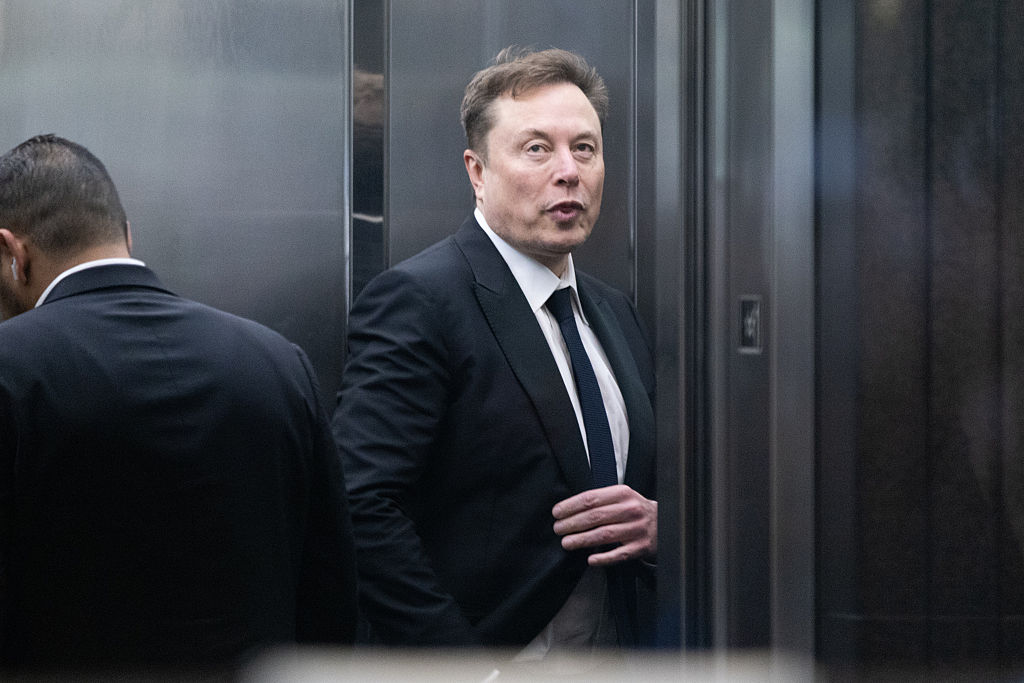
Elon Musk arrives to court at the Ronald V. Dellums Federal Building on April 30, 2026, in Oakland, California.

Elon Musk arrives to court at the Ronald V. Dellums Federal Building on April 30, 2026, in Oakland, California. (Benjamin Fanjoy / Getty Images)


As the rocket company SpaceX has the largest-ever initial public offering (IPO) today — a blockbuster event that stands to make Elon Musk a trillionaire — stock market regulators quietly handed Wall Street trading giants an extraordinary exemption from consumer protection regulations.

Possibly for the first time ever, broker-dealers are being granted temporary relief from a crucial rule that forces them to maintain cash reserves in a separate account to safeguard customers’ investments if the firms go bankrupt.

While the regulatory reprieve could allow brokerage firms to earn fees from far more transactions amid what was already expected to be a historic trading frenzy, experts warn that eliminating the safeguard could jeopardize the assets of everyday investors caught up in the hype.

In a June 10 no-action letter granted to the Securities Industry and Financial Markets Association, an industry lobbying group, the Securities and Exchange Commission (SEC) said it would not recommend enforcement action against brokerages that temporarily reduce the cash they hold in reserve for customers participating in the SpaceX IPO.

Broker-dealers — such as Robinhood, Fidelity Investments, and Charles Schwab & Co. — are usually required to hold customer funds in separate, segregated accounts to protect the assets if the broker-dealer becomes insolvent.

The Securities Industry and Financial Markets Association asked for the rule’s temporary rollback to meet cash liquidity needs amid “unprecedented levels of customer funding activity over a compressed period.” Otherwise, it claimed, broker-dealers would have to increase their internal holdings to accommodate the “extraordinary levels of customer credits.”

“In light of the anticipated size of the SpaceX offering, this temporary duplication could create significant liquidity strains despite the absence of any corresponding increase in customer protection,” the group wrote.

But Corey Frayer, director of investor protection for the consumer advocacy group Consumer Federation of America, said the exemption is highly unusual — and that, to his knowledge, “has never been provided before.”

“[This] customer protection rule is generally sacrosanct and not something the [SEC’s] Trading and Markets Division creates exceptions for,” he added.

Some experts question SpaceX’s sky-high $1.77 trillion valuation, in part because some of that value is tied to unproven technologies like artificial intelligence.

About 20 percent of the SpaceX IPO shares are expected to be set aside for retail investors, which means “about $70 billion in customer funds will be subject to intraday risk,” Frayer said.

Alternatively, even if SpaceX meets or beats its projections, it could trigger market volatility as investors sell off other stocks to raise cash for the hot IPO. Either way, broker-dealers and their clients could be in for a volatile day of trading — which is exactly what segregated client accounts are designed to protect against.

In the first quarter of 2026, the Securities Industry and Financial Markets Association, which represents numerous large banks and brokerage firms, spent more than $1.9 million lobbying Congress, the SEC, the Federal Reserve, and other regulators on an “SEC proposed rule regarding the safeguarding of client assets” and other matters. The lobbying firm has also been urging regulators to roll back rules designed to prevent a repeat of the 2008 financial crisis.

It’s uncommon for the SEC to grant a no-action letter like this to a lobbying group rather than to individual companies, but it could be a strategic move to grant sweeping immunity to an entire industry, Frayer said.

“If you’re looking to create a broad-based exemption, a trade association that represents many companies, and not one broker-dealer, gets the no-action letter,” he added. “I think there’s sort of an efficiency to doing this through one of the trade [associations].”

In the lead-up to its IPO, stock markets and investment giants have granted other special exceptions for SpaceX, a rocket company founded by tech tycoon and former Trump adviser Musk that now also combines his satellite company Starlink, the social network X, and his AI startup xAI.

Those exceptions included Nasdaq fast-tracking SpaceX’s entrance to the index fund market. Since index funds often make up the core of 401(k)s, pensions, and other retirement funds, this means many Americans with retirement accounts may end up investing in SpaceX whether they want to or not.

And Fidelity, one of the country’s largest brokerage firms, just lowered its risk-management requirements for IPO stock purchases, making it easier for retail investors to purchase SpaceX stock.

Frayer is concerned that Wall Street’s watchdog appears to be bending the rules for Musk’s moonshot as well.

“The [financial] industry has been bending itself in knots to be uniquely favorable to this extremely problematic IPO,” Frayer said, “and now you’ve got a regulator stepping in to provide a special dispensation to a wealthy and well-connected person.”