Taking a Good, Long Look Into Elon Musk and “Muskism”
A growing share of world infrastructure is dominated by the eccentric, reactionary, annoying billionaire Elon Musk. He is, regrettably, a key figure to understand — which Ben Tarnoff and Quinn Slobodian set out to do in Muskism.
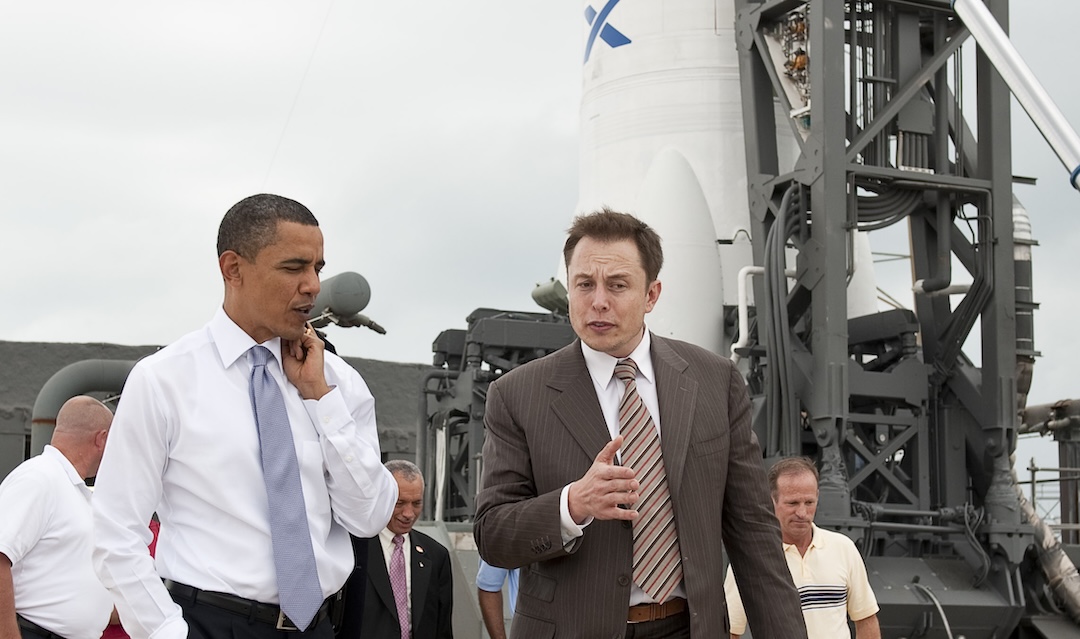
Throughout his life, Elon Musk has provided an exaggerated, cartoonish picture of broader trends within political economy. (NASA / Bill Ingalls)
Elon Musk needs no introduction. He is one of the leading capitalists of our time. Unlike many in tech, he gets down and dirty with the physical world (or rather, his employees do), building cars and rockets, digging tunnels, even implanting chips in people’s brains.
He is also a master of hype, making ludicrous claims that never come to pass. That hype aside, he has achieved a lot. And yet he has used his fame, his money, and his X platform to promote a politics that, it is no exaggeration to say, is white supremacist and exterminationist.
Musk’s businesses include Tesla, the car company; SpaceX, the rocket company; X, formerly Twitter, and xAI, the artificial intelligence enterprise of which Grok is the face; Neuralink, the maker of chips implantable into human brains so they can talk directly with computers; and Boring Company, which drills giant tunnels to create subterranean highways. Of these, only Tesla and SpaceX are profitable. The current profits of the two combined are around $12 billion.