How the Constitution Lost Its Life
Americans used to fight for constitutional change — and not just in the Supreme Court chamber. Jill Lepore talked to Jacobin about the decline of the amendment process and the rise of judicial power.
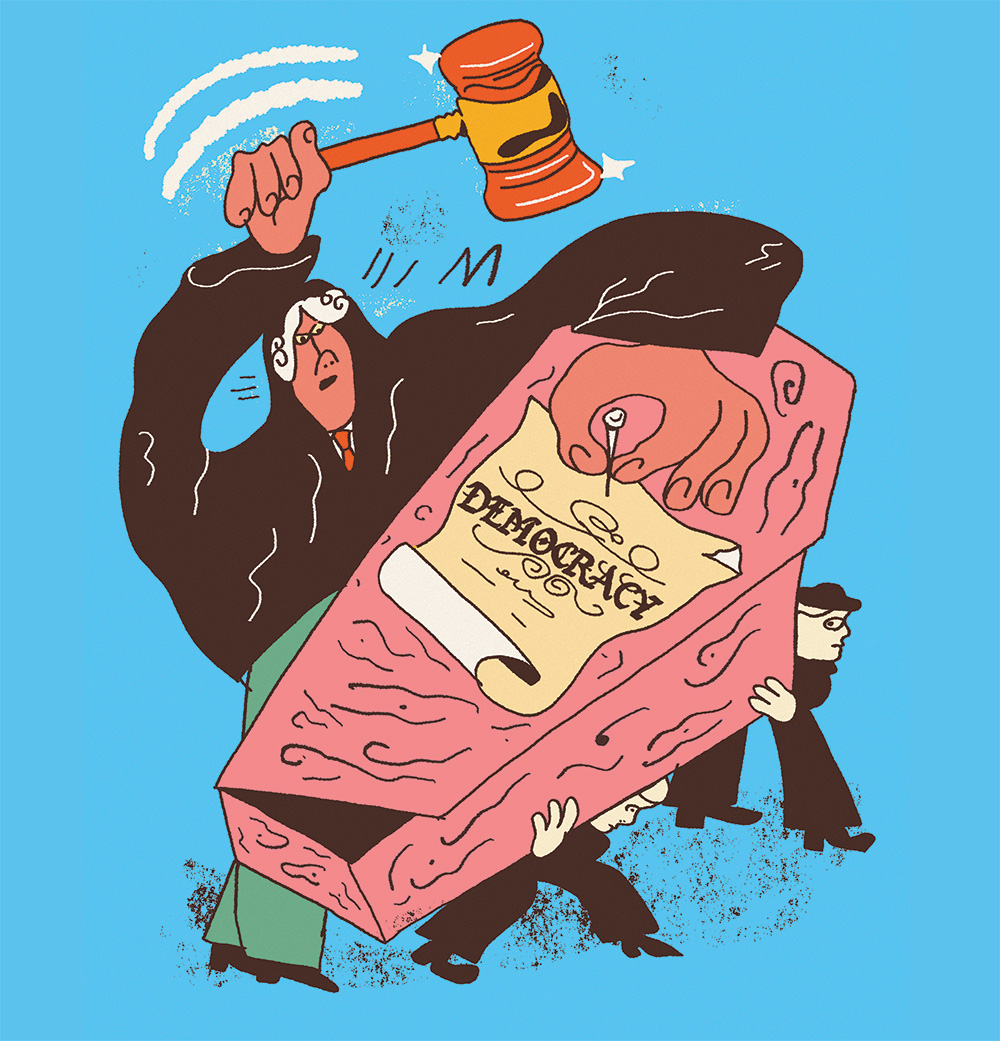
Illustration by Darren Shaddick
The US Constitution is “not a living document,” Justice Antonin Scalia once said. “It’s dead, dead, dead.” In her Pulitzer Prize–winning book We the People: A History of the U.S. Constitution, Harvard historian Jill Lepore shows that the document’s demise came slowly. Before originalists like Scalia put the final nail in the coffin, Americans embraced and then abandoned the project of keeping the Constitution alive through mass politics.
The Framers, Lepore argues, wanted the Constitution to evolve; that’s why they included an amendment process in Article V. Throughout the nineteenth and early twentieth centuries, Americans channeled this “philosophy of amendment” into energetic movements for constitutional change. There were some successes — the direct election of senators, women’s suffrage — but the strin-gent requirements of Article V resulted in one of the lowest amendment rates in the world. From the mid-twentieth century onward, progressives increasingly sought relief from the Supreme Court, entrusting nine unelected judges with the task of keeping the Constitution up to date.
The last time the United States meaningfully amended the Constitution was in 1971. That same year, Robert Bork outlined the modern doctrine of originalism. For Lepore, originalism represents the institutionalization of a strain of constitutional conservatism that developed in response to the long, popular struggle for amendment justice. The Left’s retreat to the courtroom had given constitutional conservatives the initiative; by putting on robes and picking up gavels, they could not only stifle progressive constitutional reform but advance their own radical project. “The Fifth Article was meant as a constitutional door, open to the people,” Lepore writes. “After 1971, that door slammed shut.”