Zohran Mamdani’s Toughest Task in 100 Days: Taxing the Rich

Zohran Mamdani’s early wins are a testament to what a talented left-wing municipal executive can accomplish even in the face of major obstacles. But much of his ambitious agenda will remain blocked if he can’t convince the state to tax the rich.
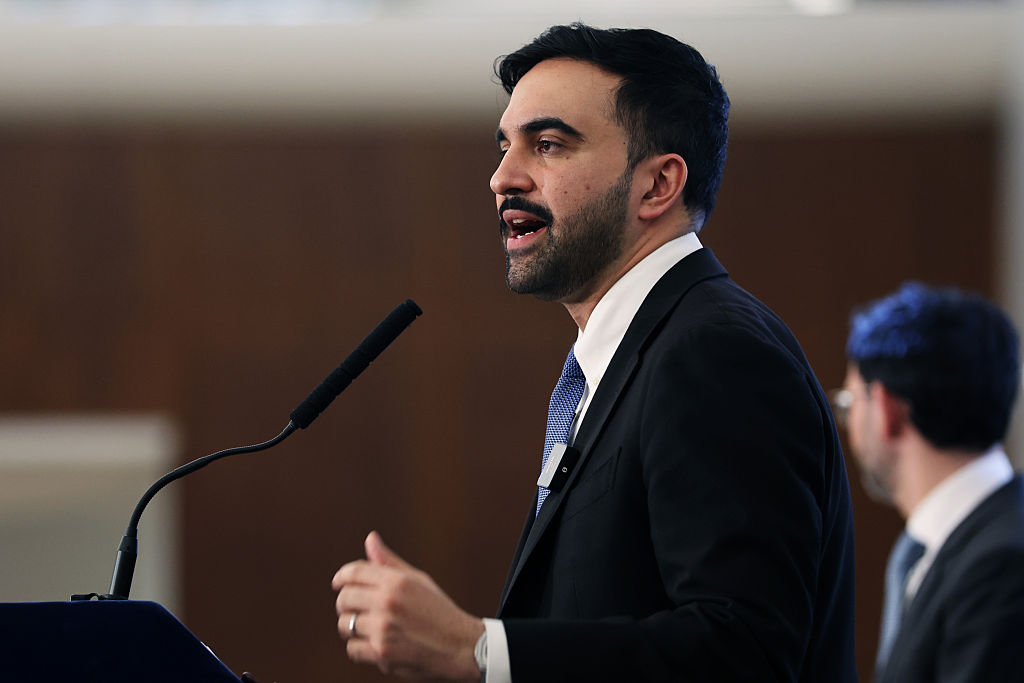
Using the mayor’s office to craft new forms of mass mobilization on top of the usual work of governance is a tall order for Zohran Mamdani. But it’s a sine qua non for a successful socialist mayoralty. (Spencer Platt / Getty Images)

How does a socialist mayor, elected as a consummate outsider, actually govern once elected in the face of pressures from all sides? It’s a question many heads of US cities, from Schenectady mayor George Lunn to the Milwaukee “sewer socialists” to a young Bernie Sanders in Burlington, have had to answer. One hundred days into his term, we are seeing how New York City Mayor Zohran Mamdani is answering it.

We can see three distinct strategic tendencies at work in the Mamdani administration. First, the administration is seeking to revive and update the left-wing good governance tradition associated with the Milwaukee “sewer socialists” and Fiorello La Guardia’s New Deal–era tenure as New York City mayor. Second, it is working to pass the suite of ambitious redistributive reforms that Zohran campaigned on, like universal childcare and free buses. Third, the mayor is using his office to publicly call out the abuse and exploitation of workers and tenants and build their collective capacity to fight back against bosses and landlords, seen in initiatives like the “Rental Ripoff” hearings to solicit testimony from tenants about bad landlords and the mayor’s publicly touted prosecution of labor law violations.

On each of these fronts, Mamdani has scored major victories in his first one hundred days in office, on top of facing challenges. The wins are a testament to what a talented left-wing municipal executive can accomplish, even in the face of major political obstacles and structural constraints. The difficulties illuminate the seriousness of those constraints and the potential tensions between his strategic approaches.

Socialism as Good Governance

During campaign season, one of Gov. Andrew Cuomo’s favorite lines of attack against Zohran was that he was a young naïf without any “management experience,” utterly lacking the skills needed to steer the massive ship that is New York City government. Yet Mamdani’s first months in office have shown him to be an extremely competent municipal administrator.

From filling potholes to expanding bike lanes to installing new public bathrooms and improving emergency response, the mayor has worked diligently to improve city services. As my colleague Liza Featherstone has highlighted, take a look at the night-and-day difference in how many potholes the administration has filled this year already compared to its predecessor.

The mayor’s office has also been very effective in communicating what it is doing here. That’s good politicking, but it’s also a crucial and too often neglected aspect of any project of left-wing governance: communicating to people how the government and the public sector can be a force for improving their lives, rather than simply a tax-sucking drain on the more productive private sector, as right-wing propaganda would have it.

The biggest challenge on this front has been the large city budget deficit bequeathed to Mamdani by former Mayor Eric Adams: $5.4 billion, according to the latest estimate. The mayor wants to plug the hole largely by raising taxes on the rich, but he needs the state government to enact a tax hike, and Gov. Kathy Hochul continues to say she will do no such thing. Zohran has demonstrated his talent for making political lemonade out lemons, parodying an infamous old Adams video to tout worker-friendly savings the mayor has found in the city’s budget — including canceling a $9 million city contract with consulting firm McKinsey.

These savings can only go so far, and the budget crisis has also led Mamdani to backtrack on a campaign promise to support expansion of the city’s rental assistance program for low-income New Yorkers and seek to delay fulfillment of a state mandate to shrink public school classroom sizes. The rock-hard walls of budgetary reality only leave him so much room for maneuver.

The Fight for Reforms

Zohran won the mayoralty promising bigger reforms: most prominently, universal childcare, fast and free buses, and a rent freeze for rent-stabilized apartments. In his first one hundred days, Mamdani has made significant progress toward fulfilling the childcare and rent freeze pledges.

Barely a week into his administration, the mayor and Gov. Hochul announced that she had committed to funding to strengthen the city’s existing 3K program to ensure universal access and to funding the first two years of free childcare for two-year-olds across the city (in addition to piloting a statewide pre-K program). Mamdani’s administration has been rolling out sign-ups for childcare throughout the city.

A rent freeze must be enacted by the city’s Rent Stabilization Board, which decides on permitted rent increases for rent-stabilized apartments. The mayor appointed six of nine of the board’s members, giving his allies a supermajority on the body and potentially paving the way for a decision for a rent freeze in May or June.

Significant obstacles for the mayor’s marquee platform planks remain. Zohran ran on establishing a permanent free childcare program for all children in New York City between the ages of six months and five years. Hochul’s initial funding pledge falls far short. The hope is that her current commitment is the thin wedge that will open the door to an enduring, more expansive, free childcare program in the future, but that remains unknown. And Mamdani has said free buses will not happen this year. (Though legislators in Albany are considering bringing back the fare-free bus pilot program that Mamdani spearheaded as a state assembly member.)

The fundamental roadblocks here are, again, budgetary. The city needs more tax revenue to close the budget gap and fully fund programs like free childcare and free buses, and it is largely dependent on the state for that revenue. As long as Hochul refuses to raise taxes on the rich, the mayor will not be able to fully realize his campaign promises. The administration has also proposed raising property taxes, which the city does have the legal authority to do, if the state does not raise income taxes. But the proposal was largely seen as a failed gambit to force the governor’s hand on taxing the rich; Mamdani has seemingly backed off of that idea, which is unpopular with voters and would have a hard time getting the needed votes from city council.

The Mayor and the Masses

The mayor has also to some extent used his executive authority and bully pulpit to offer direct support for workers, renters, and consumers in their fights against predatory bosses and landlords.

The “Rental Ripoff” hearings spearheaded by the Mayor’s Office to Protect Tenants are a case in point. These hearings, held across the five boroughs from late February to early April, solicited testimony from ordinary tenants about the problems they faced with their landlords; the administration asked to hear about everything “from poor conditions and repair delays to unconscionable business practices and non-rent fees.”

Officially, the point of gathering this testimony was to inform city officials in their attempts to craft policy changes to better protect tenants. But when I attended one of the Rental Ripoff hearings in Long Island City last month, it seemed like the events might have another function as well. I met multiple tenants who were at the hearing on behalf of their tenant unions and were hoping to use it to build leverage against their corporate landlords. These efforts by tenant unions suggest how the administration might empower grassroots organizing going forward. If these hearings lead the administration to pursue prosecution of lawbreaking landlords at the behest of tenant unions, that will give renters a powerful bargaining chip in negotiations with building owners and potentially encourage more tenant organizing efforts.

Zohran has also taken on labor abuses and other shady business practices. His administration has issued new regulations banning junk fees and predatory debt collection practices, and stepped up enforcement of labor law violations. Among its most significant achievements in this area was its Department of Worker and Consumer Protection’s securing a $5 million settlement with food delivery companies and the reinstatement of up to ten thousand wrongfully deactivated drivers. Mamdani also took the rare step of publicly walking the picket line in support of private-sector nurses during their historic strike this winter.

These moves, and Zohran’s consistent denunciation of Immigration and Customs Enforcement’s authoritarian attacks on migrants, are refreshing uses of municipal power to support ordinary people in struggles against economic elites, of the sort we see all too rarely in this country.

Even so, Mamdani could do much more to fulfill his mandate as organizer in chief. In the absence of progressive legislative supermajorities or a massive organized base, Zohran is dependent on the governor to pass his agenda, so building a cooperative relationship with her is necessary. Since his election, Zohran has not appeared at rallies organized by his allies calling on the Hochul to tax the rich; he also endorsed her for reelection early in his term, no doubt as part of their negotiations over childcare — an understandable move, but one that weakened his allies’ leverage over the governor in demanding that the rich pay up.

And despite the promising creation of an Office of Mass Engagement, headed by his campaign field director and longtime New York City DSA electoral leader Tascha van Auken, the administration has not made efforts to mobilize supporters en masse, nor has it yet experimented with forms of participatory democracy that might bring ordinary people more deeply into the governance process. We are less than three and a half months into this mayoralty, and using the mayor’s office to craft brand new forms of mass mobilization on top of the usual work of governance is a tall order. But it’s a sine qua non for a successful socialist mayoralty.

What Next?

These choices no doubt reflect the administration’s judgments about what to prioritize and how to navigate trade-offs as it tries to deliver transformative governance of the US’s largest city. That Zohran has succeeded as much as he has so far, including in maintaining positive approval among New Yorkers, is a testament to his and his team’s strategic acumen and political talents.

The governor’s apparent intransigence on taxing the rich looks to be the central problem for the administration moving forward. If Hochul doesn’t budge, the Mamdani administration may simply have to narrow its ambitions, focusing on building on its early victories on childcare, enacting a rent freeze, and continuing to excel at good governance and communication. Because of the city’s large budget hole, the lack of additional tax revenue would mean more difficult choices about where to cut or rein in public spending.

If the rest of Zohran’s mayoralty unfolds along these lines, it need not be regarded as a defeat or a failure — especially if the mayor is able to maintain popular support and show that the Left can govern the city effectively. But it would be a disappointment of the higher hopes many people placed in the administration, and a reminder of the limits of what can be achieved with municipal political power alone.

Alternatively, the administration might try to adopt a more confrontational tack to get out of the budget stalemate. Could the mayor use his considerable charisma and popularity to help build popular mobilizations against Hochul to pressure her into taxing the rich in future budget seasons? Is there some way of using the Office of Mass Engagement, directly or indirectly, to build such pressure? Might more initiatives in the style of the Rental Ripoff hearings — “Bad Boss” or “Underfunded Services” hearings, say — support grassroots organizing in favor of the mayor’s taxation agenda? A change of focus in messaging or governance may be necessary to push Hochul further.

Zohran’s election to New York City’s top executive office was a major, unexpected breakthrough for the socialist left. One hundred days in, it has already reshaped the terrain of the Democratic Party and of national US politics more broadly and will likely continue to do so. To maximize his mayoralty’s impact in advancing the causes of socialism and the working class, Mamdani and his movement may need creative approaches to breaking out of some of the trickier impasses in which they now find themselves.