Japan Is Building a War Machine in the East China Sea
Japan’s conservative leader, Takaichi Sanae, won a supermajority of seats in this year’s general election. Takaichi and her allies are using this position of strength to advance a dangerous militarist agenda as part of Washington’s anti-China front.
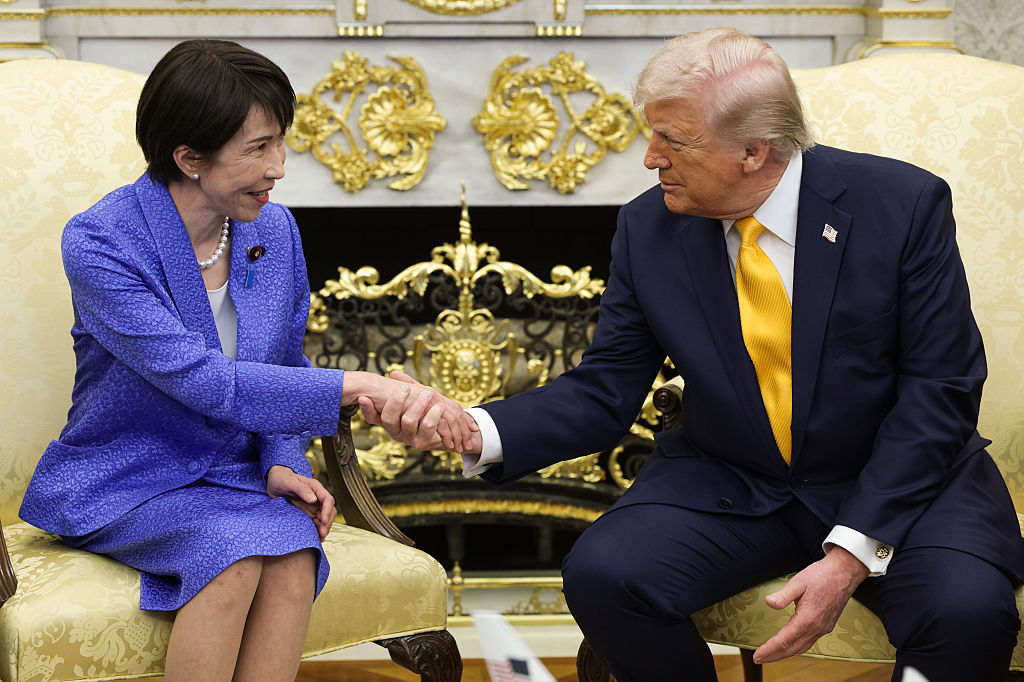
Eighty years after suffering devastating defeat in war, Japan again stands at a crossroads, facing a choice over whether to maintain and consolidate the US-led global anti-China front or to commit to building a peaceful East Asian community of nations. (Alex Wong / Getty Images)
Less than six months after her assumption of office as Japan’s 104th (and first female) prime minister, and two months since her rise was confirmed by a resounding victory in a national election, the grip of Takaichi Sanae on the levers of state is unchallenged, and her support level remains high.
However, thoughtful and historically aware commentators are speculating that a fundamental transition of the state might be underway, one from “peace state” to “war state.” Looking back to the Konoe Fumimaro government of 1937, which in retrospect we can see as taking the steps that led to a catastrophic war four years later, they fear that Takaichi might be replaying that scenario.
Supermajority
On February 8, 2026, the Japanese people went to the polls for an election to the lower house of the National Diet. It was generally taken to be a test of the latest government led by the Liberal Democratic Party (LDP), formed in October 2025. With the party leader Takaichi enjoying support levels of around 70 percent, the election outcome was scarcely in doubt, but its scale still took many by surprise. Takaichi took the LDP from 198 seats (short of the 233 needed for a parliamentary majority) to 316 seats, giving the LDP a two-thirds supermajority.