Japanese Militarism Has Put the People of Okinawa on the Firing Line
Okinawans have long campaigned against the massive US military bases that dominate their island. But the Japanese state is pressing ahead with a new base against their will, placing the island on the front line in a region made more dangerous by US saber-rattling against China.
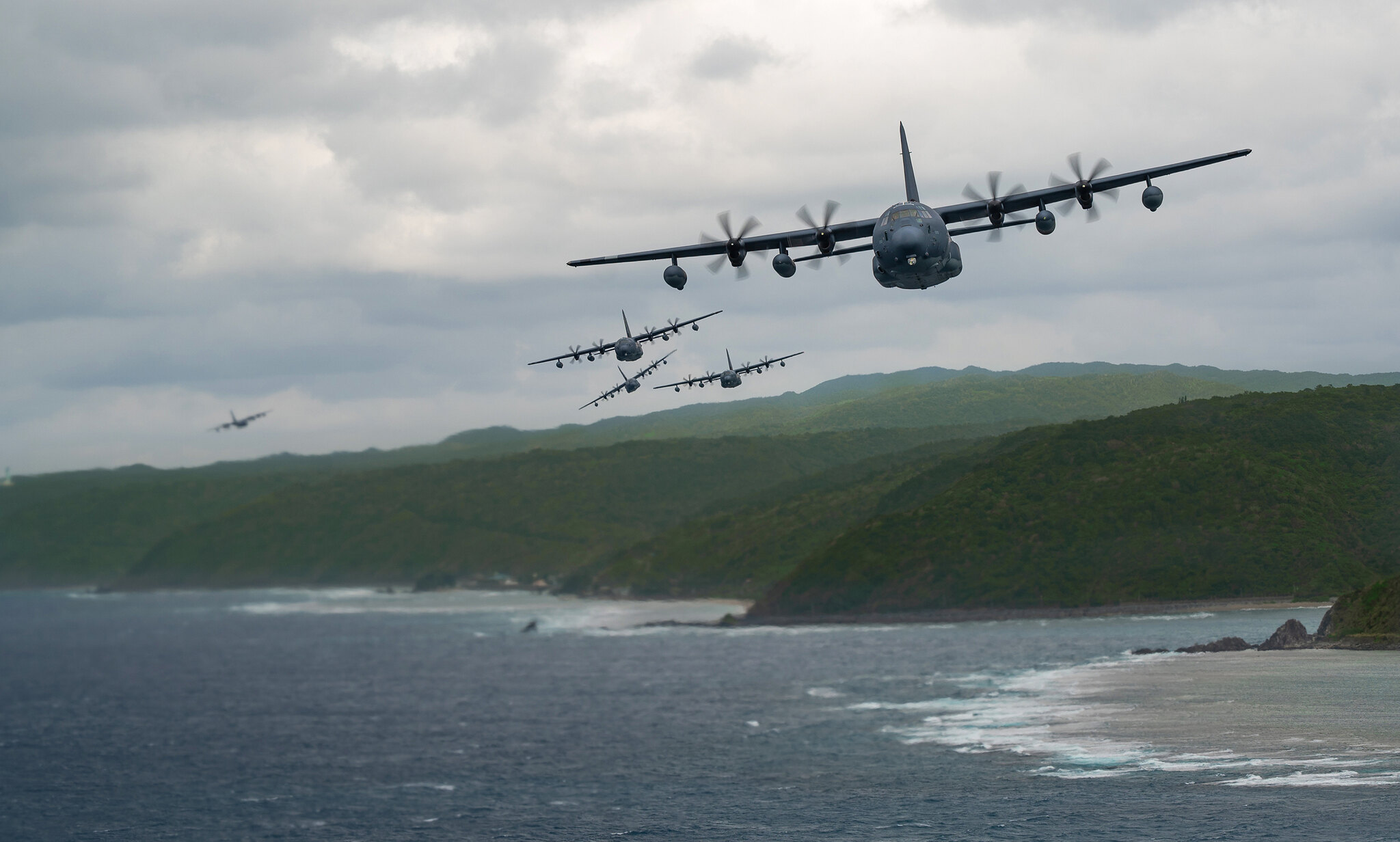
US military planes fly off the coast of Okinawa on January 7, 2022. (Stephen Pulter / US Indo-Pacific Command)
On January 23, voters went to the polls in the city of Nago, located in northern Okinawa, Japan. The incumbent, Toguchi Taketoyo, supported by the ruling conservative Liberal Democratic Party (LDP), defeated his challenger Kishimoto Yohei by 57.5 to 42.5 percent. The outcome reflected a mood of powerlessness in Okinawa that the Japanese state has cultivated through decades of obduracy and high-handed policies.
About an hour’s drive from the Okinawan capital, Naha, and with a population of sixty-one thousand, Nago may not be an especially large or important Japanese city. However, this election took on particular importance because the city contains the site of a major military base that the Japanese authorities are building for the US Marine Corps. The contradictions of the Japanese state and its relations with the US are most evident in a peripheral space like Nago.
Okinawa, which is closer to Shanghai than Tokyo, was only incorporated directly into the Japanese state in the late nineteenth century as Okinawa Prefecture, annulling the long-established Ryukyu Kingdom. The island was the scene of some of the bloodiest fighting between Japan and the United States in the Pacific War. Its geographical location and role as a US military hub mean that it would be in the front line of any China-US confrontation.