Hungary’s Narrow Path Out of Orbánism
Elections on Sunday could finally remove Viktor Orbán from power. Opposition forces have rallied behind rival candidate Péter Magyar, less out of belief in his program than from desperation at the country’s authoritarian turn.
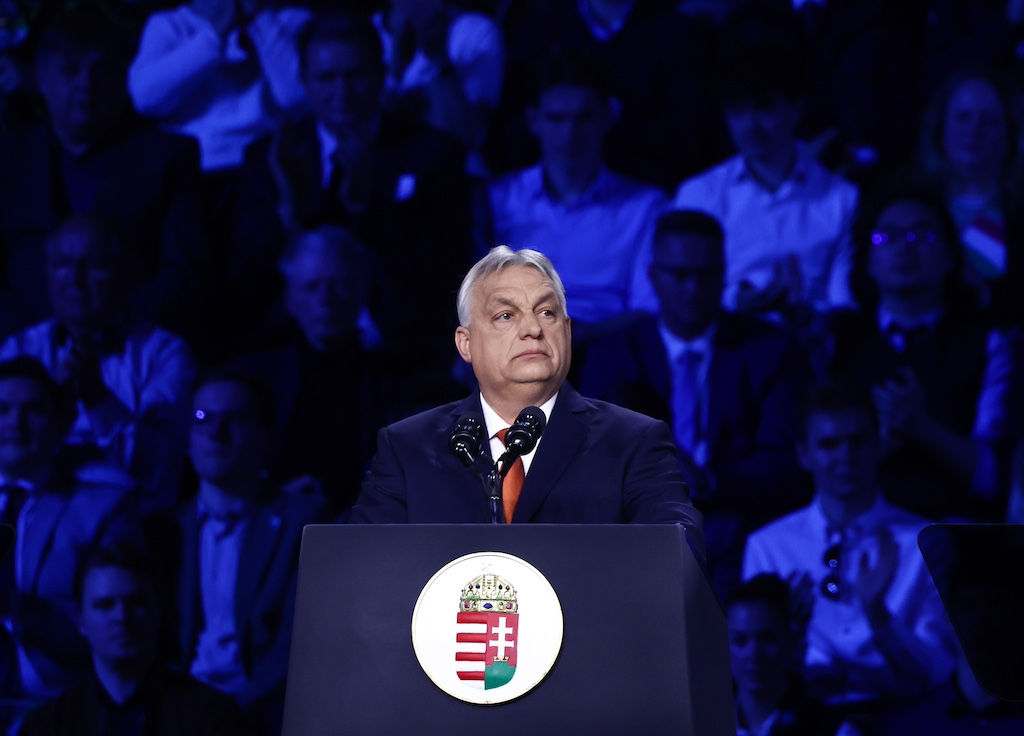
Despite the favorable constellation of an opposition in the lead and a mobilized civil society, Hungary’s path toward democratization remains narrow and treacherous. (Jakub Porzycki / NurPhoto via Getty Images)
Ever since Viktor Orbán’s far-right Fidesz party came to power with a sweeping supermajority in 2010, Hungary’s democratic institutions have faced constant pressure. Orbán called his victory a “revolution in the ballot box” and proceeded to systematically dismantle most institutional checks on his personal power. He adopted a new constitution, brought the Constitutional Court under party control, changed the electoral system, and redrew electoral districts to give his party a significant advantage.
There was more. Orbán used his political power to enrich friends and family members, consolidated most of the media market in the hands of loyalists, turned the public broadcaster into a propaganda outlet, and weaponized the state to bully NGOs, academics, labor unions, and the remnants of the independent press into silence.
While elections remained technically free, they were anything but fair. The systematic distortion of the playing field in favor of Fidesz produced three subsequent supermajorities in the 2014, 2018, and 2022 parliamentary elections.