Poland’s Lessons for Post-Orbán Hungary

Viktor Orbán’s defeat in Hungary followed the earlier ouster of Poland’s nationalist government. Yet while Donald Tusk’s 2023 Polish election victory was widely welcomed as the defeat of “populism,” his government has disappointed hopes of change.
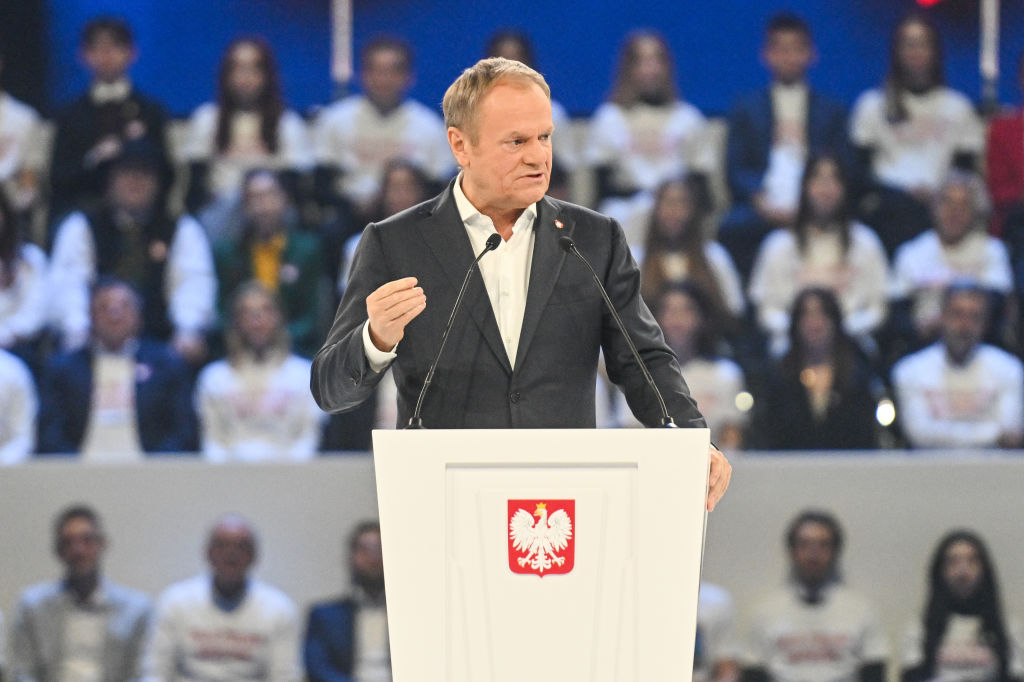
Poland’s Donald Tusk standing at a podium speaking to a crowd.

Polish leader Donald Tusk’s poor record in power also shows the dangers of left-wing forces subordinating themselves to establishment forces. (Omar Marques / Getty Images)


Péter Magyar’s “announced program amounts to a ‘regime change,’” wrote political scientist Zsolt Kapelner shortly after Hungary’s recent elections, while also noting the new government’s lack of concrete plans. Especially in socioeconomic matters, it seemed unclear what Magyar’s liberal-conservative Tisza Party would change, after sixteen years under Viktor Orbán’s rule. We on the Polish left were making similar ironic remarks back when Donald Tusk’s coalition won power in Poland in 2023, likewise ousting a right-wing populist government.

One might, then, suspect that the lessons from Poland — and a coalition that also included the now-split left-wing forces, Lewica (“Left”) and Razem (“Together”) — may foreshadow what awaits Hungary. Certainly, Tusk’s story is now worth recalling, if only to explain how such a victory can end badly. For Tusk’s Polish government has been under pressure for some time now, navigating the stormy waters of both domestic expectations and European politics.

Has Poland Won?

In fall 2023, Poland emerged from years of deeply polarizing rule under the hard-right Law and Justice (PiS) party. The Civic Coalition, a broad center to center-right front led by Tusk, promised one hundred concrete reforms in the first one hundred days in office, spanning economic policy, social rights, and judicial reform. Today Tusk faces the consequences of partial implementation, compromises with coalition partners, and an electorate impatient for tangible results.

“Poland has won. Democracy has won. We have removed them [PiS] from power,” Civic Coalition leader Tusk said at the time. And indeed, it was a moment full of hope — after eight years of right-wing rule under Jarosław Kaczyński’s PiS, democratic change was eagerly anticipated. However, while that change has still not materialized, Tusk continues to base his hold on power on warning against the return of right-wing populists. The problem, however, is that this primarily benefits the Right — especially its more extreme wing.

Tusk, a veteran EU official, recently made waves in Britain by suggesting that the European Convention on Human Rights requires reform. “If the 46 signatory states cannot modernize the Convention, withdrawing from it might be quite reasonable,” he told London’s Sunday Times. His comments underline a tension between national sovereignty and supranational obligations, particularly on migration policy: a recurring source of frustration for several European leaders.

Yet in Poland, Tusk’s challenges are more intimate, personal, and ideologically charged. Last October 15, at a meeting with voters in Piotrków Trybunalski, exactly two years after winning the election, he addressed questions on abortion: “Abortion does not excite me. It excites no one. I even dislike when people say it’s a woman’s right, because we are not born just to have the right to terminate pregnancy. You know what I mean.”

The meeting itself was turbulent. Climate activists, including Dominika Lasota and Aleksandra Gruszczyńska (both from liberal-left “Wschód” Initiative), interrupted it early on. Initially silenced by Tusk and the moderator, Monika Wielichowska, they were later allowed to ask questions. Lasota, sometimes called the “Polish Greta Thunberg,” was later subjected to a wave of online attacks from Tusk’s supporters, including some public figures. The reason? Tusk’s government must not be criticized, because, although it may not be perfect, “we” must remain “united” in order to fend off the far-right threat.

Tusk also reflected on the ambitious hundred-point plan of days gone by. “My party got 31 percent, so I delivered a third of what I promised. I think that’s an honest account,” he admitted. Yet even in March 2024, he had insisted that all promises remained in play, describing the coming months as an opportunity to accelerate reforms. Even as bureaucratic hurdles and coalition negotiations slowed progress, government communications as late as last September affirmed that the objectives were still valid and that ministerial priorities would not override past commitments.

Tusk himself managed to unify, somewhat like Pedro Sánchez in Spain, a kind of “defense of democracy” against the fascist specter haunting both countries. Before 2023, this was directed solely against PiS, whereas now it targets a much more radical right and in two distinct shades. This is the result of a split within the extremely nationalist, neoliberal Confederation: a faction led by Grzegorz Braun broke away, forming the Confederation of the Polish Crown, which is more openly pro-Russian and, notably for the region, also monarchist.

Continuity

The problem, however, runs deeper — and it is difficult to justify it by claiming to be “fixing the country after Kaczyński.”

Migration policy provides one of the clearest examples. Successive governments — both PiS and the current Tusk cabinet — have maintained a de facto state of exception on the Polish-Belarusian border, continuing the pushback of migrants and restricting access to the border zone for humanitarian organizations and media. Supposedly emergency measures are thus normalized as the new status quo. Tusk has done nothing to address the crisis, and instead boasts that he is more effective at combating migrants than the far right.

Tusk here fits into a broader European pattern in which centrist elites adopt increasingly restrictive migration policies in an attempt to appropriate parts of the far-right agenda. In practice, however, this leads to the legitimization of its language and interpretive frames, casting migrants primarily as a security threat rather than as subjects of rights. In the long run, this strategy does not weaken the radical right but strengthens it, positioning it as a more “authentic” representative of the same demands.

Secondly, the Sejm (parliament) is currently debating the extension of terms for local government officials. This reform aims to consolidate quasi-oligarchic rule at the municipal level in Poland: it would abolish the term limits for mayors and village heads. This would only entrench the pathologies that have persisted in certain regions for years, particularly those tied to the influence of wealthy landowners in more agrarian municipalities. In doing so, Tusk is not only failing to enact reforms but steering Poland toward a condition more resembling our undemocratic eastern neighbors.

This also has an economic dimension. The absence of social reforms, which had earned PiS the support of many citizens, risks reviving nostalgia for the far right. As some analysts have noted, this strategy already led to crushing defeats for Tusk’s camp in 2015 and 2016. One example is the minimum wage. Polish law has long mandated an annual increase of the minimum wage by at least 5 percent. However, this provision was only consistently followed under PiS, as neoliberal governments before 2015 tended to ignore it.

Attempts to push for raising this wage, mainly driven by Family and Social Policy Minister Agnieszka Dziemianowicz-Bąk, were largely — and rather patronizingly — dismissed by Tusk. Hence during one public appearance, he said: “The minister has a left-wing sensitivity and would very much like to help everyone; in some sense, it’s very good that she has such sensitivity.”

As a rule, on social policy, Tusk defends the achievements of the neoliberal but state-centric policies of Mateusz Morawiecki’s PiS government, such as the well-known “500+” program of family benefits. The Left within his coalition, in this sense, plays more the role of a force that can promise reforms, which (so far, it seems) are not going to materialize anytime soon.

Tusk’s Civic Platform is currently leading in polls, sometimes by close to 10 percentage points over PiS. Yet while the ruling camp has only slightly lower support than in 2023, Tusk’s coalition partners are currently polling significantly lower than then, shedding voters to the Civic Coalition. It remains uncertain whether the divided left will even make it back into parliament: Lewica polls at just under 6 percent, sometimes dipping below the 5 percent threshold for representation, and Razem just beneath it. Tusk’s conservative allies, Polska 2050 and the Polish People's Party, are also struggling, with 0.5 and 3 percent, respectively. It seems many have rallied to Tusk’s party, which has come to embody opposition to the authoritarian right of Kaczyński.

There is, however, a further element: a significant rise in support for forces even further to the right. In recent polls, Confederation Liberty and Independence, an openly nationalist and radically neoliberal formation, has reached 13 percent, while the post-split Confederation of the Polish Crown polls at 8 percent.

Class Protests

There surely are differences with the Hungarian case, but the social conditions, especially when it comes to the voter bases of both Magyar’s Tisza and Tusk’s Civic Coalition, are (perhaps paradoxically) fairly similar. In 2023, Tusk became prime minister despite PiS having the larger vote share; power was ultimately taken by a coalition of several groupings together adding up to a majority. In Hungary, by contrast, Magyar won the election outright, with a constitutional majority (two-thirds of seats) in parliament.

Poland’s political system provides for a strong presidency, including the power of legislative veto, which can only be overridden by a qualified majority. During Tusk’s tenure, the office of president has been held by a politician aligned with the opposed PiS camp. In Hungary, the systemic changes introduced under Orbán followed the acquisition of a constitutional majority and were enacted in accordance with existing legal procedures. In Poland, however, the actions of the PiS government concerning state institutions met with significant opposition from legal circles, which organized nationwide initiatives: both protests and educational tours in primary schools.

Back in 2015 and 2020, PiS used to win by tapping into elements of Poland’s recent history. The economic transformation increased inequalities and favored groups possessing economic, cultural, and social capital, while the working classes more often experienced stagnation or marginalization. At the same time, class conflict remained weakly articulated in the Polish political contest, and parties largely operated as broad, catch-all formations, avoiding direct references to class interests.

This marginalization also had a symbolic dimension: the working classes were underrepresented in public debate and culture, limiting their ability to articulate political interests and contributing to lower participation. Still, Law and Justice, though often paradoxical (even displaying a kind of pro-“peasant” posture: a contradictory pose given that Kaczyński himself is an intellectual from a well-off, elite Warsaw background), successfully mobilized post-1990s resentments, capturing voters from agrarian movements, including larger landholders and farmers (previously associated with the populist leader Andrzej Lepper).

In Poland’s 2023 election, the strongest differences concerned age: among eighteen- to twenty-year-olds, PiS received about 15 percent support but among those over sixty it surpassed 50 percent, while support for other parties declined as age increases. Moreover, Poles with only primary education voted for PiS at a rate over 60 percent rate, while among those with higher education, this figure was around 20 percent.

Farmers and retirees (over 50–60 percent) as well as manual workers are also more likely to vote for PiS, while professionals and managers tend to prefer Tusk’s outfit (around 30–40 percent). Entrepreneurs relatively more often chose Confederation, then still as one party (about 12–13 percent), while students more often supported Lewica and Civic Coalition. Spatial divisions reinforce these differences: in rural areas, PiS has about 45 percent support, while in the largest cities it falls below 20 percent, and Civic Platform has the opposite. Gender differences are limited to selected parties: men more often support Confederation, while women more often support Lewica.

In Hungary, the situation is somewhat different. In the 1990s, clearer class alignments existed (e.g., a larger share of workers in the electorate of Hungary’s Socialist Party — something that did not occur in Poland, where the political camp around the trade union Solidarność was quickly taken over by nationalist-Catholic circles), but since the late 1990s the party system has simplified into competition between two ideological blocs, which blurred sociological differences between electorates. After 2010, when Orbán’s Fidesz obtained a constitutional majority, the system became dominated by a single party, while the opposition remained fragmented.

A key shift occurred before 2010: Hungary’s Socialist Party lost a significant portion of its working-class electorate, partly as a result of liberalization and austerity policies, and these voters shifted toward the Right. At the same time, Fidesz expanded its base to include working classes while maintaining support among the middle class and parts of the economic elite.

As a result, a broad social coalition emerged, encompassing both lower and higher classes, which persisted in subsequent elections (2014, 2018) and formed the basis of Fidesz’s dominance. The Alford index for Fidesz was positive (relatively greater support among workers), while for left-wing and liberal parties it was negative.

Fidesz’s victory had its roots in a real improvement in the material conditions of part of society during the 2010s. During this period in Hungary, unemployment declined, incomes increased, and the share of people living in poverty decreased, which was particularly visible among low-skilled workers. At the same time, state policy included measures such as the introduction of a flat tax, reduction of social transfers, expansion of public works programs, and policies supporting capital accumulation, which strengthened the position of higher classes and parts of the middle class.

Fidesz, then, much like PiS before it, also benefited from a specific class configuration — or rather from the abandonment of politics grounded in clearly defined class interests. The Right does not speak here in the name of “the people”; instead, its electorate constitutes a particular cross-class coalition.

Although Poland borders Russia (and Hungary does not) the factor of being so close to imperialist power has played a significant role in both countries in recent years. In his propaganda (that is, image promotion rather than policy), Orbán never clearly aligned himself with either Russia or Ukraine but adopted a chameleonic position, shifting depending on the context, audience, and political moment. What mattered was not belonging to one camp (East vs. West) but presenting himself as a defender of “the people” and their space.

Within the framework of radical-right populism, Orbán constructed an antagonism between three categories: “the people,” “the elites,” and “others”. Most often, the primary narrative adversary was the West (the EU, “Brussels,” liberal values), portrayed as a dominant and intrusive force acting against the interests of nations.

A similar logic now underpins the strategy of the far right in Poland — especially Braun’s Confederation of the Polish Crown, which likewise does not openly declare support for Vladimir Putin, but insists in slogan form that this is “not our war.”

Lesser-Evil Trap

At the level of class-based politics, Tusk has long relied on a similar mechanism, and it is precisely this dynamic that also contributed to Magyar’s success. Both politicians operate through a strategy of negative mobilization, based on fear of the far right and the perceived necessity of stopping it at all costs. It’s a “lesser-evil” logic that facilitates the consolidation of broad, ideologically heterogeneous electoral coalitions.

Yet the long-term effects of this strategy are ambivalent. This may work electorally by mobilizing antiauthoritarian voters, but it contributes to the further blurring of programmatic differences and the weakening of class-based political articulation. Mainstream parties cease to be perceived as representatives of specific social groups and instead function as technocratic blocs managing political conflict.

In the Polish case, this strategy has coincided with the gradual normalization of the far right. Confederation — once treated as a fringe force — has become a stable element of the party system, and its positions, particularly on economic and migration issues, have increasingly entered mainstream debate.

Tusk today finds himself trapped by his own strategy. Warning against the return of PiS mobilizes part of the electorate, but at the same time it increases the salience of issues on which the far right thrives. If the government also fails to deliver tangible material benefits to its voters, this mechanism may reverse — channeling social frustration toward more radical actors instead.

This is something that Magyar’s government may well fear. Simply being “against Orbán” may prove difficult to maintain, especially given the vast support base he has built, both in the media and in the economy. Hungary, even more than Poland, is a dependent economy, relying not only on capital from the United States (including networks associated with the Trump administration) but also on Russia and East Asia.

To confront him, Magyar may be forced to resort to methods as controversial as those once used by the Polish (neo)liberals. The Tusk government’s rapid actions on public media — including leadership changes in broadcaster TVP, Polish Radio, and press agency PAP — led to political conflict and the mobilization of the opposition. This, in turn, facilitated its partial return to influence, notably through its victory in the 2025 presidential election.

What is also important is that this poses a significant threat to the already small Hungarian left — one similar to the situation that the Polish left is itself trying hard to move beyond. The struggle currently unfolding in both Poland and Hungary can be described, using Karl Popper’s classic distinction, as a conflict between the ideas of the “open society” and the “closed society.”

One side is dominated by liberals, who argue that social problems — as well as women’s rights or LGBTQ issues — can wait, because the most important priority is fighting the Right. At the same time, however, they adopt parts of the Right’s language, including themes such as “defending the borders” and the need for further militarization. The other side is shaped by right-wing actors who may appear more sensitive to social issues but remain radically reactionary.

In both cases, these are by now the hegemonic discourses, and the ones that both the Polish and Hungarian left have to face.